Author: oscar

  • Anthropic Secures Injunction Against Trump Administration Over Defense Department Restrictions

    Anthropic Secures Injunction Against Trump Administration Over Defense Department Restrictions

    A federal judge has halted recent actions by the Trump administration that restricted Anthropic’s operations, highlighting growing tensions between AI innovation and government regulation.

    Anthropic, a leading AI company known for its work on the Claude language model, achieved a notable legal victory as a federal judge issued an injunction requiring the Trump administration to roll back restrictions imposed on the company. These restrictions were part of a broader controversy involving the Defense Department’s oversight of AI technologies and raised concerns about the limits of executive authority in regulating emerging tech firms.

    The case underscores the complex intersection of national security, innovation, and regulatory policy. While the administration had justified its actions as necessary for safeguarding defense interests, the judge found that the restrictions were implemented without proper authority. This ruling not only restores Anthropic’s operational freedom but also sets a precedent regarding the scope of governmental control over AI companies engaged in sensitive sectors.

    For business leaders and CEOs, this development signals a critical moment in how government agencies may interact with AI startups and established firms alike. Companies like Anthropic, Polymarket, and OpenClaw, which are pushing the envelope in automation and AI-assisted decision-making, could be affected by evolving regulatory frameworks. The injunction suggests that courts may push back against executive overreach, potentially offering more stability for AI ventures navigating compliance and national security concerns.

    Anthropic’s case also reflects the increasing importance of transparency and due process in government interventions within the tech sector. As AI applications become more integrated into defense and commercial operations, businesses must stay alert to the shifting legal landscape. Executive teams should consider how regulatory risks could impact strategic partnerships, innovation pipelines, and market positioning, especially as AI companies expand their influence in areas like automation and predictive analytics.

    This ruling may have ripple effects beyond Anthropic, influencing how agencies assess and authorize AI technologies deployed within government contracts. Meanwhile, firms such as Polymarket continue to leverage AI-driven forecasting tools, and OpenClaw aims to redefine user engagement through advanced AI assistants. The evolving legal environment will shape opportunities and constraints for these companies and their clients.

    In summary, the court’s decision to block the Trump administration’s restrictions on Anthropic offers a clearer picture of the balance between national security and business innovation. For executives, it highlights the need to monitor regulatory developments closely and to anticipate how government actions could influence AI technology adoption and commercialization. As the AI sector matures, maintaining agility in legal and operational strategies will be essential for sustaining growth and competitive advantage.

    Anthropic’s legal victory highlights the delicate balance between innovation and regulation in the AI sector.

    This injunction comes at a pivotal moment as AI companies like Anthropic, known for developing advanced models such as Claude, continue to expand their influence across various industries, from defense to commercial automation. For executives, the ruling underscores the importance of understanding how government actions can directly impact operational capabilities and strategic planning. It also signals that judicial oversight may serve as a critical check on executive power, potentially providing a more predictable environment for AI companies navigating national security concerns and compliance obligations.

    Moreover, the case exemplifies broader challenges faced by firms in the AI ecosystem, including Polymarket and OpenClaw, which rely heavily on automation and data-driven decision-making. These companies operate at the intersection of innovation and regulation, where shifts in policy can affect their ability to deploy new technologies or enter sensitive markets. Business leaders should therefore monitor regulatory trends closely and consider how legal developments might influence partnerships, investment decisions, and product roadmaps, especially as AI’s role in critical infrastructure and defense applications grows.

    The recent court injunction in favor of Anthropic underscores the evolving dynamics between AI innovation and regulatory oversight, carrying significant implications for market participants in the AI sector.

    This legal development may encourage a more cautious approach among policymakers when considering interventions that impact AI companies engaged in defense-related activities. For executives at firms like Anthropic, Polymarket, and OpenClaw, the ruling offers a degree of reassurance that abrupt regulatory restrictions could face judicial scrutiny, potentially providing a more stable operating environment. Such stability is crucial for companies investing heavily in automation and advanced AI models like Claude, where long-term planning and partnership development are essential for sustained innovation and market growth.

    However, the case also highlights the complexity of navigating national security concerns alongside commercial ambitions. Business leaders should remain vigilant, recognizing that while this injunction limits executive overreach in this instance, regulatory frameworks are likely to continue evolving. Companies will need to balance compliance with agility, ensuring that their technologies align with both governmental expectations and market demands. This balance will be especially important as AI-driven automation increasingly influences decision-making processes across industries, potentially reshaping competitive dynamics and opening new avenues for value creation.

    Related reading: Anthropic Launches Claude Code Channels: AI Coding Comes to Telegram and Discord and Judge Rules Hegseth and Trump Lacked Authority to Blacklist Anthropic.
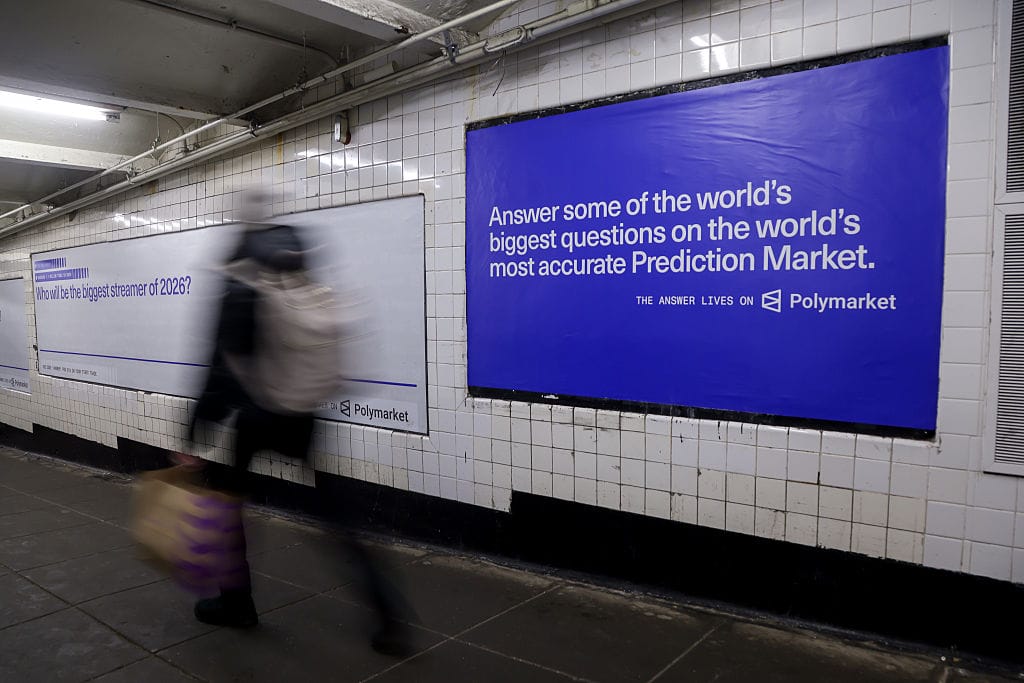

  • Exclusive: Operator Won Nearly $1 Million on Polymarket Thanks to Surprisingly Accurate Bets on Iran

    Exclusive: Operator Won Nearly $1 Million on Polymarket Thanks to Surprisingly Accurate Bets on Iran

    Polymarket, the decentralized prediction market platform, recently witnessed an extraordinary series of bets that led to nearly $1 million in winnings by a small cluster of operators betting on events related to Iran.

    In early March 2026, Polymarket saw an unprecedented surge in trading volume, with more than $529 million wagered on markets tied to the bombing of Iran. This spike drew attention not only for its scale but also for the precision of certain bettors who capitalized on detailed timing predictions. Analysis revealed that a handful of new accounts were behind nearly $1 million in profits, a testament to the platform’s potential as a tool for informed speculation on geopolitical developments.

    The success of these operators underscores an emerging trend where real-time information and strategic automation converge in prediction markets. Platforms like Polymarket are increasingly attracting sophisticated users who leverage data analytics and automated decision-making tools to enhance their betting strategies. In this context, automation technologies such as OpenClaw — a recently rebranded AI assistant designed to operate across messaging platforms and run locally on users’ devices — are becoming relevant for market operators seeking an edge.

    OpenClaw’s approach to automation, which prioritizes user control and cross-application integration, presents new opportunities for streamlining workflows and executing complex strategies rapidly. Its development coincides with competitive moves from industry players like Nvidia, which is reportedly working on NemoClaw, an open-source alternative that could democratize access to advanced automation tools. Such innovations may soon provide prediction market participants, including those on Polymarket, with more sophisticated ways to analyze data and react swiftly to unfolding events.

    Meanwhile, Anthropic’s Claude AI continues to capture significant user interest, recently climbing to the No. 2 spot on the U.S. App Store. The surge in Claude’s popularity, following the company’s public dispute involving the Pentagon, reflects growing demand for AI solutions that combine usability with robust performance. For business leaders, Claude’s expansion signals the broader integration of advanced AI across sectors, including finance and information services, potentially influencing how decisions are made in volatile environments such as geopolitical prediction markets.

    The confluence of these developments suggests a shifting landscape where AI-powered tools and decentralized platforms like Polymarket are reshaping how information is processed and monetized. Executives and operators in the business space should watch these trends carefully, as they highlight new avenues for leveraging technology to anticipate market shifts and geopolitical risks.

    While the record-breaking bets on Iran demonstrate Polymarket’s capability to surface real-time market sentiment, they also raise questions about regulatory scrutiny and the ethical dimensions of prediction markets focused on sensitive global events. As this sector evolves, transparency and compliance will be critical considerations for those involved.

    For CEOs and founders, the intersection of automation tools like OpenClaw, AI platforms such as Claude, and innovative marketplaces like Polymarket offers practical insights into harnessing emerging technologies. Staying informed about these dynamic developments can help business leaders make more strategic decisions, anticipate risks, and identify opportunities in an increasingly complex global environment.

    The recent surge in Polymarket activity highlights the growing intersection of real-time geopolitical analysis and automated trading strategies, signaling a shift in how business leaders might approach risk and opportunity in volatile markets.

    For executives and operators, the remarkable accuracy demonstrated by a select group of Polymarket users betting on Iran-related events underscores the increasing value of platforms that aggregate diverse data streams into actionable insights. This trend is amplified by emerging automation tools like OpenClaw, which enable users to seamlessly integrate intelligence from multiple messaging applications and execute complex decision-making workflows with greater speed and precision. Such innovations could reshape how companies monitor geopolitical risks and adjust strategies in near real time, particularly in sectors sensitive to international developments.

    Meanwhile, Anthropic’s Claude AI, climbing rapidly in the U.S. App Store, reflects the broader appetite for AI solutions that blend technical sophistication with user-friendly interfaces. For business leaders, Claude’s momentum may translate into new opportunities to leverage AI-driven analytics and natural language processing to enhance scenario planning and competitive intelligence. Together, the advancements in prediction markets, automation platforms, and AI assistants suggest a future where executives can harness a richer, more dynamic set of tools to anticipate and respond to complex global events with greater confidence.

    Related reading: Exclusive: Operator Won Nearly $1 Million on Polymarket Thanks to Surprisingly Accurate Bets on Iran and Polymarket Rolls Out Sweeping Insider Trading Rules After Rash of Suspicious Bets on Iran and Venezuela.

  • Is OpenClaw Really the Next ChatGPT? Why Nvidia’s CEO Called This Hot New AI Assistant the Future

    Is OpenClaw Really the Next ChatGPT? Why Nvidia’s CEO Called This Hot New AI Assistant the Future

    OpenClaw has surged into the spotlight as a promising new AI assistant, drawing comparisons to ChatGPT and earning praise from Nvidia’s CEO, who recently described it as the future of AI assistance. As businesses.

    OpenClaw has surged into the spotlight as a promising new AI assistant, drawing comparisons to ChatGPT and earning praise from Nvidia’s CEO, who recently described it as the future of AI assistance. As businesses evaluate the evolving landscape of AI-driven automation, OpenClaw’s unique approach—running directly on users’ personal devices and integrating across multiple messaging platforms—sets it apart in a crowded field dominated by cloud-based models.

    The AI assistant, formerly known as Clawdbot and Moltbot, was renamed OpenClaw earlier this year in a strategic move to emphasize its open and decentralized nature. Its creator envisions a system where users maintain control of their data by operating the assistant locally, rather than relying on cloud servers. This approach addresses growing concerns around privacy and data security, critical considerations for executives managing sensitive corporate information. OpenClaw’s design allows it to interact seamlessly with various messaging apps, offering a unified automation experience without sacrificing user control.

    Industry watchers have noted that OpenClaw’s architecture could reshape how automation tools are deployed in enterprise settings. Unlike AI assistants that require constant internet connectivity and centralized data processing, OpenClaw’s offline capabilities offer resilience against network disruptions and reduce latency, enhancing real-time interactions. For businesses, this translates to more reliable and responsive AI-driven workflows, especially in environments with strict data governance policies.

    Meanwhile, Nvidia’s announcement of its own open-source project, NemoClaw, signals the strategic importance of this emerging AI assistant category. By entering the space with a competitor, Nvidia aims to foster innovation while ensuring that AI assistants remain adaptable and accessible to developers and enterprises. This move underscores the growing recognition among technology leaders that AI assistants will play a pivotal role in the next wave of automation, enabling smarter decision-making and operational efficiencies.

    OpenClaw’s rise comes amid significant activity in related AI and prediction platforms. Anthropic’s Claude, for instance, recently climbed to the No. 2 spot on the U.S. App Store, buoyed by a surge in daily sign-ups and subscriber growth following a public dispute involving the Pentagon. Claude’s momentum highlights the competitive dynamics among AI language models and assistants, each carving out niches based on usability, privacy, and integration capabilities.

    On the prediction market front, Polymarket has attracted considerable attention by facilitating high-stakes bets on geopolitical events, including a recent $529 million traded volume related to the bombing of Iran. Such platforms demonstrate how automation and AI-driven analytics are increasingly influencing business strategies and risk management. While Polymarket operates in a different domain, its recent activity reflects a broader trend of leveraging AI and data-driven tools to inform decision-making under uncertainty.

    For executives and business operators, the emergence of OpenClaw presents an opportunity to rethink how AI assistants can be integrated into existing workflows without compromising security or control. Its decentralized design aligns well with enterprises prioritizing data sovereignty and operational resilience. Moreover, the endorsement from Nvidia’s leadership suggests that investments in AI assistant technology will intensify, potentially accelerating adoption across sectors.

    While OpenClaw is not without competitors, its distinctive model and growing ecosystem position it as a serious contender in the AI assistant arena. As the market matures, organizations will need to assess not only the capabilities of these tools but also their alignment with corporate governance and strategic objectives. Staying informed about developments from Anthropic, Nvidia, Polymarket, and OpenClaw will be essential for leaders aiming to leverage AI for sustainable competitive advantage.

    In summary, OpenClaw’s innovative approach to AI assistance, coupled with industry endorsements and parallel advancements in related AI technologies, suggests that it could play a significant role in shaping the future of business automation. Executives should monitor these developments closely, considering how such tools might fit into their digital transformation roadmaps and operational models.

    As AI assistants continue to reshape enterprise workflows, OpenClaw’s emphasis on local device operation addresses a critical pain point for many businesses: data sovereignty. By avoiding cloud dependency, it potentially reduces compliance risks associated with storing sensitive information off-premises—a growing concern under evolving international data protection regulations. For executives, this model may align better with corporate policies that prioritize data confidentiality without compromising on the flexibility and responsiveness expected from AI-driven automation tools.

    Furthermore, OpenClaw’s interoperability across multiple messaging platforms suggests a strategic focus on seamless integration within existing communication ecosystems. This could facilitate smoother adoption in organizations where diverse collaboration tools coexist, eliminating friction caused by switching between apps. As automation increasingly becomes integral to productivity, OpenClaw’s approach may offer a practical pathway for companies seeking to enhance operational efficiency while maintaining user familiarity and control.

    In the broader AI assistant market, OpenClaw’s rise coincides with competitive moves by players like Nvidia, whose NemoClaw project indicates a commitment to open-source innovation. This dynamic highlights an industry trend towards customizable, developer-friendly AI solutions that can be tailored to specific enterprise needs. For decision-makers, monitoring these developments will be essential to understand how emerging platforms might support smarter automation strategies, helping businesses stay agile amid rapid technological change.

    Related reading: Anthropic Launches Claude Code Channels: AI Coding Comes to Telegram and Discord and Polymarket and Kalshi Rush to Ban Insider Trading as Senators Introduce Prediction Markets Crackdown.

  • Anthropic Launches Claude Computer Use for Mac in Research Preview, Enabling AI to Control Your Desktop

    Anthropic Launches Claude Computer Use for Mac in Research Preview, Enabling AI to Control Your Desktop

    Anthropic is stepping firmly into the agentic AI race with a major new capability: Claude can now take control of your Mac computer to complete tasks on your behalf. Announced on March 24, 2026, the feature — currently available as a research preview — marks one of the most ambitious moves yet by any leading AI lab to transition its flagship model from a chatbot into a genuine autonomous agent capable of operating real software.

    What Claude’s Computer Use Can Do

    With the new computer use feature, Claude gains the ability to interact with a Mac just as a human user would. The AI can open applications, navigate web browsers, scroll through documents, fill in spreadsheets, and carry out multi-step workflows across software without the user needing to be present. Claude controls the machine by simulating mouse movements, keyboard input, and screen interaction — essentially acting as a remote operator inside the desktop environment.

    Anthropic designed the system to prioritize precision. When a task involves services like Slack, Google Calendar, or other popular apps that have direct API connectors, Claude reaches for those first. Only when no connector is available does it fall back to direct screen-level computer control. This layered approach is meant to reduce errors and make the AI’s behavior more predictable.

    The feature also integrates with Dispatch, Anthropic’s mobile companion app released just last week. With Dispatch, a user can message Claude a task from their iPhone — say, “compile the latest sales figures into a report” — and then return to find the work completed on their desktop.

    Availability and Platform Support

    The computer use capability is currently limited to Claude Pro and Claude Max subscribers on macOS. Anthropic confirmed that Windows support is in the pipeline, with availability expected “in the next few weeks.” Linux support has not yet been announced.

    This rollout follows a broader trend of AI companies pushing into agentic territory. OpenAI, Google DeepMind, and other major players have all been racing to ship tools that let AI models execute real-world tasks autonomously — not just answer questions, but actually do things.

    Safety and Permission Controls

    Anthropic was candid about the early-stage nature of the feature. The company stated that computer use is “still early compared to Claude’s ability to code or interact with text,” and acknowledged that “Claude can make mistakes.” However, Anthropic emphasized that it built the capability with guardrails in place.

    Critically, Claude will always request explicit permission from the user before accessing a new application. The AI does not autonomously expand its access without asking — a design choice intended to keep users in control and limit potential misuse or unintended consequences.

    The company also stressed that users should remain vigilant and avoid leaving sensitive, unprotected data accessible while Claude is operating on their machine.

    Claude Code Gets Auto Mode and New Channels

    Alongside the consumer-facing computer use launch, Anthropic also announced major upgrades to Claude Code, its developer-focused agentic coding tool.

    Claude Code is now receiving Auto Mode, a research preview feature that allows the AI to make judgment calls about which coding actions are safe to execute on its own — without requiring the developer to manually approve every step. Anthropic describes Auto Mode as a middle ground between Claude Code’s default configuration (which prompts for many permissions) and a fully permissive mode that skips checks altogether.

    In addition, Anthropic announced Claude Code Channels, enabling developers to connect Claude Code to Discord and Telegram. This means teams can now message Claude Code directly through their existing communication platforms, instruct it to write code, run tasks, and receive updates — all without leaving their messaging app.

    Claude Sonnet 4.6: A New Model Under the Hood

    Powering many of these new features is Claude Sonnet 4.6, the latest version of Anthropic’s flagship model. The new release brings notable improvements in coding performance, long-context reasoning, and computer use accuracy. It also introduces a 1-million-token context window, currently available in beta — a significant upgrade that allows the model to process and reason over extremely large documents or codebases in a single session.

    The Bigger Picture: The Race for AI Agents

    Today’s announcements signal that Anthropic is accelerating its push to transform Claude from a conversational AI into a fully capable autonomous agent. The combination of computer use, Dispatch for mobile task delegation, Auto Mode for developers, and Claude Code Channels points toward a vision where Claude functions more like a digital employee than a chatbot.

    Analysts and developers are watching closely. As AI agents gain the ability to operate real software, manage files, and take action on behalf of users, the stakes — and the responsibilities — grow considerably. Anthropic’s emphasis on permission-based controls and transparent safety messaging suggests the company is keenly aware of those stakes.

    For now, Claude’s computer use is a research preview. But if Anthropic’s track record holds, a broader rollout may not be far behind.

  • Polymarket and Kalshi Rush to Ban Insider Trading as Senators Introduce Prediction Markets Crackdown

    Polymarket and Kalshi Rush to Ban Insider Trading as Senators Introduce Prediction Markets Crackdown

    Prediction Markets Face Reckoning as Lawmakers Target the Industry

    Polymarket and Kalshi, the two largest prediction market platforms in the United States, announced sweeping new insider trading bans on Monday in a coordinated effort to get ahead of federal legislation that could fundamentally reshape — or even dismantle — key parts of their business.

    The moves come as Sens. Adam Schiff (D-Calif.) and John Curtis (R-Utah) introduced bipartisan legislation called the “Prediction Markets are Gambling Act,” which would ban prediction markets from offering contracts related to sports. If enacted, the bill could severely curtail the future growth prospects of both platforms, which have been aggressively expanding into sports-related markets over the past year.

    What the New Rules Prohibit

    Polymarket’s updated rulebook, published Monday across both its global decentralized finance (DeFi) platform and its Commodity Futures Trading Commission (CFTC)-regulated U.S. exchange, codifies explicit bans on three categories of insider trading. First, users are now prohibited from trading on any contract if they possess confidential information about the outcome of the underlying event, where using that information would violate a preexisting duty of trust or confidence. Second, users cannot trade on confidential tips received from someone who owed a duty of confidence to a third party. Third, anyone who holds a position of authority or influence sufficient to affect the outcome of an event is barred from placing bets on that event.

    Kalshi took a slightly different approach, announcing it would preemptively block political candidates from trading on their own campaigns and ban anyone involved in college or professional sports from trading on contracts related to the sports they play or are employed by.

    Suspicious Bets Sparked the Crackdown

    The industry-wide push for stronger guardrails did not happen in a vacuum. Over the past several months, prediction markets have faced intense scrutiny after a series of suspiciously well-timed bets drew the attention of lawmakers, regulators, and the media.

    One Polymarket trader operating under the username “Magamyman” made more than $553,000 by placing bets related to Iran and its Supreme Leader, Ayatollah Ali Khamenei, just before an Israeli strike killed him. The account appeared to have profited from advance knowledge of military action in the region. Similarly, other traders placed large, profitable wagers ahead of the capture of former Venezuelan President Nicolás Maduro, further raising alarms about potential information leaks from government or intelligence sources.

    Sen. Jeff Merkley (D-Ore.) was among the first to sound the alarm, describing the activity as insider trading conducted openly and proposing legislation in early March to ban government officials from participating in prediction markets entirely.

    Polymarket Builds Out Its Enforcement Infrastructure

    Beyond updating its rulebook, Polymarket has invested heavily in enforcement technology. The company’s U.S. exchange now operates a three-tier surveillance structure that includes a trade surveillance technology partner, a real-time control desk, and a Regulatory Services Agreement with the National Futures Association (NFA). Violations can result in suspension, monetary penalties, or referral to law enforcement.

    Earlier this month, Polymarket also announced a partnership with Palantir and TWG AI to build a comprehensive surveillance platform designed to detect suspicious trading patterns and manipulation in sports prediction markets. Polymarket CEO Shayne Coplan said the goal is to bring world-class analytics and monitoring to sports markets while maintaining the confidence of leagues and teams in the integrity of games.

    The timing of these investments is no coincidence. Just four days before Monday’s rule update, Polymarket was named Major League Baseball’s exclusive prediction market partner in a landmark deal announced March 19. The partnership gives Polymarket and its brokers exclusive access to MLB logos, official data from Sportradar, and brand exposure across the league’s digital ecosystem. As part of the agreement, MLB also signed a first-of-its-kind Memorandum of Understanding with the CFTC to share information and establish an integrity framework for prediction markets in professional sports.

    An Industry at a Crossroads

    The prediction market sector experienced explosive growth in 2025, with total trading volume increasing fourfold to $60 billion. MLB joined the NHL, MLS, and the UFC as North American sports leagues that have signed commercial partnerships with prediction market platforms, signaling growing mainstream acceptance.

    But the bipartisan legislation introduced Monday threatens to reverse that momentum. The “Prediction Markets are Gambling Act” would effectively destroy much of Kalshi and Polymarket’s sports-related business if it becomes law. The platforms are betting that by proactively self-regulating and demonstrating robust integrity controls, they can persuade lawmakers that the industry can police itself without heavy-handed federal intervention.

    Whether that strategy will succeed remains an open question. With multiple senators from both parties now engaged on the issue and public scrutiny intensifying after the Iran and Venezuela betting scandals, the prediction market industry faces perhaps its most consequential moment since Polymarket’s breakout during the 2024 presidential election cycle.

    For now, the message from both Polymarket and Kalshi is clear: the era of unregulated, anything-goes prediction markets is over. The question is whether the industry will be allowed to write its own rules — or whether Congress will write them instead.

  • Polymarket Rolls Out Sweeping Insider Trading Rules After Rash of Suspicious Bets on Iran and Venezuela

    Polymarket Rolls Out Sweeping Insider Trading Rules After Rash of Suspicious Bets on Iran and Venezuela

    Polymarket, the world’s largest prediction market platform, announced comprehensive market integrity rules on Monday covering both its decentralized finance (DeFi) platform and its Commodity Futures Trading Commission (CFTC)-regulated U.S. exchange. The move comes after a string of high-profile incidents raised serious questions about whether traders with insider knowledge had been using the platform to profit from classified government intelligence and geopolitical events.

    What the New Rules Actually Prohibit

    The updated rulebook introduces three explicit categories of prohibited insider trading conduct that apply to all participants on both platforms. First, traders may not act on stolen confidential information about the outcome — or likely outcome — of an underlying event where doing so would violate a preexisting duty of trust or confidence owed to another party. Second, the rules extend liability to so-called “tippees”: anyone who receives confidential information from a person who was themselves prohibited from trading on it, and who knew or had reason to know that the source was bound by such a duty. Third — and perhaps most consequentially — traders are barred from placing any bet if they hold a position of authority or influence sufficient to actually affect the outcome of the event being wagered on.

    Beyond insider trading, both platforms explicitly prohibit all forms of market manipulation, including spoofing, wash trading, and fictitious transactions, as well as self-dealing, front-running, information misuse, attempted manipulation, and any disruptive practices that undermine orderly market operations.

    A Pattern of Suspicious Bets That Forced Polymarket’s Hand

    The rule overhaul did not emerge in a vacuum. Over the past year, Polymarket has been at the center of several alarming episodes where trading patterns suggested participants may have possessed advance knowledge of classified military or government actions.

    In June 2025, during the 12-day war between Israel and Iran, Israeli prosecutors filed criminal indictments against an Israel Defense Forces reservist and a civilian who allegedly used classified military intelligence to place bets on Polymarket about upcoming strikes on Iran. The two individuals reportedly earned over $150,000 in combined profits before Israeli authorities caught up with them — marking what may be the first criminal case of its kind involving a prediction market.

    Then, in late February 2026, an account trading under the username “Magamyman” made more than $553,000 by placing well-timed bets related to Iran’s Supreme Leader, Ayatollah Ali Khamenei, just hours before an Israeli strike killed him. Blockchain analysis firm Bubblemaps identified six newly created Polymarket accounts that collectively placed bets shortly before the February 28 airstrikes, winning approximately $1.2 million in total. The accounts had been opened mere hours before the bets were placed, raising obvious red flags.

    Earlier in January 2026, an anonymous user had already attracted attention by placing a $32,537 wager on the removal of Venezuelan leader Nicolás Maduro from power — at a time when the platform’s own odds implied only a 6.5% probability of that outcome. The trader had joined the platform just days before the bet, and the timing proved uncannily accurate.

    How Enforcement Will Work Across Both Platforms

    Polymarket says it has built a multi-layered compliance infrastructure to back the new rules. On the DeFi side, the platform leverages the inherent transparency of the Polygon blockchain, where all trades are publicly visible on-chain and every position in each contract is viewable on polymarket.com. Polymarket also partners with third-party surveillance and technology specialists to monitor for unusual activity.

    The U.S. exchange operates under a more formal three-tier surveillance regime: external partnerships with trade surveillance specialists, an internal control desk conducting real-time monitoring, and a Regulatory Services Agreement with the National Futures Association (NFA) to detect potential rule violations and sanction offenders. Users who spot suspicious activity on the DeFi platform can report it via the Polymarket Discord or by emailing [email protected], while U.S. exchange participants can file confidential reports to [email protected].

    When Polymarket identifies questionable trading patterns, it may initiate a formal review and pursue disciplinary measures ranging from banning wallet addresses to referring cases to law enforcement agencies.

    Polymarket’s CLO Speaks Out

    “Markets thrive on clarity,” said Neal Kumar, Polymarket’s Chief Legal Officer. “These rule enhancements make our expectations abundantly clear for every participant across both platforms and highlight the compliance infrastructure we have already built.”

    Alongside the rulebook update, Polymarket launched dedicated Market Integrity pages on both platforms, designed to explain how the rules operate in practice and provide easy access to reporting tools for suspicious activity.

    Why This Matters for the Future of Prediction Markets

    Polymarket’s move is significant not just for the platform itself, but for the broader prediction market industry, which has long argued that markets aggregate dispersed information to generate accurate forecasts. That value proposition depends critically on the assumption that participants are trading on publicly available information and genuine beliefs — not on stolen government secrets or classified military intelligence.

    The repeated insider trading incidents of the past year have put that assumption under strain and attracted scrutiny from regulators, lawmakers, and the public. By publishing explicit, enforceable rules aligned with both DeFi norms and CFTC regulations, Polymarket is making a calculated bet that proactive compliance will protect its legitimacy and its CFTC-regulated U.S. exchange — which represents a major strategic asset as the platform seeks to expand its footprint with American institutional participants.

    Whether the new rules will be enough to deter sophisticated actors with access to classified information remains an open question. But for a platform that handles hundreds of millions of dollars in wagers on some of the world’s most sensitive geopolitical events, the attempt to draw a clear legal and ethical line is an overdue step forward.

  • Anthropic Launches Claude Code Channels: AI Coding Comes to Telegram and Discord

    Anthropic Launches Claude Code Channels: AI Coding Comes to Telegram and Discord

    What Are Claude Code Channels?

    Anthropic has officially launched Claude Code Channels, a new feature that transforms how developers interact with AI coding assistants by enabling two-way communication through Telegram and Discord. Released on March 20, 2026, as a research preview, this update allows developers to message their Claude Code sessions directly from their phones — and get full responses back — without ever opening a terminal.

    The feature represents a fundamental shift from the traditional synchronous “ask-and-wait” model to an asynchronous, always-on AI coding partnership. Instead of being tethered to a desktop terminal, developers can now fire off coding instructions, check on project status, or debug issues from anywhere using messaging apps they already use daily.

    How Claude Code Channels Work Under the Hood

    At its core, a Claude Code Channel is an MCP (Model Context Protocol) server that pushes events into a running Claude Code session. When a developer sends a message via Telegram or Discord, that message arrives in the active Claude Code session on their local machine, where Claude processes the request with full filesystem, git, and MCP tool access. The response then flows back through the same messaging platform.

    The technical foundation relies on the Model Context Protocol, the open-source standard Anthropic introduced in 2024. MCP acts as a universal connector for AI systems, providing a standardized way for AI models to interact with external data and tools. Claude Code Channels extend this protocol to support real-time, bidirectional messaging between developers and their AI coding assistant.

    Setting up a channel requires Claude Code v2.1.80 or later and a claude.ai account on the Pro, Max, or Enterprise tier. Developers create a bot through Telegram’s BotFather or the Discord Developer Portal, install the corresponding plugin in Claude Code, configure their bot token, and restart with the --channels flag enabled. A pairing process ensures only authorized users can push messages to the session.

    Security and Enterprise Controls

    Anthropic has built security into the core of Claude Code Channels. Every approved channel plugin maintains a sender allowlist, meaning only verified user IDs can push messages — everyone else is silently dropped. The pairing process requires a unique code that must be confirmed in both the messaging app and the Claude Code terminal.

    For enterprise customers, channels are disabled by default and must be explicitly enabled by an organization admin through the claude.ai admin settings panel. This gives IT teams full control over whether their developers can use the feature, addressing common concerns about data security and unauthorized tool access in corporate environments.

    Additionally, being configured in the MCP settings file alone is not enough to activate a channel. Servers must be explicitly named in the --channels startup flag, adding an extra layer of intentional activation that prevents accidental exposure.

    Why This Matters: The OpenClaw Competition

    The timing of Claude Code Channels is widely seen as a strategic response to the growing open-source AI coding movement, particularly OpenClaw, which has been gaining traction among developers who want flexible, self-hosted AI coding solutions. Multiple industry publications have described the feature as Anthropic’s answer to these competitive pressures.

    While OpenClaw and similar projects typically require dedicated hardware, complex self-hosting setups, or third-party bridges to achieve similar functionality, Anthropic’s approach leverages its existing Claude Code infrastructure and plugin architecture. Developers get always-on AI coding assistance through apps they already have installed, with no additional servers to maintain.

    The plugin-based architecture also means more platforms can follow beyond Telegram and Discord. Anthropic has published an open channel reference specification, allowing developers to build custom channels for systems like Slack webhooks, CI/CD pipelines, error trackers, and deployment monitoring tools.

    Beyond Chat: Webhooks and Automation

    Claude Code Channels are not limited to human-to-AI chat. The feature also supports webhook receivers, enabling automated systems to push events directly into a Claude Code session. This means a failed CI build, an error tracker alert, or a deployment pipeline notification can arrive in a session where Claude already has the developer’s files open and context about what they were working on.

    This positions Claude Code as more than just a reactive coding assistant. With channels active, it becomes a proactive development partner that can respond to external events, triage alerts, and begin investigating issues before the developer even notices something went wrong.

    Availability and What’s Next

    Claude Code Channels are currently rolling out as a research preview, with Telegram and Discord support available as the initial launch platforms. The --channels flag syntax and protocol specifications may evolve based on developer feedback during the preview period.

    Pro and Max individual users can start using channels immediately by opting in per session, while Team and Enterprise organizations need admin approval first. Anthropic has indicated that the feature will expand based on community feedback, with custom channel development already possible through the published reference documentation.

    The launch adds to an already packed March 2026 for Anthropic, which also announced a $100 million investment in the Claude Partner Network, the launch of The Anthropic Institute, and a new Asia-Pacific office in Sydney. With Claude Code Channels, the company is making a clear bet that the future of AI-assisted development is not just smarter models, but smarter ways to stay connected to them.

  • Polymarket Opens “The Situation Room” Pop-Up Bar in D.C. as Token Launch Looms

    Washington, D.C. — March 22, 2026 — Prediction market giant Polymarket brought its platform off the screen and onto K Street this week, opening a three-day pop-up bar called The Situation Room in the heart of Washington’s lobbying corridor. The immersive installation ran from March 20 through March 22, drawing a cross-section of D.C. insiders — Hill staffers, policy analysts, crypto traders, and curious passersby — into a bar environment styled around political intelligence and real-time probabilistic thinking.

    The timing was calculated. Polymarket is widely expected to announce the launch of its POLY governance token — or confirm a major new fundraising round — as early as Monday, March 23, making the pop-up a highly visible warm-up to what could be a defining moment for the platform’s next chapter.

    Inside the Situation Room

    The venue’s design borrowed the visual language of a White House Situation Room crossed with a quantitative trading floor. Large screens mounted throughout the bar displayed live Polymarket odds on active political, economic, and sports contracts. Guests could browse real positions, watch probability curves shift in real time, and discuss the mechanics of prediction markets with knowledgeable staff stationed throughout the space.

    The cocktail menu leaned into the theme. Drinks reportedly included “The Bull Case,” “The Black Swan,” and “Tail Risk” — a nod to the probability concepts that underpin Polymarket’s platform. For many visitors, the pop-up served as their first hands-on introduction to how prediction markets actually work: not through an explainer article, but through a conversation over a drink while watching live market probabilities move on a screen.

    That accessibility was clearly the point. Polymarket has spent years building sophisticated infrastructure for traders who understand probability and liquidity. The Situation Room was an experiment in a different direction: can the platform explain itself to a mainstream audience without dumbing itself down?

    POLY Token Launch Expected Monday

    Behind the cocktails and probability charts, the event carried a clear strategic subtext. Polymarket has been building toward a major announcement for months, with speculation intensifying in crypto circles around the POLY governance token — a move that would give platform participants formal ownership stakes and voting rights over its future development.

    Community anticipation has run high since Polymarket’s explosive growth during the 2024 U.S. election cycle, when the platform’s odds on the presidential race diverged sharply from traditional polls and ultimately proved more accurate. That moment turned Polymarket from a niche crypto tool into a mainstream data source cited by cable news anchors alongside Gallup and FiveThirtyEight.

    A token launch — or the announcement of a significant new funding round — on March 23 would capitalize on that momentum. Polymarket raised $70 million in a Series B in 2024 led by Founders Fund, and analysts have suggested a Series C at a substantially higher valuation is plausible given the platform’s user growth since then.

    MLB Deal, CFTC Progress, and the Regulatory Tailwind

    The D.C. pop-up arrives amid a string of moves signaling Polymarket’s confidence in its U.S. regulatory standing. The platform’s partnership with Major League Baseball brought prediction markets to a mass sports audience for the first time, giving Polymarket access to official game data and MLB branding — a signal that traditional institutions are no longer treating crypto-native platforms as pariahs.

    Equally significant is the shifting posture of the Commodity Futures Trading Commission. Under new leadership aligned with the current administration’s pro-digital-assets stance, the CFTC has moved toward providing clearer regulatory pathways for prediction market platforms. Polymarket has been an active participant in those regulatory conversations, positioning itself as a good-faith actor seeking rules of the road.

    Prediction Markets Cross Into Culture

    The deeper story The Situation Room tells is not about a token launch or a fundraising round. It is about a category crossing a cultural threshold. Prediction markets have existed for decades, used by economists and policy researchers as superior forecasting tools. For most of that time, they remained invisible to anyone outside a narrow specialist community.

    The 2024 election changed that. Polymarket’s odds became news. And now Polymarket is acting like a media brand — renting physical space, designing immersive experiences, putting its probability engine in a room where people drink and talk and argue about the future. Whether the POLY token announcement lands Monday as expected or not, Polymarket has already answered one question with The Situation Room: it is no longer content to be a background data source. It wants to be a place where the conversation about the future happens first.