Tag: polymarket

  • Reddit Post Highlights Potential of Automated Trading on Polymarket’s 5-Minute BTC Markets

    Reddit Post Highlights Potential of Automated Trading on Polymarket’s 5-Minute BTC Markets

    A recent Reddit post has drawn attention to the potential of automated trading on Polymarket’s 5-minute Bitcoin up/down markets, suggesting new opportunities for event-driven strategies in decentralized prediction markets.

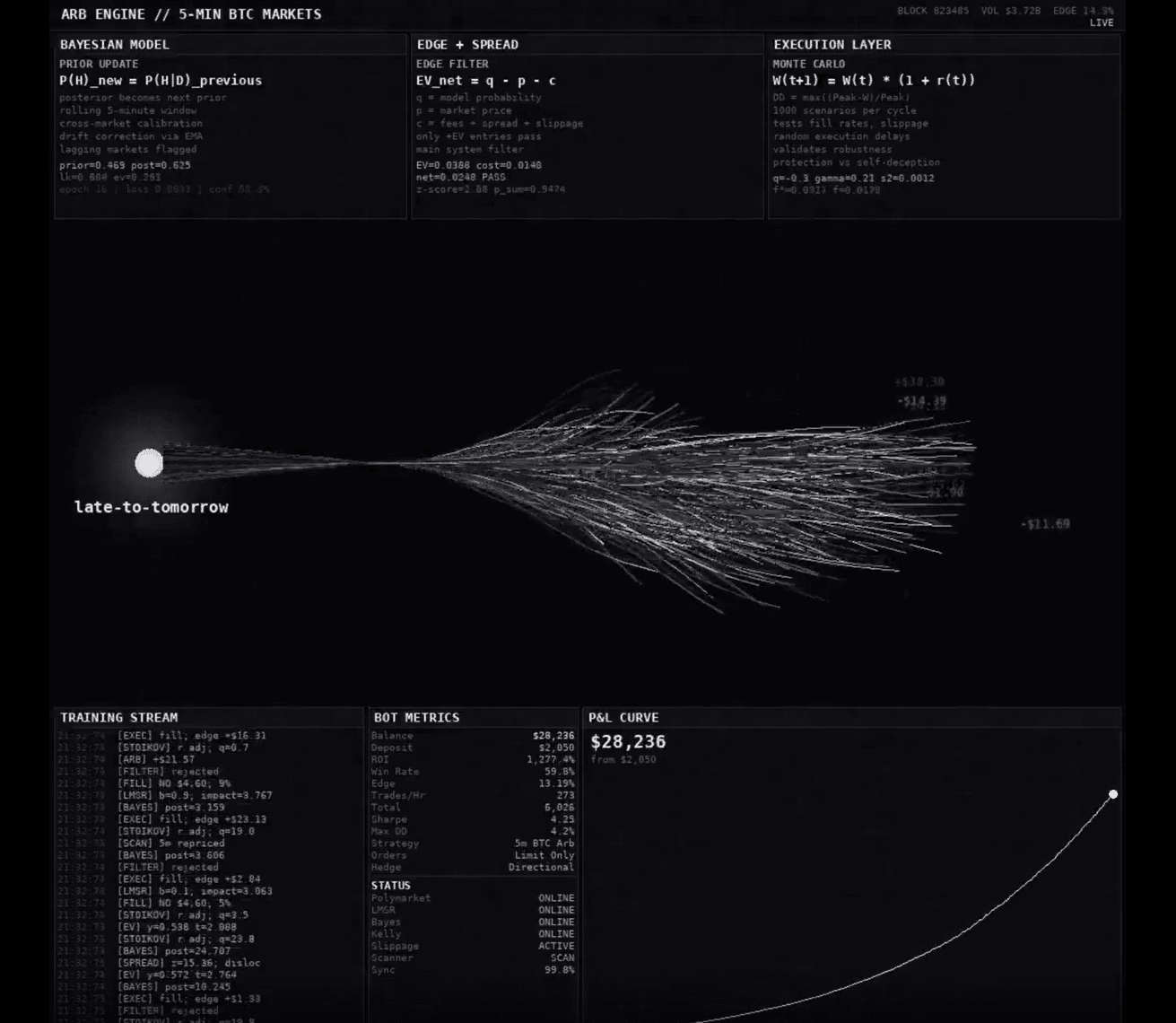
    A user on Reddit’s PolymarketProtestClub forum shared a striking claim: a trading bot reportedly transformed an initial investment of $2,050 into $178,000 within a single month by leveraging rapid-fire 5-minute Bitcoin up/down markets on Polymarket. While the claim remains unverified, it has sparked considerable discussion among traders and business operators about the implications for event-driven trading and automation in crypto prediction markets.

    Polymarket’s short-interval markets allow participants to speculate on whether Bitcoin’s price will move up or down in 5-minute increments. This structure creates a fast-paced trading environment that appears well-suited to algorithmic and automated approaches. The Reddit post, linked here https://www.reddit.com/r/PolymarketProtestClub/comments/1ruadaz/a_bot_turned_2050_into_178000_in_one_month_by/, points to how systematic, rapid decision-making enabled by bots could potentially capitalize on micro-movements in volatile markets.

    For executives and founders considering automation tools like OpenClaw or language models such as Claude, this example highlights the growing role that AI-powered trading bots can play in emerging decentralized finance environments. The ability to execute trades within tight timeframes offers a glimpse into how automation may enhance efficiency and responsiveness to market signals on platforms like Polymarket.

    However, the claim also invites caution. The high returns described are extraordinary and not typical; they underscore the risks inherent in high-frequency trading and automated strategies operating in volatile markets. Business leaders should consider both the opportunities and the challenges of adopting such technologies, including the need for robust risk management and transparency.

    Overall, the Reddit post serves as a timely prompt to explore how event-driven automation could reshape trading dynamics in prediction markets, especially as tools like Claude and OpenClaw continue to evolve. For CEOs and founders, staying informed about these developments can inform strategic decisions around technology adoption and market participation.

    For business leaders evaluating the potential of automated trading in decentralized finance, the Reddit post underscores the evolving landscape where rapid, event-driven strategies could significantly impact market outcomes. Platforms like Polymarket, by offering short-duration markets, create an environment where timely execution and algorithmic precision become critical competitive advantages. This dynamic environment aligns with the capabilities of emerging automation tools such as OpenClaw, which are designed to handle high-frequency decision-making with minimal latency.

    Moreover, the example highlights the strategic considerations executives must weigh when integrating automation into trading operations. While the prospect of substantial returns through bots and AI-driven models like Claude is compelling, it also brings into focus the necessity for rigorous risk management frameworks. The volatility inherent in 5-minute Bitcoin markets can amplify both gains and losses, making transparency, auditability, and ongoing monitoring essential components for sustainable deployment of such technologies.

    Ultimately, the discussion prompted by this Reddit claim reflects broader trends in how automation and AI are reshaping trading behaviors on prediction markets. While the specific results reported remain unverified, they emphasize the importance for CEOs and founders to stay informed about innovations in event-driven trading and to consider how these tools might be leveraged responsibly within their own financial strategies. More details can be found in the original Reddit post here.

    Related reading: Claude Code and OpenClaw: Practical Automation Tools for Business Leaders, How Polymarket Transforms Prediction Markets Into Actionable News Signals, and Anthropic Adjusts Claude Subscription to Exclude OpenClaw Usage.

  • Polymarket Insider Claim Sparks Debate on Prediction Markets’ Transparency

    Polymarket Insider Claim Sparks Debate on Prediction Markets’ Transparency

    A recent Reddit post claims that a Google insider was exposed on Polymarket after reportedly making over $1 million in a single day by betting on Google search markets.

    The post has drawn significant attention among investors and business leaders who follow emerging trends in prediction markets. Polymarket, a platform enabling users to trade on the outcomes of various events, including corporate developments and search trends, has become a hub for speculative insights. The claim that an insider with privileged knowledge of Google’s search operations profited extensively suggests that some participants may leverage non-public information to gain an advantage.

    This development has sparked a wider conversation about the integrity and transparency of decentralized prediction markets. While Polymarket’s design aims to crowdsource collective intelligence and democratize information, allegations of insider trading challenge that premise. For executives monitoring these platforms, the situation underscores the importance of understanding the potential risks and regulatory implications that could arise if insider activity is confirmed.

    Additionally, the episode highlights how automation tools like OpenClaw and AI assistants such as Claude could impact trading behaviors on platforms like Polymarket. These technologies can analyze vast data sets rapidly, possibly amplifying the influence of informed participants. Business operators should consider how automation might shift market dynamics and what governance measures might be necessary to maintain fairness.

    While the claim remains unverified and debated among users, it reflects the growing intersection of tech industry insiders, AI-driven analysis, and prediction market speculation. The discussion also raises questions about how companies like Anthropic, focused on advanced AI, might indirectly influence information flows that affect market betting on platforms like Polymarket.

    Executives and founders following these developments should watch for further updates and regulatory responses. The original conversation is ongoing on Reddit and X, where participants continue to analyze the implications of this high-profile claim.

    The alleged insider trading episode on Polymarket involving a Google employee highlights the complex challenges facing decentralized prediction markets as they grow in popularity among investors and business leaders. While these platforms aim to harness collective forecasting power, the possibility that participants with privileged information might exploit these markets raises questions about the need for enhanced oversight and governance mechanisms. For executives, this underscores the importance of distinguishing between genuine market signals and potentially distorted outcomes influenced by undisclosed data advantages.

    Moreover, the role of automation technologies such as OpenClaw and AI models like Claude cannot be overlooked in this context. These tools enable rapid analysis of large datasets and can amplify the speed and scale at which informed or semi-informed trades occur. This dynamic may increase market efficiency but also complicate efforts to detect and regulate insider-driven activity. Business operators should consider how these evolving technologies might reshape market behavior and the corresponding regulatory landscape, especially as platforms like Polymarket continue to attract attention from both retail and institutional participants.

    As the discussion continues on Reddit and X, industry observers and company leaders are advised to monitor developments closely. The outcome of this debate may influence how prediction markets are perceived and regulated in the future, particularly concerning transparency and fairness. Staying informed about the intersection of insider knowledge, AI-driven automation, and emerging market platforms will be critical for executives seeking to navigate these rapidly evolving digital ecosystems.

    Related reading: Claude Code and OpenClaw: Practical Automation Tools for Business Leaders, REJECT vs. AGELITE: Polymarket Insights and Automation Trends for April 6, 2026, and Anthropic Adjusts Claude Subscription to Exclude OpenClaw Usage.

  • Claude Code and OpenClaw: Practical Automation Tools for Business Leaders

    Claude Code and OpenClaw: Practical Automation Tools for Business Leaders

    Claude Code and OpenClaw are emerging as key tools for businesses aiming to enhance workflow automation with simplicity and precision.

    In the evolving landscape of business technology, automation tools are becoming indispensable for improving operational efficiency. Claude Code, developed by Anthropic, and OpenClaw are two noteworthy platforms gaining traction among workflow automation teams. Each offers distinct approaches to simplifying complex processes, making them attractive options for executives seeking practical solutions.

    Claude Code is an extension of Anthropic’s Claude AI, designed to facilitate the automation of tasks by translating natural language instructions into executable code. This tool is particularly useful for teams that want to automate repetitive workflows without deep programming expertise. By interpreting user intent expressed in plain language, Claude Code can generate scripts or code snippets that integrate with various business systems, reducing the time and technical barrier traditionally associated with automation projects.

    On the other hand, OpenClaw provides a robust framework focused on automating and orchestrating complex workflows across different applications and platforms. Its strength lies in enabling businesses to connect disparate software tools seamlessly, allowing for streamlined data flows and task management. OpenClaw appeals especially to organizations looking for scalable automation solutions that can adapt to evolving operational needs.

    Both Claude Code and OpenClaw resonate with the growing demand for automation that is both accessible and adaptable. For business leaders, these tools represent opportunities to reduce manual workload, minimize errors, and accelerate process execution. Their adoption can lead to improved responsiveness and agility, crucial factors in competitive markets.

    While Polymarket continues to offer insights through prediction markets, tools like Claude Code and OpenClaw focus on internal business efficiencies, complementing the external intelligence landscape. As automation becomes a strategic priority, understanding and leveraging these platforms can provide executives with practical pathways to enhance productivity and innovation.

    In conclusion, Claude Code and OpenClaw exemplify how automation technology is evolving to meet the needs of modern business teams. By simplifying the creation and management of automated workflows, they help organizations stay efficient and responsive in a fast-paced environment. Business leaders interested in automation should consider these tools as part of their broader technology strategy.

    Related reading: Polymarket Explained for Executives: A Practical Look at Prediction Markets, Claude Code Leak Draws New Attention to Anthropic’s Developer Tools, and REJECT vs. AGELITE: Polymarket Insights and Automation Trends for April 6, 2026.

  • Why Traders Are Paying More Attention to Peru on Polymarket

    Why Traders Are Paying More Attention to Peru on Polymarket

    Peru’s increasing visibility on Polymarket reflects a nuanced shift in trader focus toward Latin American political dynamics.

    Recent activity on Polymarket, a leading prediction market platform, reveals a notable uptick in trader interest surrounding Peru’s political landscape. This growing attention is indicative of broader market expectations that developments in Peru could have significant regional and economic implications. Traders are using Polymarket to gauge potential outcomes and market sentiment in real time, highlighting Peru as a key area to watch for political shifts and policy changes.

    This trend comes at a time when Peru faces complex political challenges and uncertainty, factors that naturally attract speculative interest. The evolving political environment, coupled with the platform’s ability to provide rapid insights, creates a dynamic space for investors and analysts who track Latin American markets. It also underscores how platforms like Polymarket, supported by tools such as OpenClaw automation and enhanced by AI models like Claude, are reshaping how information and sentiment are processed and acted upon by business leaders.

    From a business perspective, the increased focus on Peru demonstrates how prediction markets serve as a practical barometer for assessing risks and opportunities in emerging markets. Traders’ behavior on Polymarket suggests they anticipate significant developments that could influence trade, investment, and policy decisions not only within Peru but across the region. For executives monitoring geopolitical risks and market trends, these signals provide valuable, near real-time context that can inform strategic planning and risk management.

    While Polymarket continues to expand its coverage and sophistication, the case of Peru exemplifies the platform’s growing relevance as a tool for business operators and policymakers seeking actionable insights. The integration of automation through OpenClaw enhances market efficiency and user experience, while AI innovations like Claude contribute to the analysis and interpretation of complex data streams, making prediction markets increasingly integral to decision-making in fast-moving political environments.

    As political developments in Peru unfold, the attention it garners on Polymarket will likely persist, offering executives an early window into evolving market sentiment. Keeping an eye on these indicators can help business leaders navigate uncertainty with greater confidence and agility.

    The heightened interest in Peru on Polymarket not only reflects immediate political developments but also signals a broader recognition among traders of Latin America’s growing influence in global economic and political affairs. For business leaders and investors, this shift suggests an increasing need to monitor regional trends through innovative platforms that provide near real-time data on market sentiment and geopolitical risk. Polymarket’s ability to aggregate diverse inputs and forecast outcomes offers executives a way to anticipate changes that could impact trade flows, regulatory environments, and investment climates across multiple countries.

    Moreover, the integration of automation technologies like OpenClaw streamlines the trading process on Polymarket, allowing users to respond quickly to evolving news and market signals. This automation, combined with AI-driven analytical tools such as Claude, enhances the platform’s capacity to interpret complex data sets and distill them into actionable insights. For CEOs and founders, leveraging these advanced capabilities can improve strategic decision-making by providing a more nuanced understanding of potential political and economic shifts in emerging markets like Peru.

    As Peru’s political landscape remains fluid, the growing activity on prediction markets underscores a pragmatic approach by traders and business operators who seek to manage uncertainty effectively. Rather than relying solely on traditional news sources or lagging indicators, executives can use platforms like Polymarket to supplement their risk assessments with probabilistic forecasts. This trend highlights the evolving role of prediction markets as complementary tools for anticipating regional developments that may influence long-term business strategies and operational planning in Latin America and beyond.

    Related reading: Anthropic Adjusts Claude Subscription to Exclude OpenClaw Usage, How Polymarket Transforms Prediction Markets Into Actionable News Signals, and Why More Users Are Switching to Claude From ChatGPT.

  • Polymarket’s Peru Election Markets Offer Insight into Political Sentiment

    Polymarket’s Peru Election Markets Offer Insight into Political Sentiment

    Polymarket’s markets on Peru’s upcoming election highlight shifting voter sentiment with potential business and geopolitical implications.

    As Peru approaches a crucial election, Polymarket’s prediction markets have become a real-time indicator of public sentiment and political risk. These markets, which allow traders to place bets on election outcomes, are showing notable fluctuations that reflect growing uncertainty and evolving preferences among the electorate. For executives and business leaders with interests in Latin America, understanding these market movements can offer valuable context for strategic planning.

    Recent activity on Polymarket’s Peru markets indicates increased volatility in the perceived chances of leading candidates. This dynamic suggests that investor confidence in a clear winner remains tentative, highlighting the potential for unexpected election outcomes. Such uncertainty can have direct implications for foreign investment, regulatory outlooks, and economic stability in the region. The markets are essentially aggregating diverse information—from polls to social sentiment—providing a distilled view of how stakeholders are positioning themselves.

    The connection between prediction markets like Polymarket and traditional political analysis underscores the growing role of automated, data-driven tools in monitoring global events. While platforms like OpenClaw continue to enhance automation in information processing, Polymarket serves as a complementary gauge of crowd-sourced expectations. Executives tracking these signals alongside other intelligence sources may gain an edge in anticipating shifts that could affect markets or operational conditions.

    Although prediction markets are not infallible, the movements seen in Polymarket’s Peru election markets underscore the importance of staying attuned to real-time sentiment indicators. As the election date nears, these markets could provide early warnings of political volatility or shifts in policy direction, allowing business leaders to adjust risk management strategies accordingly.

    In a landscape where rapid changes are common, integrating insights from Polymarket alongside tools developed by firms like Anthropic, which focus on automation and natural language processing, can improve the depth and timeliness of political risk assessments. For CEOs and founders operating in emerging markets, such layered approaches to monitoring can be crucial in navigating uncertainty and making informed decisions.

    Polymarket’s Peru election markets offer more than just a snapshot of voter preferences; they reflect broader economic and political risks that could influence business environments in the region. For executives operating in or considering expansion into Peru, these markets provide a practical tool to gauge potential shifts in regulatory frameworks, trade policies, and government stability. The fluctuating odds seen in these markets suggest that key stakeholders remain cautious, which may translate into delayed investment decisions or heightened due diligence requirements for cross-border ventures.

    Moreover, the integration of automation platforms like OpenClaw with data sourced from prediction markets enhances the speed and accuracy of political risk assessment. By automating the collection and analysis of market signals, business leaders can incorporate near real-time insights into their strategic planning processes. Tools such as Claude, developed by Anthropic, further support these efforts by enabling more nuanced interpretation of complex market data, assisting executives in distinguishing between transient market noise and meaningful trends that could impact operational continuity.

    As Peru’s election approaches, the value of these prediction markets lies in their capacity to distill diverse information streams into actionable intelligence. While no model can guarantee outcomes, Polymarket’s evolving Peru markets serve as a useful complement to traditional political and economic analysis. For CEOs and founders, staying attuned to these market movements can inform risk mitigation strategies and help anticipate policy changes that may affect supply chains, labor markets, and overall investment climate in one of Latin America’s most dynamic economies.

    Related reading: How Polymarket Transforms Prediction Markets Into Actionable News Signals, OpenClaw’s Rapid Rise and Restrictions: What Claude Users Need to Know, and Anthropic Adjusts Claude Subscription to Exclude OpenClaw Usage.

  • How Polymarket Transforms Prediction Markets Into Actionable News Signals

    How Polymarket Transforms Prediction Markets Into Actionable News Signals

    Polymarket is redefining how prediction markets serve executives and traders by turning collective sentiment into actionable news signals.

    Prediction markets have long been a tool for aggregating public opinion on future events, but Polymarket is elevating their practical value by transforming these markets into a dynamic news and sentiment indicator. For business leaders, founders, and operators who need to stay ahead of market-moving developments, Polymarket offers a fast, real-time read on public attention that can complement traditional news sources.

    Unlike conventional news outlets that report events after they unfold, Polymarket reflects the collective expectations and uncertainties of a diverse user base. By tracking how users place bets on outcomes ranging from political events to economic indicators, the platform aggregates sentiment that often reacts swiftly to emerging information. This creates an early signal of shifting public opinion or breaking developments that executives can monitor for strategic decision-making.

    For traders, this means access to an alternative data stream that provides insight into market psychology and potential event outcomes, supplementing quantitative models and fundamental analysis. Business operators can also leverage these signals to gauge consumer sentiment and anticipate market reactions, enabling more proactive management. The transparency and liquidity of Polymarket’s platform further enhance its reliability as a sentiment barometer.

    Automation tools like OpenClaw are increasingly being integrated with platforms such as Polymarket to streamline data extraction and interpretation. This combination allows executives to receive timely alerts and summaries without manually monitoring multiple markets, improving operational efficiency. Meanwhile, advancements from companies like Anthropic, with models such as Claude, contribute to better natural language processing and sentiment analysis, potentially enriching the interpretation of prediction market data.

    While prediction markets have inherent uncertainties, Polymarket’s approach offers a practical supplement to traditional information channels. By converting collective bets into a usable news signal, it provides a nuanced perspective on public attention that can help executives and traders make more informed decisions in a fast-paced environment.

    Polymarket’s innovative use of prediction markets not only provides a pulse on public sentiment but also introduces a new dimension of data-driven insights for executives and business strategists. By capturing the collective wisdom of a diverse participant base, Polymarket effectively transforms speculative activity into a forward-looking signal that can inform risk assessment and strategic planning. This capability is particularly valuable in rapidly evolving scenarios where traditional news cycles may lag behind emerging developments, giving business leaders a competitive edge.

    From an operational perspective, the integration of automation tools such as OpenClaw enhances the accessibility and usability of Polymarket’s data. These tools facilitate real-time monitoring and automated extraction of relevant market movements, reducing the need for constant manual oversight. When combined with advanced natural language processing models like Claude from Anthropic, the system’s ability to interpret complex sentiment shifts and contextualize information improves, thereby supporting more informed decision-making processes.

    For traders and executives alike, Polymarket’s approach underscores a broader trend towards leveraging alternative data sources to complement traditional economic indicators and news feeds. While prediction markets inherently involve uncertainty, their aggregation of diverse viewpoints can serve as an early warning mechanism or confirmation tool for business leaders monitoring market dynamics. This evolving landscape suggests that staying attuned to such real-time sentiment signals may become an increasingly important component of strategic intelligence in the years ahead.

    Related reading: REJECT vs. AGELITE: Polymarket Insights and Automation Trends for April 6, 2026, Anthropic Adjusts Claude Subscription to Exclude OpenClaw Usage, and OpenClaw’s Rapid Rise and Restrictions: What Claude Users Need to Know.

  • Why Trump-Related Markets Continue to Capture Polymarket’s Trader Interest

    Why Trump-Related Markets Continue to Capture Polymarket’s Trader Interest

    Political headlines involving former President Donald Trump continue to fuel significant trading activity on Polymarket, highlighting the platform’s sensitivity to real-time political developments.

    Polymarket, a leading event prediction market, has seen sustained interest in markets centered around Donald Trump-related outcomes. This pattern underscores the close connection between current political news cycles and trader engagement on the platform. As political events involving Trump unfold, traders respond quickly, placing bets that reflect their expectations and risk assessments.

    The persistence of Trump-related markets as a focal point for Polymarket users suggests that these events offer a combination of high public interest, uncertainty, and potential for rapid developments. Such conditions naturally attract traders seeking to capitalize on volatility and information asymmetry. This dynamic aligns with broader trends in prediction markets where politically charged topics often generate the most liquidity and volume.

    From a business perspective, the continued prominence of Trump-related markets offers insights into how event-driven platforms like Polymarket benefit from real-world news flow. For executives evaluating the impact of political volatility on market behavior, these activity patterns demonstrate how timely information and headline-driven speculation can maintain platform engagement over extended periods.

    While Polymarket leverages these political events to drive user interaction, the platform is also advancing its capabilities through automation and integration with tools like OpenClaw, which streamline trading processes. Additionally, Anthropic’s Claude AI is becoming increasingly relevant for market analysis, offering executive users enhanced ways to interpret complex data and sentiment trends.

    Overall, the sustained attention on Trump-related markets reflects a broader phenomenon where political uncertainty continues to shape trader behavior on event prediction platforms. For business leaders, understanding this linkage provides valuable context for navigating markets influenced by fast-moving political developments.

    Beyond the immediate political intrigue, Trump-related markets on Polymarket exemplify how event-driven platforms capitalize on the intersection of public sentiment and real-time information flow. For business operators, this underscores the importance of agility in responding to fast-changing narratives, as these markets often reflect broader shifts in public perception and risk appetite. The continued engagement in these specific markets suggests that traders value the transparency and immediacy that Polymarket offers, enabling them to make informed decisions in a complex political environment.

    Moreover, the integration of automation tools like OpenClaw enhances the efficiency of trading on Polymarket by reducing manual intervention and increasing the speed of execution. This operational improvement allows users to better manage the volatility inherent in politically sensitive markets. Meanwhile, AI frameworks such as Anthropic’s Claude provide sophisticated data analysis capabilities that can assist executives in interpreting market signals and sentiment trends, offering a strategic advantage in navigating uncertainty. Together, these technological advancements support a more refined approach to prediction markets, where timely insights and streamlined processes are critical.

    From a strategic perspective, the prominence of Trump-related event markets also highlights the broader role of prediction platforms in reflecting and potentially influencing public discourse. For CEOs and founders, understanding how these platforms function as both a barometer and catalyst for market sentiment can inform decisions related to risk management, investor relations, and competitive positioning. As political developments continue to unfold unpredictably, the sustained interest in these markets serves as a reminder of the value in monitoring alternative data sources that capture nuanced shifts in collective expectations.

    Related reading: Anthropic Adjusts Claude Subscription to Exclude OpenClaw Usage, OpenClaw’s Rapid Rise and Restrictions: What Claude Users Need to Know, and REJECT vs. AGELITE: Polymarket Insights and Automation Trends for April 6, 2026.

  • Polymarket’s Role as a Real-Time Indicator of Market Sentiment

    Polymarket’s Role as a Real-Time Indicator of Market Sentiment

    Polymarket is increasingly recognized as a real-time barometer for shifting market sentiment, capturing trader attention ahead of mainstream news coverage.

    In today’s fast-paced business environment, timely information is critical for strategic decision-making. Polymarket, a decentralized prediction market platform, has emerged as a unique indicator reflecting collective trader sentiment in real time. The platform’s trading activity often signals where attention and concern are concentrating before traditional media outlets report on these developments. This dynamic provides executives with an early window into emerging trends and potential risks.

    Polymarket’s markets function by allowing users to trade on the outcomes of future events, effectively aggregating diverse perspectives into quantifiable probabilities. When trading volumes and price movements spike, they can reveal shifts in public expectation and sentiment around political, economic, or social events. Unlike conventional news sources, which must verify and contextualize information before publication, Polymarket captures immediate reactions from a broad pool of participants. This makes it a valuable tool for executives aiming to anticipate market shifts and adjust strategies proactively.

    The implications for business leaders are significant. By monitoring Polymarket’s activity, executives can gauge the intensity of market focus on specific issues, providing early signals that may warrant closer attention or contingency planning. This can be especially useful in volatile sectors or when geopolitical developments unfold rapidly. Additionally, platforms like OpenClaw, which integrate automation technologies, are beginning to harness data from prediction markets and AI tools like Claude to streamline information processing and decision-making workflows, further enhancing responsiveness.

    As prediction markets such as Polymarket continue to gain traction, their role in complementing traditional intelligence sources is becoming clearer. They offer a decentralized, crowd-driven perspective that can reveal undercurrents of sentiment not yet visible through conventional channels. For CEOs and founders, understanding these dynamics can be an important component of maintaining agility in uncertain times.

    In sum, Polymarket’s ability to reflect real-time collective judgment makes it a practical resource for executives seeking to stay ahead of news cycles. Coupled with advances in automation and AI, this approach underscores a broader trend toward integrating innovative tools to navigate complex and rapidly evolving market landscapes.

    Polymarket’s ability to surface emerging sentiment is further amplified by its decentralized structure, which invites a wide range of participants from diverse backgrounds. This inclusivity can provide a more nuanced and immediate reflection of public opinion than traditional media or analyst reports, which often rely on curated sources and slower editorial processes. For business leaders, this means that Polymarket can function not just as a barometer of current events but as an early warning system, identifying shifts in sentiment that might otherwise go unnoticed until they become more broadly acknowledged.

    The integration of automation tools like OpenClaw alongside AI-driven insights from platforms such as Claude is also reshaping how executives interact with this data. By automating data collection and analysis, these tools help distill complex trading patterns into actionable intelligence, reducing the time required to interpret market signals. This technological synergy supports faster, more informed decision-making, particularly in sectors where timing and sentiment are critical factors. As a result, executives who leverage these combined resources can gain a competitive edge by anticipating developments before traditional information channels catch up.

    Looking ahead, the evolving ecosystem around prediction markets and AI-enhanced analytics underscores a broader trend toward real-time, decentralized intelligence in the business world. While Polymarket and similar platforms are not without limitations, their growing adoption suggests an increasing reliance on alternative data sources to complement conventional research methods. For CEOs and founders, staying attuned to these innovations will be essential to navigating an environment where rapid response to market sentiment can drive strategic advantage and resilience.

    Related reading: Why Polymarket Is Becoming a Real-Time News Barometer, Anthropic Adjusts Claude Subscription to Exclude OpenClaw Usage, and OpenClaw’s Rapid Rise and Restrictions: What Claude Users Need to Know.

  • OpenClaw’s Rapid Rise and Restrictions: What Claude Users Need to Know

    OpenClaw’s Rapid Rise and Restrictions: What Claude Users Need to Know

    OpenClaw’s fast expansion and subsequent limitations by Anthropic highlight important considerations for Claude users and automation workflow developers.

    OpenClaw, a notable third-party automation tool that integrates with Anthropic’s Claude, saw rapid adoption among workflow builders and business operators looking to enhance productivity through automation. Its ability to harness Claude’s capabilities in diverse applications made it a favored option for those leveraging AI-assisted workflows. However, recent moves by Anthropic to restrict OpenClaw’s use have introduced uncertainty for users relying on this integration.

    The restrictions imposed by Anthropic appear to stem from concerns related to control and security around third-party access to Claude’s API. While Anthropic continues to support Claude’s core functionality and direct integrations, the limitations on OpenClaw signal a tightening of the ecosystem around the AI model. This shift is significant for Claude users who depend on third-party harnesses like OpenClaw to streamline and scale their automation processes.

    For executives and founders, this development underscores the importance of closely monitoring how platform providers manage third-party tools and integrations. The dependence on external automation solutions can introduce operational risks if those tools face sudden restrictions or changes in access. Organizations using Claude through platforms like OpenClaw may need to reassess their workflows and consider alternatives or direct API integration strategies to maintain continuity.

    Polymarket, another platform in the AI and prediction market space, remains unaffected by this specific issue but continues to illustrate the growing demand for real-time, automated decision-making tools. The OpenClaw situation serves as a reminder that as automation grows more complex and integrated, companies must stay agile in adapting to policy and platform changes.

    In summary, OpenClaw’s quick growth followed by Anthropic’s restrictions presents a cautionary tale for Claude users and automation harness developers. It highlights the evolving landscape of AI tool ecosystems and the need for businesses to evaluate their reliance on third-party solutions within these frameworks carefully.

    OpenClaw’s rapid ascent demonstrated the strong demand among Claude users for flexible automation tools that can enhance operational efficiency. Many businesses adopted OpenClaw to build customized workflows that leveraged Claude’s natural language processing capabilities, enabling faster decision-making and streamlined task management. This growth also highlighted the potential for third-party developers to innovate on top of AI platforms, helping drive broader adoption across industries. However, the subsequent restrictions imposed by Anthropic serve as a reminder that platform providers must balance openness with the need to maintain control and security over their AI models.

    For executives and operators relying on Claude-powered workflows, the situation with OpenClaw emphasizes the importance of evaluating the resilience and stability of their automation infrastructures. Dependence on third-party tools can introduce vulnerabilities if access policies shift unexpectedly, potentially disrupting critical business processes. Organizations may need to consider diversifying their automation approaches, including exploring direct API integrations or alternative solutions, to mitigate risks associated with sudden platform changes.

    Meanwhile, the broader AI ecosystem continues to evolve, with platforms like Polymarket illustrating the ongoing appetite for real-time, automated insights in complex environments. The challenges faced by OpenClaw underscore that as AI-driven automation becomes more integral to business operations, companies must remain vigilant in monitoring platform governance and be prepared to adapt as providers refine their ecosystems. This dynamic landscape calls for a strategic approach to AI tool adoption, balancing innovation with operational continuity.

    Related reading: REJECT vs. AGELITE: Polymarket Insights and Automation Trends for April 6, 2026, Anthropic Adjusts Claude Subscription to Exclude OpenClaw Usage, and OpenClaw’s Security Flaw Raises Serious Concerns for Users and Businesses.

  • Claude Code Leak Draws New Attention to Anthropic’s Developer Tools

    Claude Code Leak Draws New Attention to Anthropic’s Developer Tools

    A leak of Claude’s source code has shifted the spotlight onto Anthropic’s developer offerings, highlighting both opportunities and challenges for enterprises and developers leveraging these tools.

    The recent disclosure of Claude’s underlying code has brought unexpected scrutiny to Anthropic, the AI company behind this conversational agent. While the leak does not appear to have exposed sensitive user data, it has prompted industry observers to re-examine the robustness and security of Anthropic’s developer platform as well as its broader ecosystem. For business leaders and developers, these events serve as a reminder of the complex balance between innovation and safeguarding proprietary technology.

    Anthropic has positioned Claude as a competitive alternative in the AI assistant arena, emphasizing safety and reliability through its unique approach to language models. The developer tools that support Claude are increasingly critical for organizations seeking to integrate advanced AI capabilities into their workflows with automation solutions like OpenClaw. With the leak, questions arise about how Anthropic will reinforce its platform security without compromising the accessibility and flexibility that developers rely on.

    From a business perspective, the incident underscores the value of carefully vetting AI partners and understanding the potential risks tied to code exposure. For companies engaged with platforms such as Polymarket, which utilize real-time data and prediction markets, the integrity of AI components becomes even more paramount. This event may accelerate demand for enhanced security protocols and transparency from AI providers, as executives weigh both the benefits and vulnerabilities of these emerging technologies.

    Looking ahead, Anthropic’s response to the Claude code leak will likely influence confidence levels among its enterprise users and developer communities. Strengthening security measures while continuing to innovate will be essential for maintaining Anthropic’s competitive edge in automation and AI-driven solutions. For CEOs and founders, staying informed about such developments ensures a strategic approach to AI adoption that aligns with operational resilience and long-term value creation.

    The Claude code leak not only highlights potential security vulnerabilities but also prompts executives to reconsider the balance between innovation and risk management in AI deployments. As companies increasingly depend on AI-driven automation tools like OpenClaw, the importance of rigorous security protocols becomes paramount. Ensuring that developer platforms offer both robust protection and seamless integration capabilities will be essential for maintaining operational continuity and safeguarding intellectual property.

    Furthermore, this incident may influence the strategic evaluation of AI partnerships, particularly for organizations utilizing prediction platforms such as Polymarket. The integrity of AI systems directly affects the reliability of real-time market data and automated decision-making processes, making transparency and security critical factors in vendor selection. Business leaders should monitor how Anthropic and similar providers address these concerns to mitigate potential disruptions and preserve stakeholder trust.

    In the broader context, the Claude leak serves as a case study in the challenges of scaling AI technologies within enterprise environments. It underscores the need for continuous investment in security and compliance alongside innovation. For CEOs and founders, staying informed about developments in AI platform security will support more resilient technology strategies, enabling businesses to harness automation benefits while minimizing exposure to emerging risks.

    Related reading: Here’s What the Claude Code Leak Reveals About Anthropic’s Strategic Direction, Anthropic Executive Projects Cowork Agent Will Surpass Claude Code in Market Reach, and Anthropic Adjusts Claude Subscription to Exclude OpenClaw Usage.