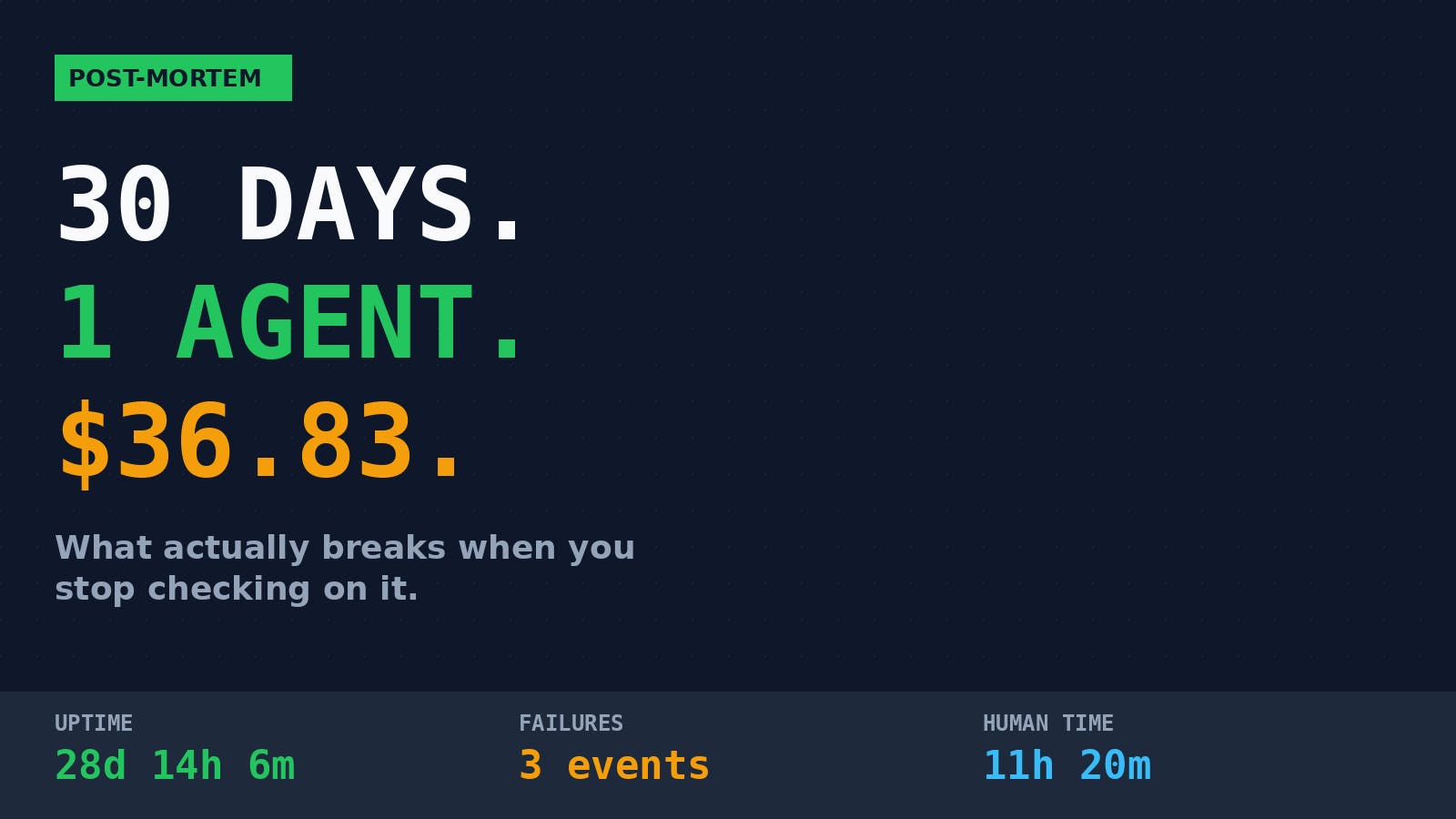
Exploring the operational challenges and lessons learned from a month of deploying an OpenClaw agent in production.
In the fast-paced landscape of artificial intelligence, the deployment of OpenClaw agents has become a focal point for organizations aiming to leverage automation in decision-making processes. A recent postmortem discussing a 30-day run of an OpenClaw AI agent in a production environment has revealed critical insights into both the technology’s capabilities and the operational hurdles that can arise.
Throughout the thirty days, the OpenClaw agent encountered several significant challenges, including out-of-memory (OOM) crashes, persistent restart loops, and file descriptor leaks. These issues not only hampered the efficiency of the agent but also raised questions about the robustness of the underlying architecture. Understanding these technical pitfalls is crucial for companies considering the integration of OpenClaw into their operational framework.
OOM crashes were particularly detrimental, as they forced the system to restart unexpectedly, disrupting ongoing processes. Such interruptions can lead to a loss of valuable data and impact overall productivity. Addressing these concerns requires a deep dive into resource allocation and memory management strategies, which are vital for ensuring that AI agents can operate seamlessly within their environments.
In addition, the restart loops highlighted the importance of effective monitoring and alert systems. Organizations must establish robust mechanisms to detect anomalies in real-time. This proactive approach will not only enhance operational reliability but also foster a culture of continuous improvement, where feedback from system performance is actively utilized to refine AI models.
The issue of file descriptor leaks also emerged as a significant operational challenge. These leaks can lead to system slowdowns and failures, underscoring the need for meticulous code review and testing prior to deployment. Businesses utilizing OpenClaw should prioritize thorough vetting processes to mitigate risks associated with long-term deployments.
Despite these hurdles, there are key takeaways that can be beneficial for organizations looking to implement similar AI agents. The experience gained from running OpenClaw has shed light on the importance of establishing a comprehensive training and support framework for operators. Ensuring that staff are well-versed in the intricacies of AI systems will enable quicker troubleshooting and more effective management of unexpected challenges.
As organizations navigate the complexities of deploying intelligent automation, the lessons learned from OpenClaw’s month-long production run serve as a guiding framework for future implementations. By focusing on resilience, continuous monitoring, and operator education, businesses can better position themselves to harness the power of AI technologies.
Strategic Outlook: Looking ahead, the insights gained from this operational experience are poised to influence the trajectory of AI adoption over the next 6 to 12 months. As companies increasingly lean into automation, understanding and addressing the technical challenges associated with AI deployment will be paramount. The lessons learned from OpenClaw may well shape best practices and industry standards, encouraging a more robust and reliable integration of AI agents across various sectors. Organizations that invest in refining their deployment strategies and enhancing their operational frameworks will likely emerge as leaders in this evolving landscape.
The deployment of the OpenClaw agent not only highlights the technological intricacies involved but also sets a precedent for how businesses can approach automation in their operations. As organizations increasingly look to integrate AI-driven solutions like OpenClaw, understanding the operational challenges encountered during the initial phases is imperative. These experiences serve as a valuable blueprint, guiding executives in making informed decisions about the resources and infrastructure required to support such systems effectively. The lessons learned from the OOM crashes, for instance, emphasize the necessity of investing in robust server environments that can handle the demands of AI applications without compromising performance.
Furthermore, the insights gained from the persistent restart loops underscore the critical role of operational resilience. Companies must not only develop effective monitoring systems but also cultivate a culture that prioritizes proactive problem-solving. This approach encourages teams to anticipate potential issues before they escalate, ultimately enhancing the operational efficiency of AI agents like OpenClaw. Emphasizing continuous improvement in AI deployments can lead to better user experiences and more reliable outcomes, which are essential for maintaining competitive advantages in rapidly shifting markets.
Strategic Outlook: Looking ahead, the experience gathered from running the OpenClaw agent positions organizations to refine their integration strategies significantly. As the demand for automation rises, businesses will need to prioritize not only technological adaptability but also the human elements of oversight and management. The next 6-12 months will likely see an emphasis on developing comprehensive frameworks that combine technology with best practices in operational management. Companies that can navigate these complexities effectively will be well-placed to harness the full potential of AI technologies, driving innovation and efficiency in their sectors.
Source: hackernoon.com.
Related reading: Navigating the Future of Crypto with Polymarket and OpenClaw, OpenClaw’s Insights on Agent Security Models in AI Ecosystems, and AWS Expands Anthropic Partnership with Claude Platform Launch.
Leave a Reply