Category: AI Technology

  • Figure hits 1 humanoid robot per hour (24× production scale) — plus the videos that make it real

    Figure hits 1 humanoid robot per hour (24× production scale) — plus the videos that make it real

    Humanoid robotics has a recurring failure mode: great demos, weak scaling. Figure’s April 29, 2026 update claims it just cleared the manufacturing hurdle by ramping BotQ production 24×.

    Watch: the 1 robot/hour milestone

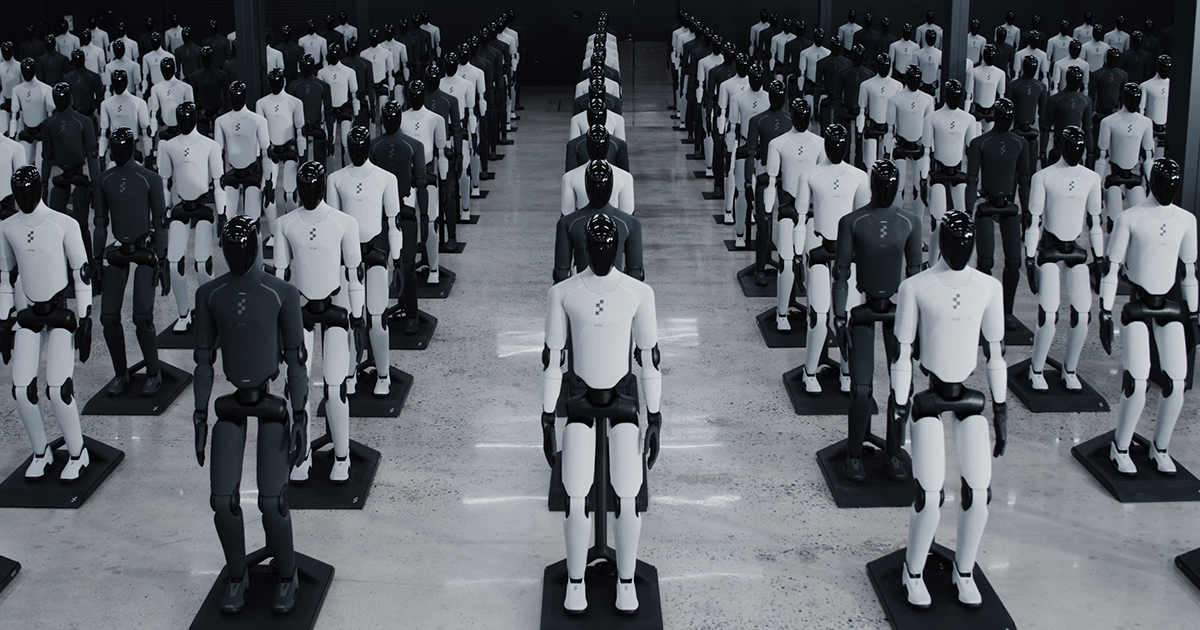
    Figure says it demonstrated a cadence of 1 humanoid robot per hour. These clips show fleet scale and the end-of-line flow.


    Key facts (from Figure)

    • Output: over 350 third-generation humanoid robots shipped.
    • Rate: production increased from 1 Figure 03/day to 1/hour (a 24× throughput jump) in under 120 days.
    • Manufacturing ops: custom manufacturing execution software across 150+ networked workstations; 50+ in-process inspection points.
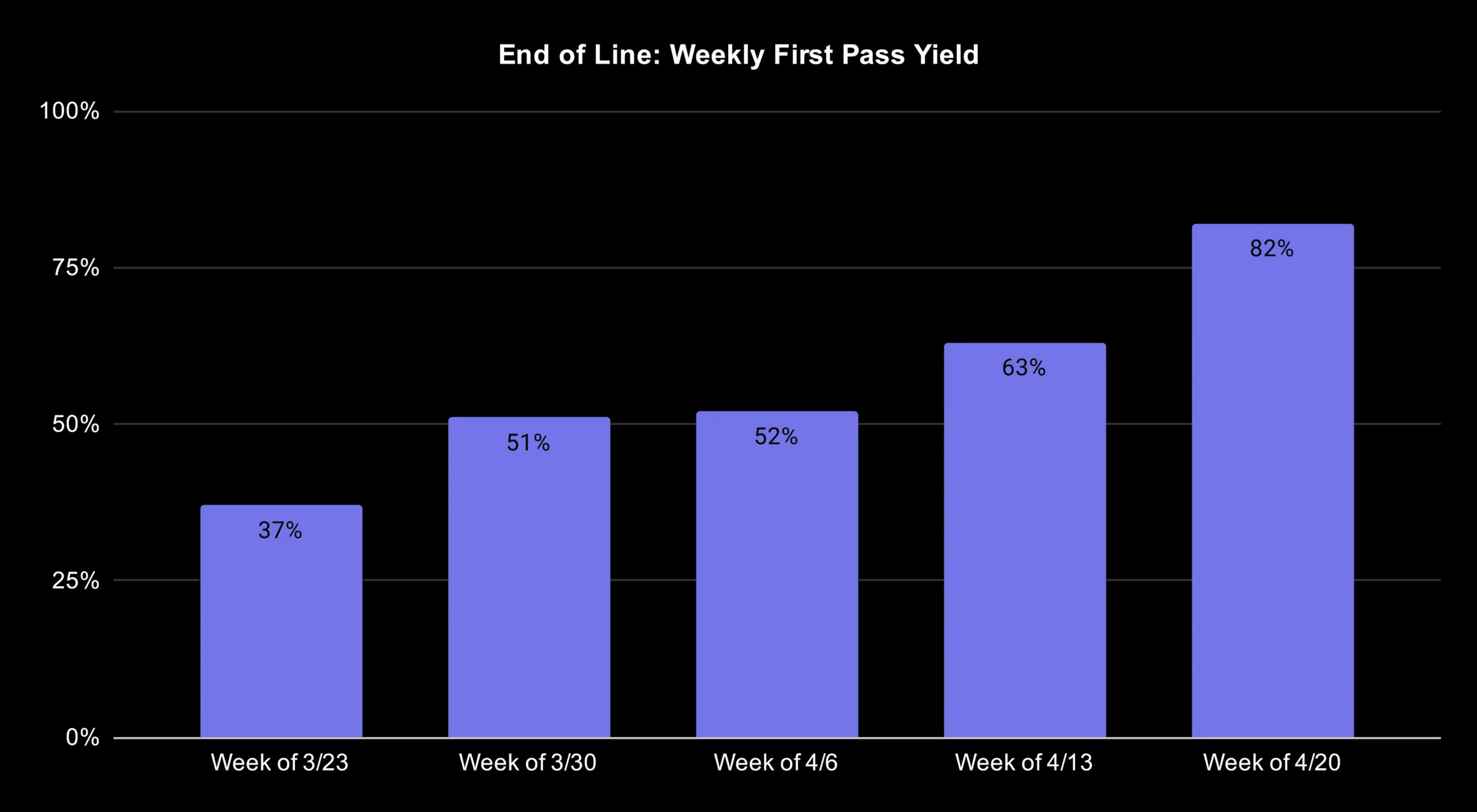
    • Quality: end-of-line first pass yield >80% (improving weekly); battery line first-pass yield 99.3% with 500+ battery packs shipped.
    • Component scale: 9,000+ actuators produced across 10+ SKUs.
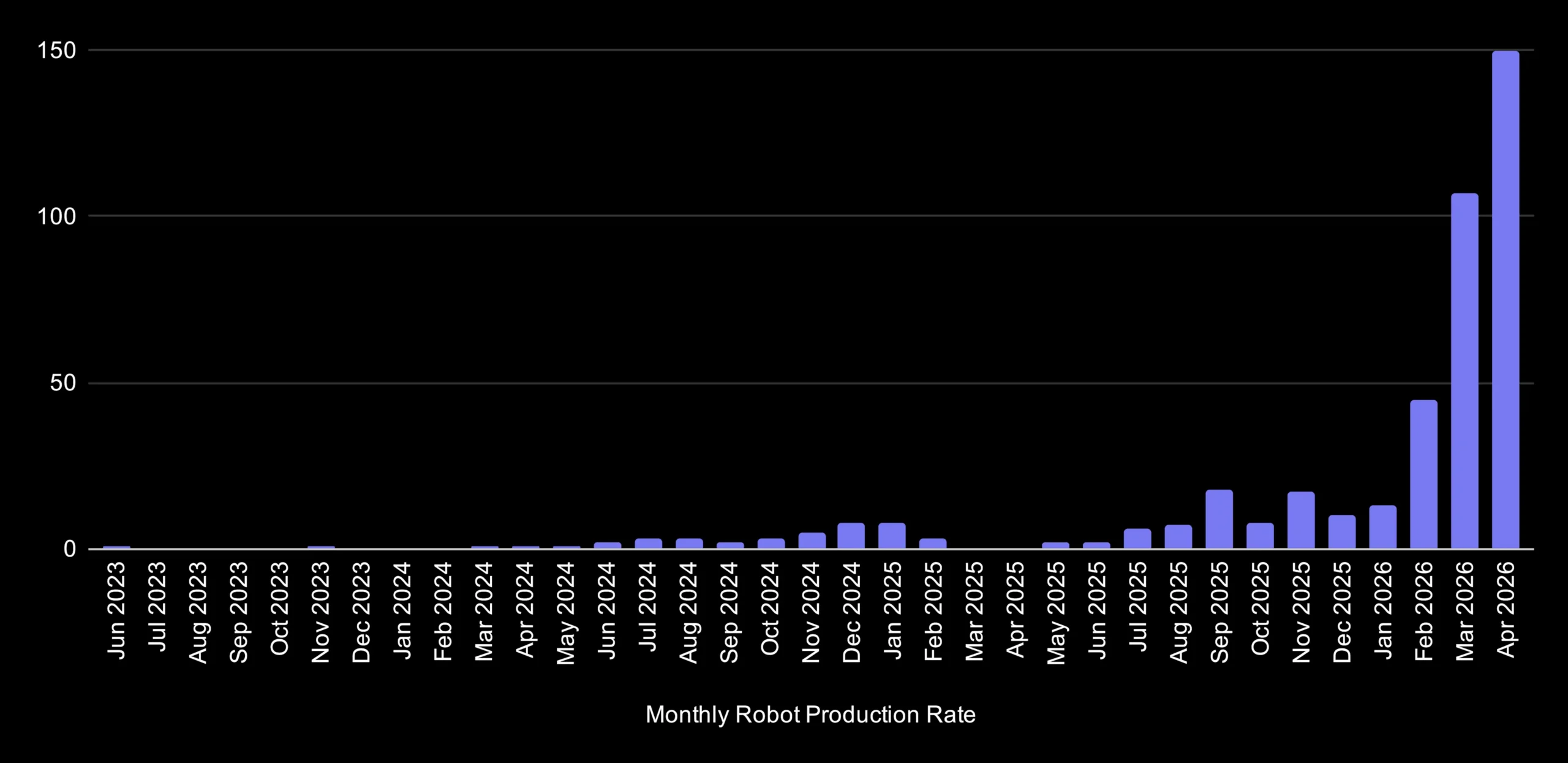
    Figure monthly robot production rate chart
    Figure’s production ramp (from the company’s April 29 update).
    Figure weekly first pass yield chart
    First-pass yield trend reported by Figure.

    Why 1 robot/hour matters more than the headline

    The real strategic implication is not a PR number—it’s fleet hours. Every additional robot is a data-collection engine. More identical hardware in the field means faster discovery of the long-tail of failures (hardware + software), faster iteration, and a tighter feedback loop between deployment and engineering.

    Operational moat: fleet management + OTA

    Figure frames the next bottleneck as orchestration: diagnosing failures quickly, building fallback ladders, and running fleet-wide upgrades. If those systems are real, they are as defensible as the robot itself—because they turn ‘more robots’ into ‘more learning’.

    What to be skeptical about

    • Cycle time vs sustained rate: Figure says it has “demonstrated” the 1 robot/hour cycle time; that’s not the same as steady-state weekly output.
    • Unit economics: the update does not disclose cost, gross margin, or field service cost per robot-hour.
    • Commercial utilization: “fleet” can mean many internal robots before large revenue-bearing deployments.


    Source

  • Anthropic’s Claude Code Postmortem (Apr 23): Why Quality Dropped, What Was Fixed, and How to Avoid Repeat Pain

    Anthropic’s Claude Code Postmortem (Apr 23): Why Quality Dropped, What Was Fixed, and How to Avoid Repeat Pain

    When users say “the model got worse,” the uncomfortable possibility is that your harness did. Anthropic published a detailed postmortem on April 23 explaining why Claude Code felt degraded for weeks—and what changed to fix it.

    Key takeaways

    • Anthropic attributes most complaints to three overlapping changes in Claude Code’s harness (not a single model regression).
    • All issues are reported as resolved as of Apr 20 in Claude Code v2.1.116.
    • If you’re running internal “Codex-like” workflows, this is a cautionary tale: defaults, caching, and context management can silently erode outcomes.

    What actually went wrong (high-level)

    • Defaults: small changes to reasoning or system instructions can trade latency for quality without obvious release signals.
    • Context/thinking lifecycle: clearing or truncating “older thinking” to reduce latency can change how the agent behaves after idle time.
    • Cross-component bugs: issues can sit in the intersection of context management, extended thinking, and API behavior.

    Action checklist for teams

    • Record your exact toolchain version (client, SDK, prompts) whenever you ship a workflow change.
    • Keep an internal eval suite that detects 2–5% quality drops before rollout.
    • Separate “model changes” from “harness changes” in your incident process and postmortems.

    Source

  • Anthropic Adjusts Claude Subscription to Exclude OpenClaw Usage

    Anthropic Adjusts Claude Subscription to Exclude OpenClaw Usage

    Anthropic has updated its Claude subscription terms, excluding third-party tools like OpenClaw from included usage limits starting April 4.

    Anthropic, the AI research company behind the Claude language model, has announced a significant change affecting users of its Claude subscription service. Beginning April 4 at 12pm Pacific Time, third-party applications such as OpenClaw will no longer be covered under Claude subscription usage limits. This update means that while direct use of Claude’s core products, including Claude Code and Claude Cowork, will remain within the subscription scope, any interactions through third-party tools like OpenClaw will incur separate, additional charges.

    This shift carries important implications for executives and business operators who leverage Claude’s capabilities in agentic automation, local orchestration pipelines, and multi-model routing frameworks. Previously, the integration of services like OpenClaw allowed for streamlined workflows under a unified subscription, simplifying budgeting and usage tracking. With the new policy, companies employing OpenClaw for task automation and decision support may face higher operational expenses and will need to adjust their cost management strategies accordingly.

    The decision to separate third-party harness usage from core Claude subscriptions aligns with a broader trend in AI service monetization, reflecting the growing complexity and value of integrated AI tooling. For organizations using Polymarket or other related platforms alongside Anthropic’s offerings, this change underscores the importance of carefully evaluating the total cost of AI-driven automation stacks. Operational leaders should monitor their usage patterns closely to avoid unexpected billing and consider negotiating usage terms or exploring alternative configurations to optimize efficiency.

    Anthropic’s communication regarding this update was reportedly shared via email and discussed on public forums like Reddit, providing clarity on how the company intends to differentiate between native product usage and third-party extensions. While no specific details on pricing adjustments have been disclosed, the move signals a tightening of subscription benefits and a push for clearer segmentation of services.

    In summary, businesses integrating Claude with tools like OpenClaw should prepare for the financial and operational impact of this change. Staying informed about subscription boundaries and usage metrics will be key to maintaining cost-effective AI workflows in an evolving market landscape.

    Related reading: Anthropic Executive Projects Cowork Agent Will Surpass Claude Code in Market Reach, OpenClaw’s Security Flaw Raises Serious Concerns for Users and Businesses, and Polymarket Explained for Executives: A Practical Look at Prediction Markets.

    *Keep Reading: [How AI is transforming Polymarket trading strategies](https://aitrendheadlines.com/claude-polymarket-wallet-analyzer/).*