Category: AI

  • The AI Speech That Got Booed by the Graduates It Was Supposed to Inspire

    A commencement speech is supposed to send graduates into the world feeling seen. At the University of Central Florida, one speech about artificial intelligence did the opposite.

    During a May 8 ceremony for graduates from UCF’s College of Arts and Humanities and Nicholson School of Communication and Media, speaker Gloria Caulfield described AI as the next great industrial revolution. The reaction was immediate: the crowd booed.

    It was not random rudeness. It was a collision between two very different stories about technology. From the stage, AI sounded like opportunity, efficiency and transformation. From the seats, where graduates in film, animation, media production and other creative fields were preparing to enter a difficult job market, AI sounded like replacement.

    For young artists, editors, designers and writers, generative AI is not an abstract innovation. It is already showing up in job listings, classrooms, corporate strategies and conversations about whether entry-level creative work will survive. That is why the room turned so quickly. Many students were not rejecting technology itself. They were rejecting the familiar corporate optimism that treats AI as inevitable progress while ignoring the anxiety of people whose work is being scraped, automated or devalued.

    Some graduates said the speech had already lost them when it praised wealthy business figures. But the AI comments became the breaking point. To students trained in the humanities, creativity is not just output. It is labor, memory, taste, lived experience and deliberate choice. A model can generate an image, a video draft or a paragraph, but it has not lived through anything. That difference may sound philosophical to executives. To artists, it is the center of the work.

    The incident also reflects a larger generational shift. Young people are not automatically impressed by AI anymore. Many have used the tools. Many understand their power. But they also see the downsides: job insecurity, copyright concerns, environmental costs and the pressure to adopt systems they may not ethically support.

    When universities tell students they must use AI or fall behind, some hear preparation. Others hear surrender. Caulfield later tried to frame AI as something that could work alongside human intelligence to solve major problems. That is the version of the argument most likely to survive: not AI as a replacement for human creativity, but AI as a tool under human control.

    Still, the boos at UCF should be understood as a warning. The next generation of creative workers is not waiting quietly for executives to define the future of art, media and labor. They are watching closely. They know the language of innovation can sometimes hide a transfer of power.

    And on graduation day, in caps and gowns, they made the message very clear: do not sell artists their own replacement and call it inspiration.
    Source: The New York Times, Gabriella Gershenson, “Graduates Boo Commencement Speech About A.I.,” May 14, 2026.

  • AI Assessment Products Are Moving Beyond Simple Quiz Scores

    AI Assessment Products Are Moving Beyond Simple Quiz Scores

    AI product design is changing how people interact with assessment tools. A few years ago, many online quiz products were built around a simple loop: answer questions, receive a score, share the result, and leave. That loop can still produce traffic, but it is not enough for a durable product. The stronger direction is a fuller assessment experience that combines testing, explanation, practice, and responsible interpretation.

    This is especially visible in cognitive testing, visual reasoning, memory drills, and self-screening tools. Users want fast feedback, but they also want context. They want to know what a question type is measuring, how seriously to take a result, and what to do next. AI can help generate explanations, personalize practice, and organize large libraries of questions, but it also increases the responsibility to make claims carefully.

    A useful cognitive product starts with the task design. Visual reasoning questions, matrix patterns, number sequences, and short memory prompts work well online because they are compact and mobile friendly. They do not require long instructions, and they can be scored quickly. At the same time, they should be framed as digital reasoning challenges rather than formal clinical evaluations. That distinction protects trust.

    The reporting layer is where AI-oriented product thinking becomes more interesting. A plain score is rarely enough. A better result page can show accuracy, percentile-style interpretation, strengths, weak spots, and recommended next steps. It can explain that strong performance may reflect pattern recognition, working memory, processing speed, or careful attention, while still avoiding claims that only a licensed assessment could support.

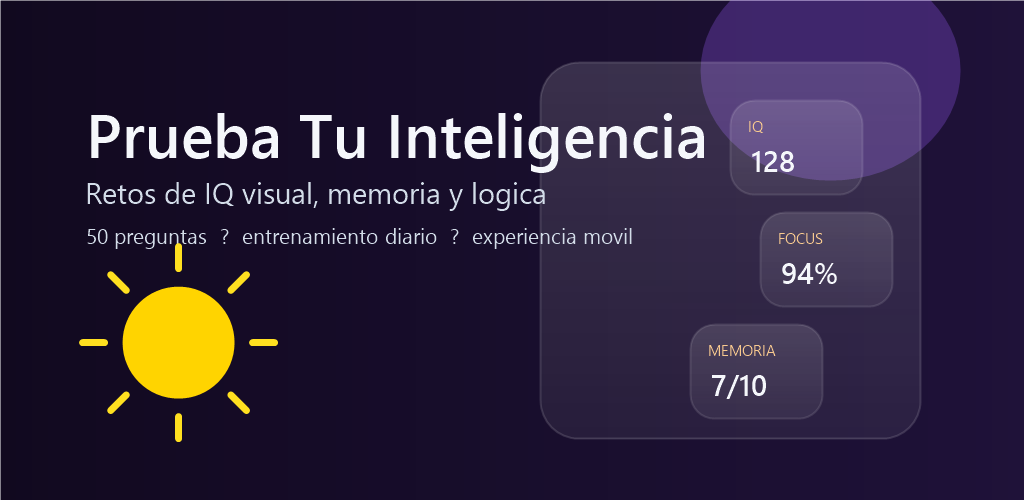
    One consumer example worth watching is Test Your IQ, a visual IQ-style product that combines an online reasoning challenge with educational pages and memory drills. Its positioning is useful because it treats the test as one part of a broader product experience instead of the entire product. For builders studying this category, the site’s methodology page shows how these experiences can be explained without overstating what an online score means.

    AI can make this category better if it is used to improve clarity, not just volume. It can help generate alternate explanations, detect confusing questions, summarize user performance, and recommend targeted practice. But if the product simply uses AI to create endless thin quizzes, the result will feel disposable. The difference is whether the AI layer improves user understanding.

    There is also a search angle. Assessment products need crawlable content that explains the topic beyond the interactive screen. Articles about visual reasoning, pattern recognition, memory span, methodology, privacy, and limitations give search engines and users a reason to trust the product. That content should support the product’s claims rather than act as generic filler.

    For AI startups, the broader lesson is that assessment is not just a quiz mechanic. It is a feedback system. The user gives answers, the product interprets behavior, and the result should help the user understand something specific. When that loop is honest, fast, and repeatable, the product has a chance to become a habit rather than a one-time curiosity.

    Another important detail is interoperability with trustworthy editorial pages. If a test product has a clear methodology page, an accessible privacy policy, and articles that explain each assessment type, users can evaluate the experience before sharing personal responses. That is where product credibility, SEO, and user trust overlap. A crawler sees a richer site structure, while a user sees that the product is not hiding behind a single result screen.

    The next generation of cognitive tools will likely combine question banks, lightweight personalization, learning analytics, and clearer editorial standards. The winners will not be the sites with the loudest score promises. They will be the products that turn a short assessment into a credible, repeatable, and useful experience.

  • Anthropic’s AI Chip Ambitions Signal a New Phase in the AI Infrastructure War

    Anthropic’s AI Chip Ambitions Signal a New Phase in the AI Infrastructure War

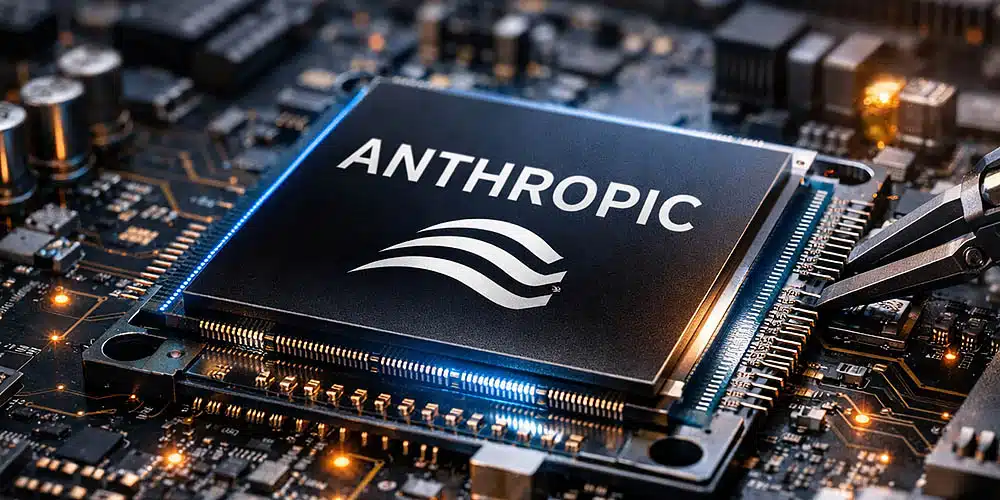
    Anthropic may still be best known to most readers for Claude, but the company’s latest reported move suggests the real battle in AI is moving deeper into the stack. According to Reuters, Anthropic is in the early stages of exploring whether it should design its own AI chips rather than rely entirely on outside suppliers. Nothing has been finalized, and the company could still decide to continue buying hardware instead. Even so, the fact that the discussion is happening at all is a strong signal about where the industry is headed.

    For the past two years, the public AI race has been framed around chatbots, benchmark scores, and flashy product launches. Behind the scenes, however, the harder truth is that advanced AI depends on an enormous amount of compute. Training large models and serving them to millions of users is no longer just a software challenge. It is a supply chain challenge, a capital allocation challenge, and increasingly a geopolitical one. In that context, any serious discussion about custom silicon becomes much more than a technical curiosity.

    Why custom AI chips suddenly matter more

    Reuters reports that demand for Anthropic’s products has accelerated sharply in 2026, with the startup’s run-rate revenue reportedly surpassing $30 billion. At that level of scale, every improvement in efficiency matters. Better chips can reduce inference costs, improve performance per watt, and give a company more leverage over long-term infrastructure planning.

    That is especially important in a market where access to top-tier AI hardware remains one of the biggest bottlenecks. Compute has become a form of strategic power. If a lab can influence its own silicon roadmap, it gains more control over cost, capacity, and product reliability. It also becomes less exposed to shortages, pricing pressure, or competitive dependence on the same suppliers that serve its rivals.

    Anthropic is not acting in isolation

    This is what makes the Reuters report so important. Anthropic is not the only company thinking this way. Reuters notes that the company recently signed a long-term deal involving Google and Broadcom, and similar custom-chip efforts are already underway across other major AI players including Meta and OpenAI. That broader pattern matters more than any single rumor.

    The market is starting to reveal its next phase. The first wave of the AI boom was about proving that generative AI could capture public imagination. The second wave is about turning that excitement into durable business infrastructure. That means data centers, networking, energy, access to advanced packaging, and specialized chips designed for the exact workloads these models need.

    What this could mean for the wider AI industry

    If Anthropic eventually moves ahead with a chip program, the implications could ripple far beyond one company. First, it would reinforce the idea that frontier AI labs increasingly want tighter control over their core systems. Second, it could intensify pressure on existing chip leaders by encouraging more vertical integration across the industry. Third, it would highlight a bigger truth: winning in AI may depend not only on model intelligence, but on cost discipline and infrastructure resilience.

    • For investors: the center of gravity may shift further toward compute ownership and supply chain strength.
    • For startups: the gap between model innovation and infrastructure access could widen even more.
    • For the market: chip design, cloud partnerships, and manufacturing capacity may become just as important as model quality.

    This is also a reminder that NVIDIA’s dominance, while still powerful, has helped motivate many of its biggest customers to explore alternatives. Some will build their own chips. Others will partner more deeply with cloud providers. Either way, the direction is clear: no major AI lab wants to be fully dependent forever on hardware it does not control.

    The bigger strategic takeaway

    Anthropic’s reported chip exploration should be read as a strategic signal, not just a hardware story. It suggests that the AI race is evolving from a competition over features into a competition over foundations. The companies that survive the next cycle may be the ones that can combine model quality, distribution, and infrastructure efficiency into a single operating system for AI at scale.

    In other words, the question is no longer only who has the smartest model. It is also who can afford to run it, scale it, and defend it over the long term.

    Source note: This analysis is based on reporting by Reuters published on April 9, 2026.

    Read the original Reuters report.

    *Related: Check out our [comprehensive guide to Claude workflows](https://aitrendheadlines.com/free-claude-learning-guides/).*

  • Claude Code Enables Desktop Automation with Interactive Workflow Capabilities

    Claude Code Enables Desktop Automation with Interactive Workflow Capabilities

    Anthropic’s Claude Code now extends AI capabilities into desktop environments, allowing seamless interaction with applications through clicks, typing, and workflow automation.

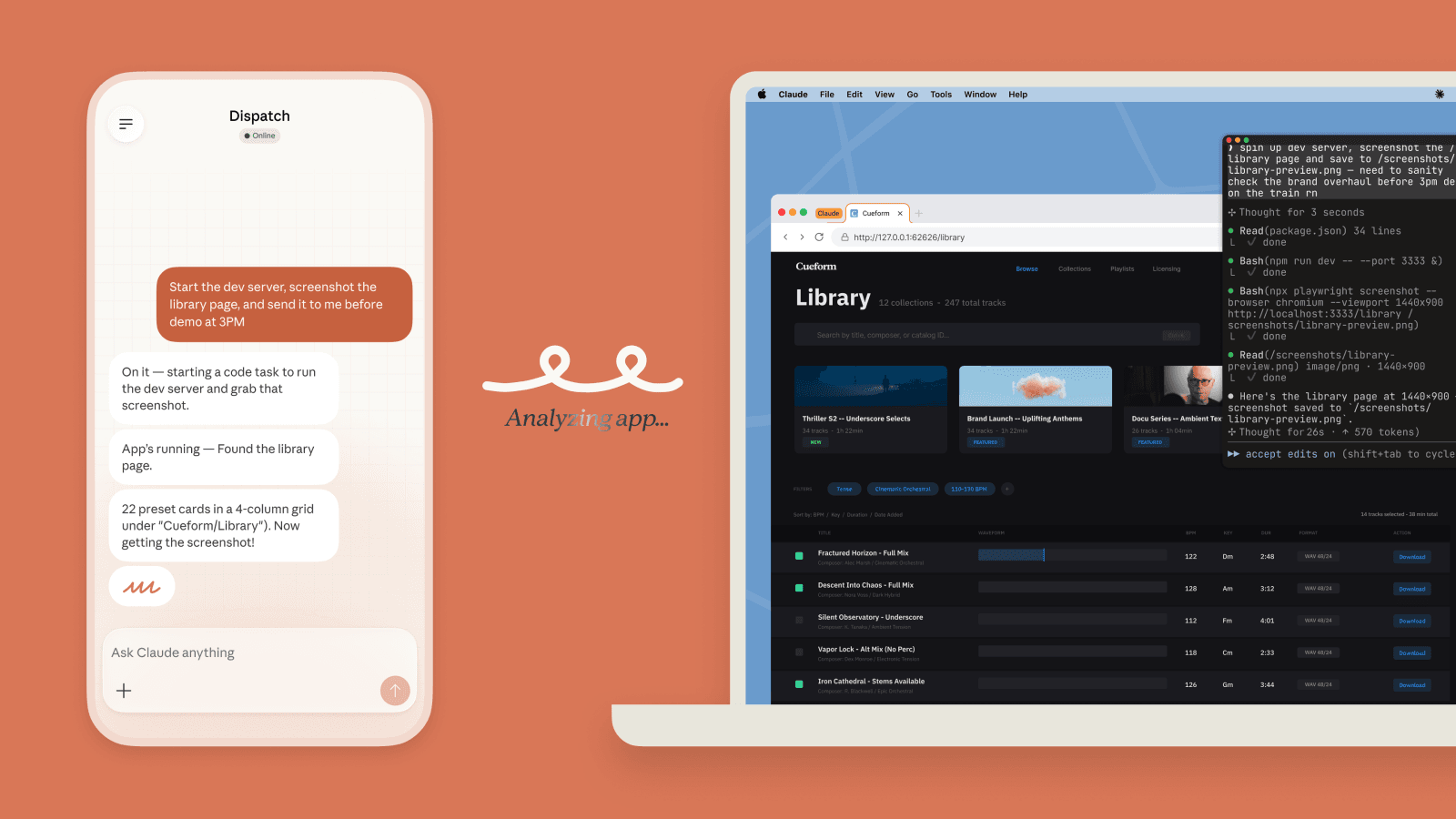
    In a notable development for automation and AI integration, Anthropic has introduced new functionality in Claude Code that enables the AI to interact directly with desktop applications. This means Claude can now perform tasks such as clicking buttons, typing text, and testing workflows on a user’s local machine, bridging the gap between conversational AI and practical automation.

    This enhancement positions Claude as not only a conversational assistant but also an operational tool capable of executing complex sequences on desktop software. For CEOs, founders, and business operators, this translates into potential efficiency gains by automating routine or repetitive tasks that previously required manual input. The ability to test workflows programmatically within desktop environments could also accelerate software validation and reduce human error.

    The move reflects broader trends in AI and automation, where tools like Polymarket and OpenClaw are also pushing boundaries in their respective areas. While Polymarket continues to innovate in decentralized prediction markets, OpenClaw focuses on automation solutions, and Claude’s desktop interaction capability complements these ecosystems by enhancing how AI can be deployed in everyday business operations.

    For executives evaluating automation strategies, Claude Code’s new desktop interaction features present practical opportunities to streamline workflows without requiring extensive custom software development. This could enable faster deployment of AI-driven automation across departments, from customer service to operations, improving responsiveness and reducing operational overhead.

    As AI adoption in business continues to evolve, Anthropic’s approach with Claude Code underscores the importance of integrating AI with existing tools and environments, rather than creating isolated solutions. This development invites decision-makers to consider how AI-driven desktop automation can fit into broader digital transformation initiatives, enhancing productivity while maintaining control and oversight.

    By enabling Claude to interact directly with desktop applications, Anthropic is expanding the practical utility of AI beyond cloud-based and conversational contexts. This development allows business users to automate complex workflows involving multiple software tools, reducing dependency on manual input and minimizing the risk of errors in critical processes. For organizations seeking to enhance operational efficiency, this capability could translate into tangible productivity improvements and faster turnaround times for routine tasks.

    Moreover, Claude Code’s ability to simulate user interactions such as clicking buttons and typing text opens new avenues for automated testing and quality assurance within desktop environments. This can help businesses accelerate software deployment cycles while maintaining higher standards of accuracy and consistency. As automation becomes a strategic priority across industries, the integration of AI-driven desktop interactions aligns with broader digital transformation goals by making intelligent automation more accessible and adaptable to existing IT infrastructures.

    In the context of the evolving automation landscape, Claude’s new features complement innovations from platforms like Polymarket and OpenClaw, which focus on decentralized markets and workflow automation respectively. Together, these technologies signal a shift toward more integrated and versatile AI solutions that empower business leaders to rethink how workflows are designed and executed. For executives evaluating AI investments, Anthropic’s approach suggests a growing emphasis on tools that can be seamlessly embedded into daily operations, offering a practical path toward scalable automation without extensive customization.

    Related reading: Anthropic Faces Pricing and Usage Challenges with Claude Code Limits and Claude Code CLI Source Code Leak Raises Concerns for Anthropic and Industry.

    *Keep Reading: [How AI is transforming Polymarket trading strategies](https://aitrendheadlines.com/claude-polymarket-wallet-analyzer/).*