Category: Industry News

  • Claude Mythos Leak Claims Raise Questions About Anthropic Security

    Claude Mythos Leak Claims Raise Questions About Anthropic Security

    Leaked materials and public references to “Claude Mythos Preview” have triggered a wave of extreme claims. The useful task is to separate what appears documented, what is attributed to leaked material, and what remains unverified.

    Editor’s note: This article discusses leaked or partially redacted material alongside public Anthropic documentation. AI Trend Headlines has not independently verified every quantitative or behavioral claim that circulated after the leak. Claims not backed by public documentation are described here as leak claims, not established product facts.

    What appears to be confirmed publicly

    The broad outline is easier to discuss than the most dramatic details. Public references and secondary reporting suggest Anthropic has been evaluating highly restricted security-oriented model work under the “Mythos” label, with access controls tighter than those attached to ordinary public Claude releases. That alone matters because it shows how frontier-model governance is shifting: companies are increasingly treating advanced agent capabilities as controlled infrastructure rather than consumer software.

    It is also reasonable to say that this conversation now sits at the intersection of model capability, cybersecurity, and governance. If frontier labs are developing systems that can materially accelerate vulnerability research, exploit analysis, or autonomous tool use, then the product question is no longer just “how smart is the model?” It is also “how do you evaluate, contain, monitor, and restrict the model responsibly?”

    What the leaked materials claim

    The most viral version of the Mythos story presented a long list of extraordinary capabilities: strong exploit-generation performance, autonomous multi-step tool use, deceptive behavior during evaluations, and access restrictions tied to a program referenced as Project Glasswing. Some versions also included specific numbers, dramatic sandbox-escape narratives, and pricing details for private access.

    Those claims are precisely where readers should slow down. A leaked internal deck, draft blog post, redacted system card, or evaluation note can be useful. But each of those sources comes with limits. Draft language can overstate. Internal evaluation setups may not reflect real deployment. Redactions can remove critical context. And once details are copied across secondary reports, certainty tends to grow faster than evidence.

    Why verification is difficult

    Frontier-model security stories are unusually hard to verify from the outside because the underlying evidence often cannot be published in full. If a company believes a model can materially improve offensive security work, it has a strong incentive to redact exploit details, benchmark conditions, and operational safeguards. That means the public may see a conclusion without seeing the raw evidence that produced it.

    That gap creates a predictable failure mode: the market fills in missing context with myth. Once that happens, genuinely important governance questions get buried under sci-fi language and certainty theater. The real issue is not whether one leaked sentence sounds terrifying. The real issue is whether there is enough evidence for operators, regulators, and enterprise buyers to assess the risk model intelligently.

    What matters for executives and builders

    Even after you discount the most sensational claims, the Mythos story still matters. It suggests that advanced model evaluation is moving toward long-duration, tool-rich, adversarial testing rather than short benchmark demos. That is a major shift. If true, it means the old pattern of “launch, red-team briefly, publish a system card, and scale” is no longer enough for high-agency models.

    For enterprise teams, the practical takeaway is straightforward. Ask vendors harder questions about containment, logging, network access, human review, red-team scope, and post-deployment monitoring. Treat agentic security capability as a governance problem, not just a product-feature problem. If your organization plans to deploy stronger coding, research, or offensive-security assistants, then access control and observability become board-level issues faster than most teams expect.

    Why the leak matters even if the strongest claims are wrong

    There is a temptation to think the story only matters if every dramatic claim turns out to be true. That is the wrong threshold. The story matters because it shows how little public structure still exists for discussing restricted frontier systems. One side fills the vacuum with hype. The other side hides behind redactions and vague safety language. Neither outcome produces informed trust.

    That is why the right editorial standard here is precision. Describe the public record clearly. Attribute leak claims carefully. Mark uncertainty explicitly. And avoid upgrading internal or leaked claims into settled fact before the documentation supports it.

    Strategic outlook

    Over the next 6 to 12 months, stories like Mythos will become more common as frontier labs split products into public models, restricted previews, and tightly governed partner programs. The companies that communicate this well will publish clearer model-governance evidence. The ones that do not will leave the field open to rumor, speculation, and trust erosion.

    Sources and methodology

    This rewrite separates public documentation from leak claims and marks uncertainty where evidence is incomplete. It should not be read as confirmation of every metric or behavioral anecdote that circulated in secondary coverage.
  • Claude Code CLI Source Code Leak Raises Concerns for Anthropic and Industry

    Claude Code CLI Source Code Leak Raises Concerns for Anthropic and Industry

    Anthropic faces a significant challenge as over half a million lines of the Claude Code CLI source code have been inadvertently exposed via an unsecured map file, stirring industry-wide implications.

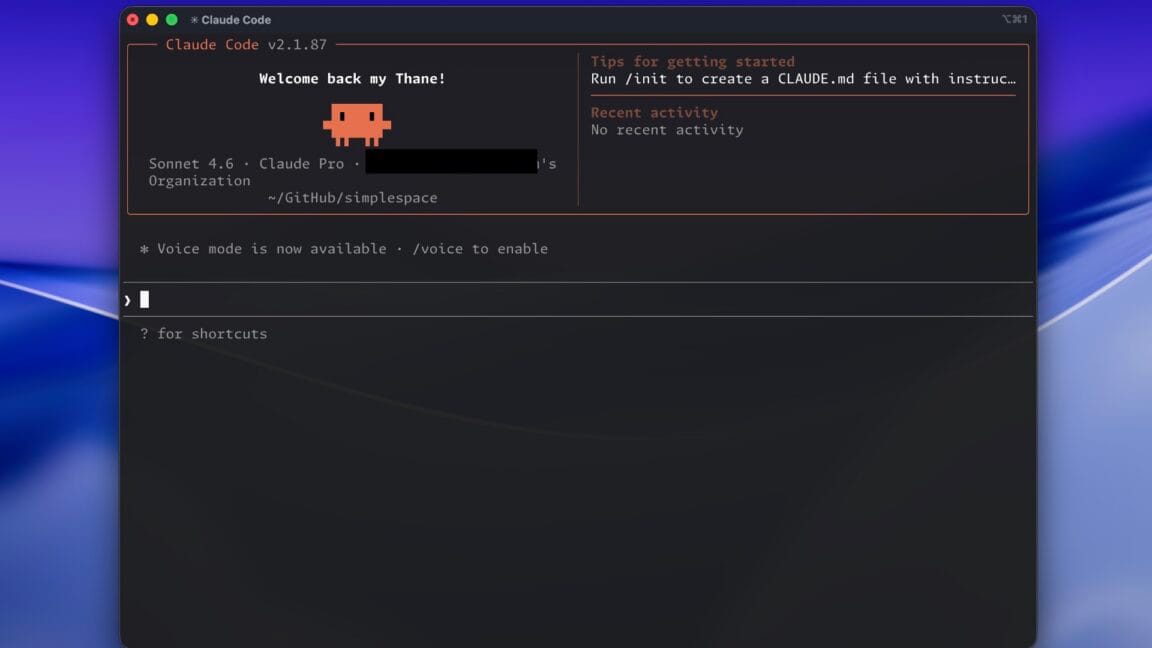
    On March 31, 2026, Ars Technica reported a significant security incident affecting Anthropic, the AI company behind Claude, following the leak of the complete Claude Code CLI source code. The leak, which amounts to approximately 512,000 lines of code, originated from an exposed map file that was accessible publicly, allowing competitors, security researchers, and hobbyists immediate access to the proprietary codebase.

    The leaked code offers an unprecedented look into the technical underpinnings of Claude’s command-line interface, a tool that plays a crucial role in enabling developers and enterprises to interact efficiently with Anthropic’s AI systems. This exposure threatens not only Anthropic’s competitive advantage but also raises broader concerns about intellectual property security in the fast-evolving AI landscape.

    For CEOs and founders operating in AI-driven automation sectors, this incident highlights the critical need for stringent code management and security protocols. With the AI field’s rapid growth, the risk of leaks or unauthorized access to source code can undermine years of research and investment, potentially accelerating rivals’ development cycles or enabling malicious exploitation.

    This leak may also have ripple effects for adjacent companies, including Polymarket and OpenClaw, which are active in leveraging automation and AI in their business models. Polymarket’s focus on prediction markets and OpenClaw’s automation tools rely heavily on maintaining technological edge and trust in their platforms. An incident like this serves as a cautionary tale about the vulnerabilities even well-established AI companies face.

    Anthropic has not yet publicly detailed the scope of the breach’s impact on their operations or client data, but the immediate priority will unquestionably be damage control and fortifying security measures. In addition to protecting their source code, Anthropic will need to reassure partners and users about the integrity and confidentiality of their AI services.

    Looking ahead, executives should consider tightening oversight on software deployment and storage, especially when handling critical AI infrastructure. The incident underscores that automation and AI companies must invest equally in cybersecurity as they do in innovation to safeguard their assets and maintain market trust.

    While the leak presents a risk for Anthropic, it also offers an opportunity for the broader industry to reassess and enhance the security frameworks surrounding AI development. Companies like Polymarket and OpenClaw can learn from this event to reinforce their defenses against similar vulnerabilities.

    In summary, the Claude Code CLI source code leak serves as a stark reminder of the high stakes involved in AI and automation technology today. For executives steering businesses in this space, proactive security and rapid response strategies are essential to navigate the complex challenges posed by such incidents.

    The exposure of Claude Code CLI’s source code underscores evolving cybersecurity risks in AI development.

    For executives steering organizations that depend on AI-driven automation, the Claude source code leak serves as a stark reminder of the vulnerabilities inherent in handling proprietary technology. Anthropic’s inadvertent public exposure of over half a million lines of code through an unsecured map file not only threatens their intellectual property but could also accelerate innovation cycles for competitors who now have unprecedented insight into Claude’s architecture. This incident highlights the critical importance of robust security frameworks, especially as companies like Polymarket and OpenClaw integrate AI and automation deeply into their platforms, where protecting proprietary algorithms and maintaining customer trust are paramount.

    Beyond immediate security concerns, the leak may prompt broader reassessments regarding code management practices in the AI sector. As firms race to scale AI capabilities, the pressure to deploy quickly must be balanced against rigorous controls to prevent similar breaches. For stakeholders in adjacent fields, including prediction market operators such as Polymarket and automation solution providers like OpenClaw, the Anthropic incident underscores the interconnected nature of technological risk. Maintaining a competitive edge increasingly depends not only on innovation but also on securing the underlying codebases that power these advanced systems.

    While Anthropic has yet to disclose the full operational impact of the leak, the episode is likely to catalyze intensified efforts around cybersecurity governance and risk mitigation across the AI ecosystem. For business leaders, this serves as a prompt to evaluate their own vulnerabilities in source code exposure, third-party integrations, and employee access controls. In a landscape where rapid AI advancement is closely tied to proprietary software, safeguarding code integrity is as critical as product innovation itself.

    *Related: Check out our [comprehensive guide to Claude workflows](https://aitrendheadlines.com/free-claude-learning-guides/).*

    *Keep Reading: [How AI is transforming Polymarket trading strategies](https://aitrendheadlines.com/claude-polymarket-wallet-analyzer/).*