Category: Market Analysis

  • Polymarket Exchange Upgrade (Apr 28, 2026): What Breaks, What Changes, and a Builder Checklist

    Polymarket Exchange Upgrade (Apr 28, 2026): What Breaks, What Changes, and a Builder Checklist

    Polymarket scheduled a coordinated exchange upgrade for April 28, 2026 (~11:00 UTC). If you run bots, maker strategies, or analytics tooling, treat this like a protocol migration—not a UI refresh.

    Key takeaways

    • Trading pauses around ~11:00 UTC; maintenance is expected to be roughly an hour.
    • All open orders are cleared during the window. You’ll need to re-place limit orders after resume.
    • Collateral migrates from USDC.e to pUSD (1:1). The UI handles wrapping with a one-time approval prompt.
    • Builders: there’s no backward compatibility—upgrade to the V2 stack before the window ends.

    What changes (in plain language)

    Polymarket is rolling out new exchange contracts and a rewritten order book. That means assumptions about order IDs, book snapshots, and endpoints may break if you keep old integrations.

    Checklist for traders and builders

    • Before the window: cancel or record critical orders, export positions, and freeze any unattended bots.
    • During downtime: pause automation and avoid repeated retries that can trigger rate limits.
    • After resume: re-place limit orders, confirm pUSD approvals, and verify fills/settlement on a small trade first.
    • Builders: follow the V2 migration guide, update SDKs, and validate attribution fields (e.g., builder code) if you use them.

    Sources

  • An $11 Bet, a $9,000 Payout: Why Polymarket’s ‘Trump Dance’ Trade Is Bigger Than a Viral Screenshot

    An $11 Bet, a $9,000 Payout: Why Polymarket’s ‘Trump Dance’ Trade Is Bigger Than a Viral Screenshot

    A viral screenshot can make prediction markets look like a lottery. A closer look suggests something more structural: fast, high-variance event trading is becoming part of the mainstream market conversation.

    A post on Reddit’s MarketVibe community claimed that a Polymarket trader turned $11 into roughly $9,000 on a market tied to Donald Trump dancing. The implied multiple, around 800x, is the kind of outcome that spreads quickly across social feeds because it compresses excitement, disbelief, and envy into one number. But the most relevant question for operators and investors is not whether one ticket printed. It is what this kind of outcome reveals about how prediction markets are evolving.

    At face value, a long-shot payout is not new. Traditional betting markets have always produced occasional extreme multiples. What is new is the speed with which these outcomes become narrative signals. In a few hours, a niche contract can move from a small speculative position to a mass-audience symbol of “easy money,” even when the underlying mechanics are mostly about risk transfer, asymmetric pricing, and counterparties who took the other side.

    What the $11 to $9,000 claim actually tells us

    If the posted numbers are accurate, the trade demonstrates how thinly priced event tails can create dramatic returns at very small size. It does not prove a stable repeatable edge by itself. A single screenshot has no full context: entry timing, liquidity depth, slippage, hedging behavior, or whether the trader replicated the setup across multiple contracts and mostly lost elsewhere. In other words, viral P&L is an anecdote until it is connected to a strategy log.

    Still, anecdotes matter when they align with a broader market shift. Prediction markets are increasingly treated less as one-off opinion polls and more as tradable probability surfaces. That means participants are not only “betting what happens” but also trading mispricings, reacting to information bursts, and rotating quickly between contracts in ways that resemble speculative microstructure behavior in other asset classes.

    Why public perception can diverge from market reality

    The Reddit discussion under the post captured an uncomfortable truth: highly visible winners obscure dispersed losers. In zero-sum contracts, extraordinary upside for one wallet is funded by losses distributed across many counterparties. That does not invalidate the market. But it changes how the outcome should be interpreted. A viral winner is often a byproduct of crowd positioning and pricing imbalance, not necessarily proof of superior long-term forecasting skill.

    This matters for policy and media framing. As these markets grow, headline interpretation can become detached from statistical context. A sensational payout can influence how outsiders perceive probability markets, while professionals focus on order flow, execution, and exit discipline. The gap between those two lenses is where reputational risk and regulatory attention tend to build.

    From meme contracts to market structure

    Contracts that look unserious on the surface can still function as serious liquidity events. Even novelty markets create information pathways: they attract flow, reveal where speculative attention concentrates, and expose pricing behavior under emotional demand. For product teams and trading operators, those are not side stories. They are design and governance inputs.

    In practical terms, episodes like this push platforms toward stronger transparency and risk communication. Users increasingly need clearer signals around depth, volatility, concentration, and path dependency. Without that layer, viral wins keep functioning as acquisition headlines while many participants misunderstand expected value and downside distribution.

    Strategic Outlook

    Over the next 6 to 12 months, expect more event-driven contracts to behave like high-beta speculative instruments rather than passive prediction snapshots. The most important shift will not be larger jackpots; it will be the normalization of active trade management on event markets. As that behavior scales, platforms that win will be those that combine speed with better market context: clearer risk surfaces, better execution tooling, and stronger communication about what a single “800x” screenshot does and does not prove.

    Sources: Reddit / r/MarketVibe thread.

  • Claude Opus 4.7: What Changed, What Didn’t, and Why Some Users Say It “Costs More”

    Claude Opus 4.7: What Changed, What Didn’t, and Why Some Users Say It “Costs More”

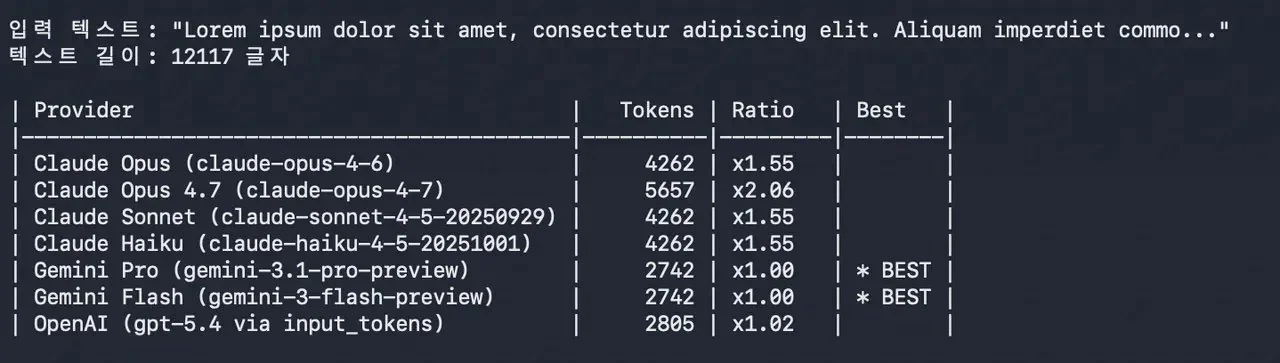
    Anthropic has launched Claude Opus 4.7 and framed it as a straightforward upgrade: better coding, stronger long-running agent work, and improved multi-step reasoning—without a headline price shock.

    But early reactions tell a more nuanced story. Even if list pricing stays similar, the real cost to teams can change because cost isn’t only “$/token.” It’s also:

    • how much context you need to include,
    • how many retries your workflow needs to get a usable answer,
    • and how often an agent loops while it works.

    This is the right lens for builders and operators: treat Opus 4.7 as a throughput + reliability decision, not a vibes upgrade.

    Key takeaways

    • “Same list price” can still feel more expensive if workflows require more context or retries.
    • For agentic use cases, reliability reduces cost; for brittle tasks, it can increase total spend.
    • Evaluate Opus 4.7 with a small benchmark that mirrors your real workload (not general leaderboards).
    • Track cost per successful output (not cost per prompt) to avoid misleading conclusions.

    What Anthropic announced (and what it implies)

    Anthropic’s announcement positions Opus 4.7 as a flagship model optimized for complex work, especially coding and long-running tasks. That typically signals two things:

    1) it should be more consistent across multi-step workflows, and 2) it should reduce the “prompt babysitting” tax.

    If that holds, the model can be cheaper in practice—even if it uses more tokens—because fewer retries and fewer human interventions matter more than token math.

    Why users say the “hidden cost” is real

    The “it costs more” claim generally comes from workflow reality:

    1) Bigger context = bigger bill

    If Opus 4.7 nudges teams toward longer contexts (“include the whole file / the full ticket / the last 50 messages”), usage climbs quickly.

    2) Retries + tool loops compound spend

    Agent workflows (tool calling, browsing, multi-file changes) can run many steps. Small increases in step count can produce meaningful cost changes.

    3) Output quality changes the cost curve

    If Opus 4.7 reduces rework, it’s cheaper. If it’s inconsistent in your niche domain, it becomes more expensive than the headline suggests.

    A practical evaluation checklist (business-first)

    Run a 60-minute evaluation before committing:

    1) Choose 10 real tasks (support answers, code diffs, analysis memos, etc.). 2) For each task, measure:

    3) Compare “cost per successful output” across:

    • tokens in + tokens out,
    • number of retries,
    • time-to-acceptable output,
    • whether humans had to intervene.
    • Opus 4.7 vs your current model,
    • short-context vs long-context variants,
    • agent workflow vs single-shot prompts.

    That tells you whether Opus 4.7 is actually an upgrade for your business.

    What to watch next

    If the early “hidden cost” narrative persists, it will likely converge into a few measurable points:

    • regression on long-context reliability (forcing retries),
    • higher average context length in real workflows,
    • or specific failure modes in coding/agent tasks that weren’t obvious at launch.

    Sources and methodology

    • Anthropic announcement: https://www.anthropic.com/news/claude-opus-4-7
    • Reddit thread (user reports; not independently verified): https://www.reddit.com/r/ClaudeAI/comments/1sn8ovi/opus_47_is_50_more_expensive_with_context/
    • X post referenced in the discussion (treat as a claim, not proof): https://x.com/AiBattle_/status/2044797382697607340

    *Related: Check out our [comprehensive guide to Claude workflows](https://aitrendheadlines.com/free-claude-learning-guides/).*

  • Automated Betting on Polymarket: Why a “No-Only” Bot Still Loses Money

    Automated Betting on Polymarket: Why a “No-Only” Bot Still Loses Money

    The “No-only bot” story is compelling because it points at a real pattern: in many prediction markets, most contracts resolve to “No.” But “most outcomes are No” is not the same thing as “buying No is profitable.” A strategy can be directionally correct and still lose money once you include price, fees, selection bias, and tail risk.

    Below is the practical way to think about a “No-only” Polymarket bot: what’s true, what’s hype, and how to evaluate it like a trader (not a gambler).

    Key takeaways

    • A high “No win-rate” does not guarantee positive expected value (EV); price matters more than frequency.
    • Fees, spread, and slippage can turn a “small edge” into a systematic bleed.
    • The biggest risk is tail events: rare “Yes” resolutions can wipe months of small wins.
    • The only credible version of this strategy requires market selection + sizing rules + stop conditions.
    • If you automate it, automate the analysis and guardrails first—not the clicks.

    What happened (and why it went viral)

    A creator open-sourced a bot that only buys “No” across Polymarket markets, based on the observation that a large share of markets resolve “No.” The bot’s results were not the “free money” many expected—losses persisted despite the win-rate narrative.

    That outcome is exactly what you’d predict if the bot ignores two basics:

    1) If the market already expects “No,” “No” will be expensive, and 2) A high win-rate strategy can still have negative EV if the losses are larger than the wins.

    The core misconception: “Most markets resolve No” ≠ “No is underpriced”

    Markets price probabilities. If a market believes “No” is 80%, then “No” should trade around $0.80 (ignoring fees/spread). If you buy “No” at $0.80 repeatedly, you need:

    • either “No” to be even more likely than 80% in the markets you pick, or
    • a mechanism to buy “No” only when it’s temporarily mispriced (liquidity shocks, news lag, bad order book).

    Without that, a “No-only” bot is basically buying the consensus.

    Why bots lose money even when they’re “right”

    1) Fees and friction

    Even small per-trade fees, plus the bid/ask spread, accumulate. If your “edge” is 1–2 points and you pay 1 point to enter and 1 point to exit (spread + fees), the edge is gone.

    2) Tail risk (the hidden killer)

    If you target lots of “easy No” markets, your average win is small because “No” is priced high. But the occasional “Yes” loss can be huge relative to your average win.

    That produces a classic profile:

    • many small wins,
    • rare but massive losses,
    • and an equity curve that looks stable until it isn’t.

    3) Market selection bias

    “No” is most likely in trivial markets—but those are often illiquid and badly priced, or they have resolution ambiguity (which is its own risk).

    A real evaluation workflow (that’s actually automatable)

    If you want to evaluate a “No-only” strategy seriously, do this before placing a single automated bet:

    Step 1 — Build a dataset

    For each market you trade (or sample), capture:

    • market URL + category
    • timestamp
    • “No” entry price
    • size
    • fees paid
    • resolution outcome
    • time to resolution
    • max adverse excursion (how far price moved against you)

    Step 2 — Compute EV with fees

    Compute profit per trade net of fees and spreads. Then slice results by:

    • category (sports, politics, crypto, earnings, etc.)
    • liquidity/volume buckets
    • time-to-resolution buckets

    If your EV disappears in any slice, your “edge” is probably not robust.

    Step 3 — Stress test tail losses

    Simulate drawdowns by re-ordering outcomes and forcing clusters of losses. A strategy that survives only in “average” conditions is not deployable.

    Step 4 — Add hard guardrails

    At minimum:

    • max daily loss
    • max exposure per category
    • max open positions
    • “stop trading if order book is too thin”
    • “stop trading if resolution source is ambiguous”

    Step 5 — Then automate (if you still want to)

    Automate screening + sizing + reporting first. If you automate execution, do it with explicit limits and audit logs.

    The business angle: why this matters beyond one bot

    This isn’t just a trading meme. It’s a pattern you’ll see across AI + markets:

    • People automate a simple heuristic (“No wins more”)…
    • …then discover the real edge is in data quality, risk controls, and process.

    That’s the same story behind wallet analyzers and agent workflows: automation is a force multiplier for good discipline—and a blowtorch for bad assumptions.

    Sources and methodology

    • Protos: the original “No-only bot” story (context + creator attribution): https://protos.com/this-bot-only-bets-no-on-polymarket-and-its-creator-keeps-losing-money/
    • Polymarket documentation (fees, mechanics, and resolution rules): https://docs.polymarket.com/

    *Keep Reading: [How AI is transforming Polymarket trading strategies](https://aitrendheadlines.com/claude-polymarket-wallet-analyzer/).*


  • What a UFC Scoring Error Reveals About Resolution Risk on Polymarket

    What a UFC Scoring Error Reveals About Resolution Risk on Polymarket

    A disputed UFC result created a viral Polymarket payout story. The real lesson is not that a trader got lucky – it is that prediction markets inherit the messy edge cases of the systems they depend on.

    Key takeaways

    • Resolution risk can matter more than pure forecasting skill in fast-moving event markets.
    • When a source event is ambiguous, traders are effectively pricing both the result and the market’s rules.
    • Headline payouts attract attention, but repeatable edge usually comes from process, not from one-off controversy.
    • For operators, the important question is how to filter markets where governance and data latency can overwhelm signal quality.

    The viral part of this story is easy to understand: a trader reportedly turned a small position into an outsized payoff after a controversial UFC scoring moment. That makes for a strong headline. But for a site focused on market structure, tooling, and decision quality, the more important issue is what the episode says about resolution risk on Polymarket.

    Prediction markets are often described as pure measures of crowd intelligence. In practice, they sit on top of rules, data feeds, adjudication systems, and real-world institutions that can all introduce friction. In sports-adjacent markets, a disputed score, official correction, or delayed settlement can be just as important as the underlying event itself.

    Why this matters beyond one trader

    When a market goes viral because of a scoring dispute, the temptation is to frame it as proof that fast traders can extract huge profits from chaos. That is only part of the picture. What it really shows is that some markets contain a second layer of risk: not just “what happened?” but “how will the platform interpret what happened?”

    That distinction matters because it changes what a trader is actually betting on. In an event with ambiguous officiating, you are not only forecasting the outcome. You are also forecasting information latency, rule interpretation, settlement timing, and how other traders will react while the ambiguity is unresolved.

    The three risks this episode exposed

    First, source ambiguity. If the underlying event is controversial, the market can remain tradable even while the reference signal is unstable. That can reward speed, but it can also punish anyone who mistakes temporary confusion for durable edge.

    Second, market-structure risk. Thin liquidity and sudden attention can create ugly price action. A market can swing not because anyone learned something new, but because participants are reacting to the same uncertain clip or headline at different speeds.

    Third, narrative risk. Once a one-off payout becomes a social-media story, copy-trading psychology follows. People remember the windfall and ignore the hidden variables that made the trade impossible to reproduce consistently.

    How to analyze similar markets more responsibly

    There is still value in these markets if you use them correctly. The better workflow is to treat controversy-heavy markets as governance-sensitive. Check how the market resolves, what the reference source is, how disputes are handled, and whether the platform has a history of clarifying similar edge cases quickly.

    That also means being honest about what you do not know. A big payout does not automatically prove superior forecasting skill. It may reflect rule interpretation, timing, or simply being willing to trade when others avoided ambiguity. That is why structured tools matter more than hype. If you want a repeatable process, the right goal is not copying viral trades; it is building better filters for which markets deserve attention in the first place.

    That same discipline shows up in our wallet-analyzer workflow and in our Polymarket automation coverage. The edge is rarely “spot one crazy trade.” The edge is deciding which markets are clean enough to analyze and which ones are polluted by process risk.

    Strategic outlook

    Over the next 6 to 12 months, the most sophisticated prediction-market operators will spend more time on integrity filters, market rules, and settlement logic. Viral stories will keep pulling new users into the category, but the durable winners will be the ones who model event quality, not just event direction. Resolution risk is now part of the trade.

    Sources and methodology

    This article focuses on prediction-market structure and market-integrity lessons. It should not be read as betting advice or as a claim that controversial markets offer repeatable profit.

  • Stop Gambling, Start Trading: The Math of the Top 13% on Polymarket

    Stop Gambling, Start Trading: The Math of the Top 13% on Polymarket

    If you walk into a Las Vegas casino and play the slot machines, you can expect to get back about 93 cents for every dollar you put in. Yet, on decentralized prediction markets like Polymarket, thousands of traders eagerly buy “longshot” contracts that mathematically return just 43 cents on the dollar. They are accepting odds significantly worse than a rigged casino game, often blinded by the allure of a massive, life-changing payout.

    This isn’t just an exaggeration—it is an empirical fact. Data scientist and software engineer Jon Becker recently processed a colossal dataset: over 72.1 million trades and $18.26 billion in volume across every resolved market on the prediction platform Kalshi. His findings exposed a brutal reality about market psychology: 87% of trader wallets bleed money over time. However, the top 13% are highly profitable because they do not rely on intuition, politics, or “gut feelings.” Instead, they treat these platforms purely as mathematical extraction engines.

    To transition from the losing 87% to the elite 13%, you must stop gambling and start applying game theory and quantitative finance principles. Here are the five foundational mathematical frameworks used by top Polymarket and Kalshi traders to consistently beat the market.

    1. The Expected Value (EV) Engine: Your Trading Compass

    Profitable traders (often acting as liquidity “Makers”) win because they absolutely refuse to enter a trade without a positive Expected Value (EV). Expected Value calculates the average outcome of a specific trade if you were to repeat it infinitely under the exact same conditions.

    If the EV is negative, it’s a gamble. If it’s positive, it’s an investment. To calculate EV effectively, you need to develop your own model for the “true probability” of an event, completely independent of the current market price.

    def get_trade_ev(market_price, true_probability):
        potential_profit = 1.0 - market_price
        capital_at_risk = market_price
        # EV formula: (Win Prob * Profit) - (Loss Prob * Risk)
        ev = (true_probability * potential_profit) - ((1 - true_probability) * capital_at_risk)
        return round(ev, 4)
    
    # Example: A Bitcoin $150K market is priced at 12c (12%). 
    # Your proprietary data model says there is a 20% true chance.
    print(f"EV per share: ${get_trade_ev(0.12, 0.20)}")

    2. Exploiting the “Longshot Bias”

    One of the most persistent inefficiencies in predictive markets is the Longshot Bias. Human psychology naturally overvalues low-probability events—it’s the exact same cognitive quirk that keeps the lottery industry generating billions in revenue.

    According to Becker’s exhaustive data analysis, contracts priced at 1¢ (implying a 1% chance of occurring) actually win only 0.43% of the time. When retail traders buy these ultra-cheap contracts hoping for a 100x return, they are effectively purchasing lottery tickets for 43 cents on the dollar, mathematically guaranteeing long-term portfolio ruin.

    The Winning Playbook: The smart money strategy involves aggressively selling overpriced longshots to emotional retail traders, while simultaneously purchasing underpriced near-certainties (e.g., buying an 88¢ contract that has a true 95% probability of resolving in your favor).

    3. The Kelly Criterion: Optimal Risk Management

    Finding a trade with a positive Expected Value is only half the battle. The other half is surviving market volatility. To determine exactly how much capital to deploy on a single trade, quantitative professionals use the Kelly Criterion.

    The Kelly formula maximizes long-term compound growth by dynamically adjusting your bet size based on the size of your statistical edge. However, because “true probabilities” in prediction markets are ultimately estimates rather than absolute physical certainties, going “Full Kelly” can lead to devastating drawdowns if your model is slightly off. Most successful quants use a “Fractional Kelly” (typically 20% to 25% of the recommended amount) to ensure strict capital preservation during losing streaks.

    def calculate_kelly(price, true_prob, bankroll, fraction=0.25):
        b = (1 - price) / price # Odds received
        q = 1 - true_prob       # Probability of losing
        full_kelly = (true_prob * b - q) / b
        
        # Ensure we don't bet if the edge is negative
        if full_kelly <= 0:
            return 0.00
            
        return round(bankroll * full_kelly * fraction, 2)
    
    # Example: $5000 bankroll, contract price 30c, your model says 45% true prob
    print(f"Optimal Bet Size: ${calculate_kelly(0.30, 0.45, 5000)}")

    4. Bayesian Updating: The Speed of Changing Your Mind

    In Polymarket and similar ecosystems, information is the ultimate currency. Elite traders use Bayes' Theorem to update their probability models the very second new data arrives. They do not marry their initial predictions; they pivot ruthlessly and instantly.

    If a catastrophic macroeconomic report drops, or breaking geopolitical news hits the wire, the math dictates exactly how many percentage points a market's probability should shift. If the general retail market lags behind the news by even 60 seconds, algorithmic traders have a massive, risk-free window to arbitrage the difference and lock in guaranteed profits before the crowd catches up.

    5. Market Making and Game Theory (Nash Equilibrium)

    Following the massive volume explosion on platforms like Polymarket in late 2024, institutional market makers and hedge funds have officially entered the chat. Today, the optimal game-theory strategy requires a deep understanding of order book liquidity dynamics.

    To survive and thrive in a highly efficient market, you must aim to act as a Maker 65% to 70% of the time. By placing limit orders instead of market orders, you avoid paying the spread. Instead, you maximize profitability by patiently absorbing the "optimism tax" that impatient, emotional traders are willing to pay to enter a position instantly.

    Key Takeaways for Prediction Market Success

    • Stop buying 1-cent contracts: The math explicitly proves they are a consistent drain on your portfolio.
    • Build a probability model: Never execute a trade unless your calculated Expected Value (EV) is strictly positive.
    • Manage risk mathematically: Always run your numbers through a Fractional Kelly calculator before allocating your bankroll to prevent total liquidation.
    • Provide Liquidity: Utilize limit orders to become a market maker and capture the spread instead of paying it.

    By shifting your mindset from a gambler hoping for a lucky payout to a quantitative trader managing a portfolio of probabilities, you can join the elite 13% who extract consistent, long-term value from decentralized prediction markets.

    To understand more about our quantitative methodology and commitment to data accuracy, be sure to review our Editorial Policy.

    Read More from AI Trend Headlines:

    *Keep Reading: [How AI is transforming Polymarket trading strategies](https://aitrendheadlines.com/claude-polymarket-wallet-analyzer/).*
  • Polymarket’s Role as a Real-Time Indicator of Market Sentiment

    Polymarket’s Role as a Real-Time Indicator of Market Sentiment

    Polymarket is increasingly recognized as a real-time barometer for shifting market sentiment, capturing trader attention ahead of mainstream news coverage.

    In today’s fast-paced business environment, timely information is critical for strategic decision-making. Polymarket, a decentralized prediction market platform, has emerged as a unique indicator reflecting collective trader sentiment in real time. The platform’s trading activity often signals where attention and concern are concentrating before traditional media outlets report on these developments. This dynamic provides executives with an early window into emerging trends and potential risks.

    Polymarket’s markets function by allowing users to trade on the outcomes of future events, effectively aggregating diverse perspectives into quantifiable probabilities. When trading volumes and price movements spike, they can reveal shifts in public expectation and sentiment around political, economic, or social events. Unlike conventional news sources, which must verify and contextualize information before publication, Polymarket captures immediate reactions from a broad pool of participants. This makes it a valuable tool for executives aiming to anticipate market shifts and adjust strategies proactively.

    The implications for business leaders are significant. By monitoring Polymarket’s activity, executives can gauge the intensity of market focus on specific issues, providing early signals that may warrant closer attention or contingency planning. This can be especially useful in volatile sectors or when geopolitical developments unfold rapidly. Additionally, platforms like OpenClaw, which integrate automation technologies, are beginning to harness data from prediction markets and AI tools like Claude to streamline information processing and decision-making workflows, further enhancing responsiveness.

    As prediction markets such as Polymarket continue to gain traction, their role in complementing traditional intelligence sources is becoming clearer. They offer a decentralized, crowd-driven perspective that can reveal undercurrents of sentiment not yet visible through conventional channels. For CEOs and founders, understanding these dynamics can be an important component of maintaining agility in uncertain times.

    In sum, Polymarket’s ability to reflect real-time collective judgment makes it a practical resource for executives seeking to stay ahead of news cycles. Coupled with advances in automation and AI, this approach underscores a broader trend toward integrating innovative tools to navigate complex and rapidly evolving market landscapes.

    Polymarket’s ability to surface emerging sentiment is further amplified by its decentralized structure, which invites a wide range of participants from diverse backgrounds. This inclusivity can provide a more nuanced and immediate reflection of public opinion than traditional media or analyst reports, which often rely on curated sources and slower editorial processes. For business leaders, this means that Polymarket can function not just as a barometer of current events but as an early warning system, identifying shifts in sentiment that might otherwise go unnoticed until they become more broadly acknowledged.

    The integration of automation tools like OpenClaw alongside AI-driven insights from platforms such as Claude is also reshaping how executives interact with this data. By automating data collection and analysis, these tools help distill complex trading patterns into actionable intelligence, reducing the time required to interpret market signals. This technological synergy supports faster, more informed decision-making, particularly in sectors where timing and sentiment are critical factors. As a result, executives who leverage these combined resources can gain a competitive edge by anticipating developments before traditional information channels catch up.

    Looking ahead, the evolving ecosystem around prediction markets and AI-enhanced analytics underscores a broader trend toward real-time, decentralized intelligence in the business world. While Polymarket and similar platforms are not without limitations, their growing adoption suggests an increasing reliance on alternative data sources to complement conventional research methods. For CEOs and founders, staying attuned to these innovations will be essential to navigating an environment where rapid response to market sentiment can drive strategic advantage and resilience.

    Related reading: Why Polymarket Is Becoming a Real-Time News Barometer, Anthropic Adjusts Claude Subscription to Exclude OpenClaw Usage, and OpenClaw’s Rapid Rise and Restrictions: What Claude Users Need to Know.

    *Keep Reading: [How AI is transforming Polymarket trading strategies](https://aitrendheadlines.com/claude-polymarket-wallet-analyzer/).*