Category: News

  • The AI Speech That Got Booed by the Graduates It Was Supposed to Inspire

    A commencement speech is supposed to send graduates into the world feeling seen. At the University of Central Florida, one speech about artificial intelligence did the opposite.

    During a May 8 ceremony for graduates from UCF’s College of Arts and Humanities and Nicholson School of Communication and Media, speaker Gloria Caulfield described AI as the next great industrial revolution. The reaction was immediate: the crowd booed.

    It was not random rudeness. It was a collision between two very different stories about technology. From the stage, AI sounded like opportunity, efficiency and transformation. From the seats, where graduates in film, animation, media production and other creative fields were preparing to enter a difficult job market, AI sounded like replacement.

    For young artists, editors, designers and writers, generative AI is not an abstract innovation. It is already showing up in job listings, classrooms, corporate strategies and conversations about whether entry-level creative work will survive. That is why the room turned so quickly. Many students were not rejecting technology itself. They were rejecting the familiar corporate optimism that treats AI as inevitable progress while ignoring the anxiety of people whose work is being scraped, automated or devalued.

    Some graduates said the speech had already lost them when it praised wealthy business figures. But the AI comments became the breaking point. To students trained in the humanities, creativity is not just output. It is labor, memory, taste, lived experience and deliberate choice. A model can generate an image, a video draft or a paragraph, but it has not lived through anything. That difference may sound philosophical to executives. To artists, it is the center of the work.

    The incident also reflects a larger generational shift. Young people are not automatically impressed by AI anymore. Many have used the tools. Many understand their power. But they also see the downsides: job insecurity, copyright concerns, environmental costs and the pressure to adopt systems they may not ethically support.

    When universities tell students they must use AI or fall behind, some hear preparation. Others hear surrender. Caulfield later tried to frame AI as something that could work alongside human intelligence to solve major problems. That is the version of the argument most likely to survive: not AI as a replacement for human creativity, but AI as a tool under human control.

    Still, the boos at UCF should be understood as a warning. The next generation of creative workers is not waiting quietly for executives to define the future of art, media and labor. They are watching closely. They know the language of innovation can sometimes hide a transfer of power.

    And on graduation day, in caps and gowns, they made the message very clear: do not sell artists their own replacement and call it inspiration.
    Source: The New York Times, Gabriella Gershenson, “Graduates Boo Commencement Speech About A.I.,” May 14, 2026.

  • Figure hits 1 humanoid robot per hour (24× production scale) — plus the videos that make it real

    Figure hits 1 humanoid robot per hour (24× production scale) — plus the videos that make it real

    Humanoid robotics has a recurring failure mode: great demos, weak scaling. Figure’s April 29, 2026 update claims it just cleared the manufacturing hurdle by ramping BotQ production 24×.

    Watch: the 1 robot/hour milestone

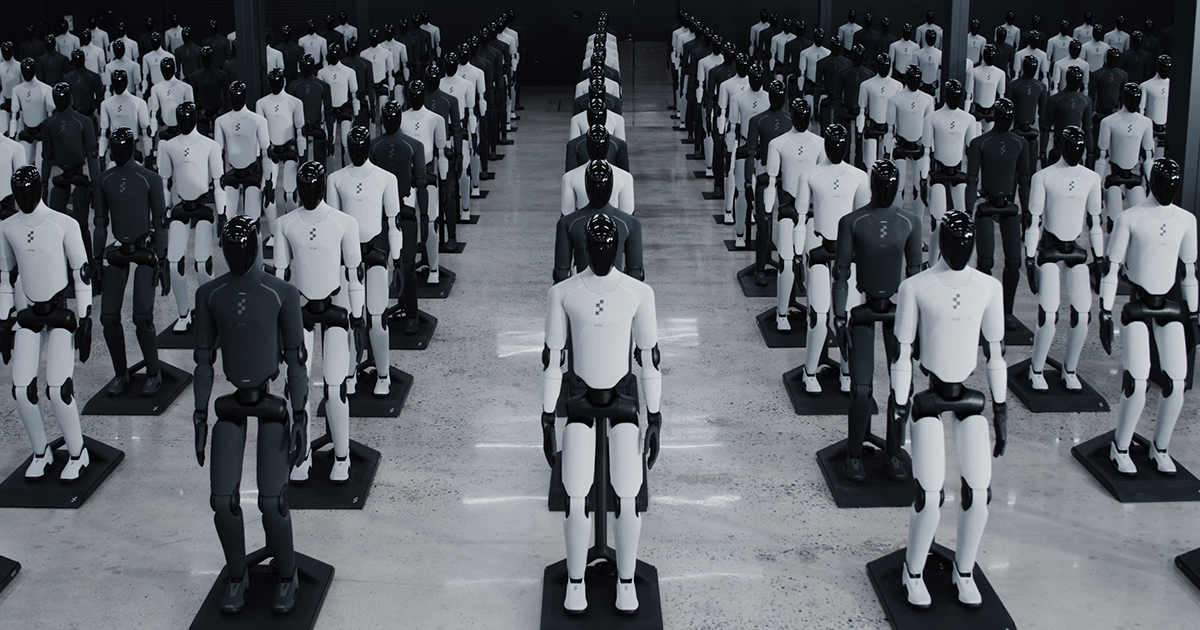
    Figure says it demonstrated a cadence of 1 humanoid robot per hour. These clips show fleet scale and the end-of-line flow.


    Key facts (from Figure)

    • Output: over 350 third-generation humanoid robots shipped.
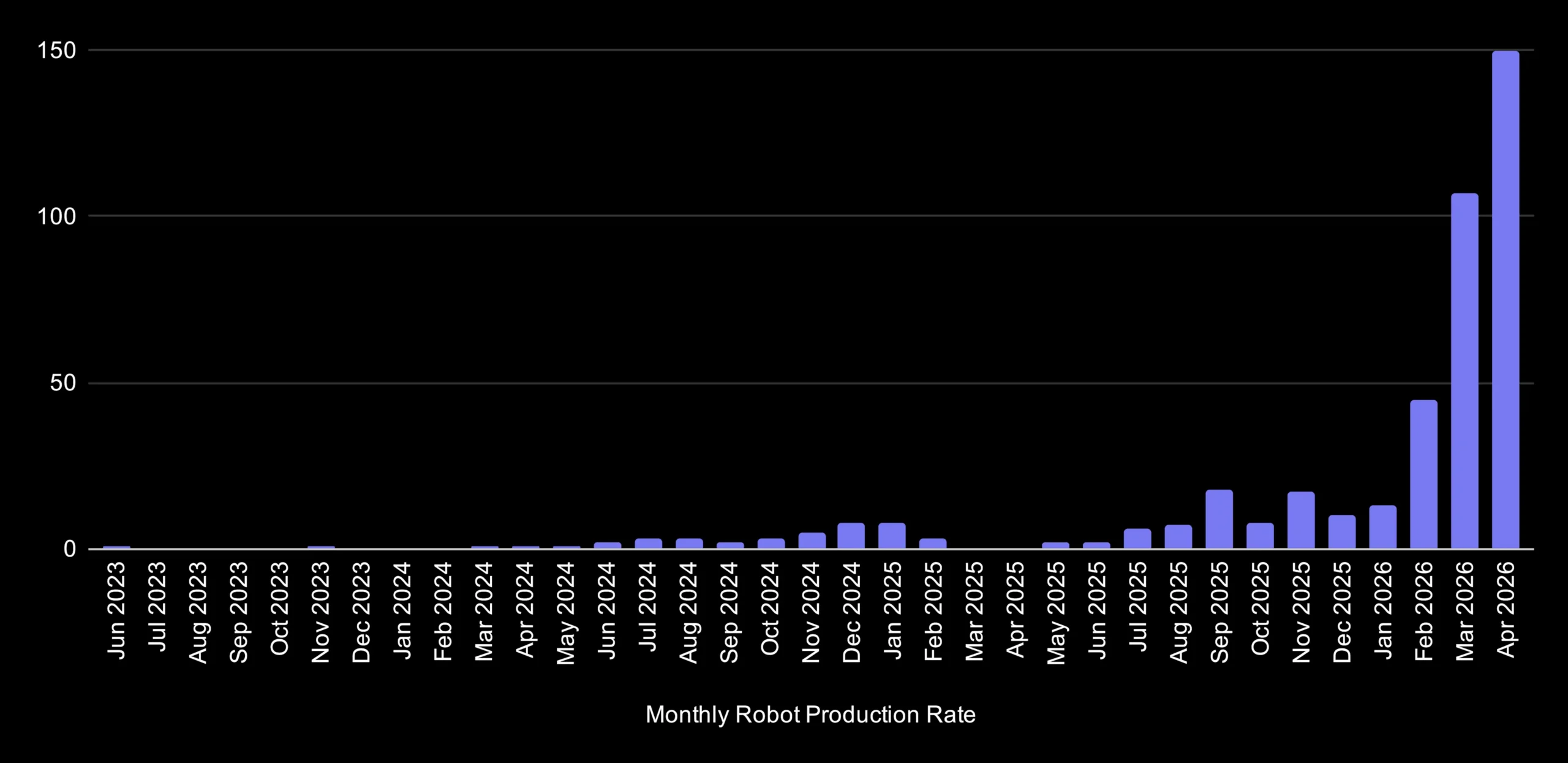
    • Rate: production increased from 1 Figure 03/day to 1/hour (a 24× throughput jump) in under 120 days.
    • Manufacturing ops: custom manufacturing execution software across 150+ networked workstations; 50+ in-process inspection points.
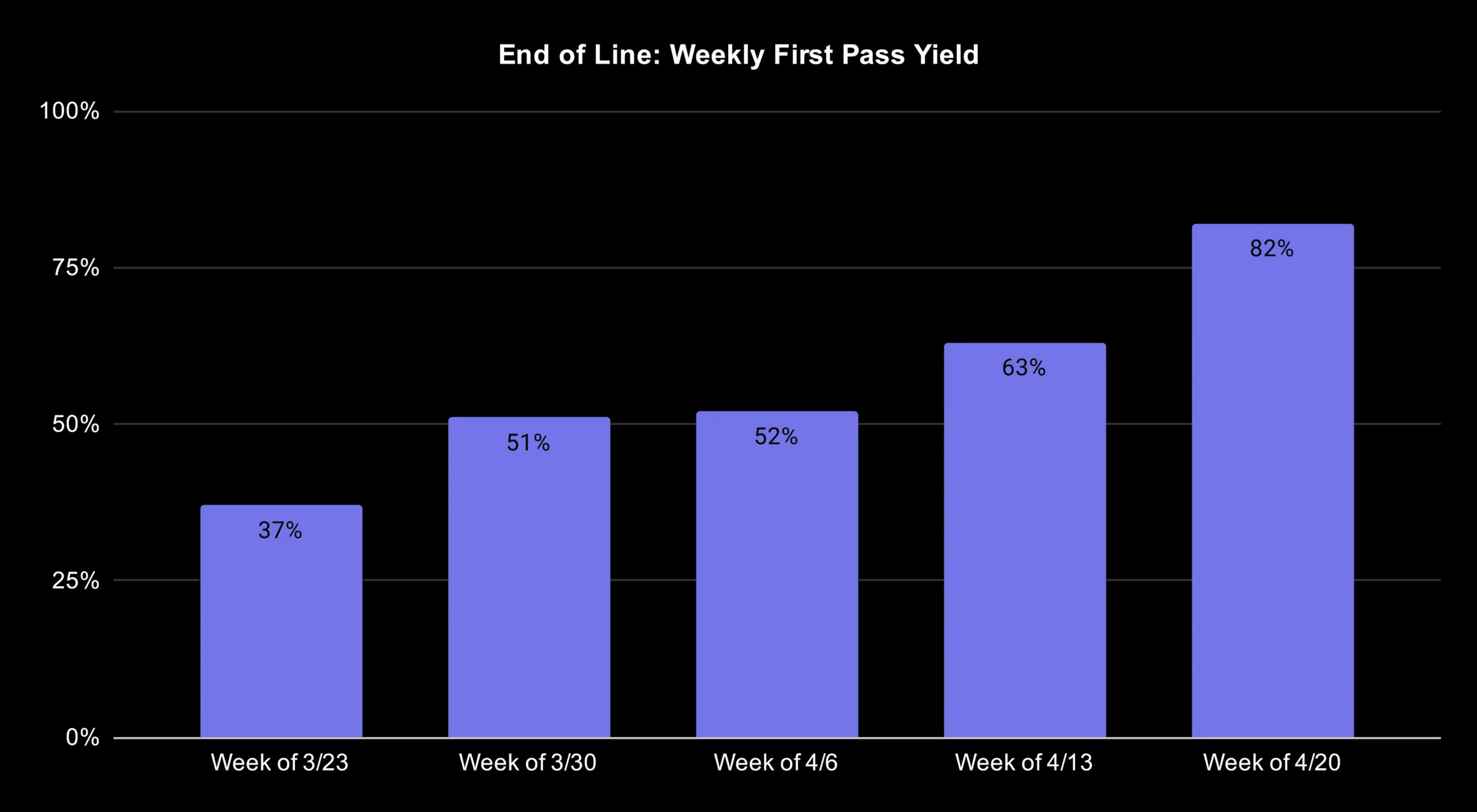
    • Quality: end-of-line first pass yield >80% (improving weekly); battery line first-pass yield 99.3% with 500+ battery packs shipped.
    • Component scale: 9,000+ actuators produced across 10+ SKUs.
    Figure monthly robot production rate chart
    Figure’s production ramp (from the company’s April 29 update).
    Figure weekly first pass yield chart
    First-pass yield trend reported by Figure.

    Why 1 robot/hour matters more than the headline

    The real strategic implication is not a PR number—it’s fleet hours. Every additional robot is a data-collection engine. More identical hardware in the field means faster discovery of the long-tail of failures (hardware + software), faster iteration, and a tighter feedback loop between deployment and engineering.

    Operational moat: fleet management + OTA

    Figure frames the next bottleneck as orchestration: diagnosing failures quickly, building fallback ladders, and running fleet-wide upgrades. If those systems are real, they are as defensible as the robot itself—because they turn ‘more robots’ into ‘more learning’.

    What to be skeptical about

    • Cycle time vs sustained rate: Figure says it has “demonstrated” the 1 robot/hour cycle time; that’s not the same as steady-state weekly output.
    • Unit economics: the update does not disclose cost, gross margin, or field service cost per robot-hour.
    • Commercial utilization: “fleet” can mean many internal robots before large revenue-bearing deployments.

    Source

  • MCP STDIO ‘By-Design’ RCE Risk: Why Tooling Supply Chains Need a Security Contract (and a Fix List)

    MCP STDIO ‘By-Design’ RCE Risk: Why Tooling Supply Chains Need a Security Contract (and a Fix List)

    As MCP becomes the default plumbing for agents, the weakest link is no longer “the model.” It’s the tool interface—and especially any pathway that can spawn local processes.

    Key takeaways

    • Multiple reports in April 2026 describe exploitation patterns where MCP STDIO adapters can be leveraged into command execution.
    • The core risk is systemic: once your agent can run a local process, the security boundary is your validation and execution policy.
    • Enterprises should treat MCP servers like a software supply chain: provenance, signing, allowlists, sandboxing, and least privilege.

    Why this happens

    STDIO-based MCP integrations typically launch a local process and then stream messages over standard input/output. If user-controlled input can influence command, arguments, or tool selection—even indirectly via prompt injection—you can end up with “tool use” that is effectively code execution.

    Fix list (practical)

    • Hard allowlist: only permit known-safe commands and arguments; block shells/interpreters by default.
    • Sandbox execution: run MCP servers in containers/VMs with no secrets and minimal filesystem/network access.
    • Human-in-the-loop: require explicit approval for any tool that can execute or write.
    • Provenance: pin versions, verify signatures, and avoid “random registry installs” for MCP servers.
    • Monitoring: log every tool invocation with full args + hashes; alert on anomalous commands.

    Sources

  • Anthropic’s Claude Code Postmortem (Apr 23): Why Quality Dropped, What Was Fixed, and How to Avoid Repeat Pain

    Anthropic’s Claude Code Postmortem (Apr 23): Why Quality Dropped, What Was Fixed, and How to Avoid Repeat Pain

    When users say “the model got worse,” the uncomfortable possibility is that your harness did. Anthropic published a detailed postmortem on April 23 explaining why Claude Code felt degraded for weeks—and what changed to fix it.

    Key takeaways

    • Anthropic attributes most complaints to three overlapping changes in Claude Code’s harness (not a single model regression).
    • All issues are reported as resolved as of Apr 20 in Claude Code v2.1.116.
    • If you’re running internal “Codex-like” workflows, this is a cautionary tale: defaults, caching, and context management can silently erode outcomes.

    What actually went wrong (high-level)

    • Defaults: small changes to reasoning or system instructions can trade latency for quality without obvious release signals.
    • Context/thinking lifecycle: clearing or truncating “older thinking” to reduce latency can change how the agent behaves after idle time.
    • Cross-component bugs: issues can sit in the intersection of context management, extended thinking, and API behavior.

    Action checklist for teams

    • Record your exact toolchain version (client, SDK, prompts) whenever you ship a workflow change.
    • Keep an internal eval suite that detects 2–5% quality drops before rollout.
    • Separate “model changes” from “harness changes” in your incident process and postmortems.

    Source

  • Polymarket Exchange Upgrade (Apr 28, 2026): What Breaks, What Changes, and a Builder Checklist

    Polymarket Exchange Upgrade (Apr 28, 2026): What Breaks, What Changes, and a Builder Checklist

    Polymarket scheduled a coordinated exchange upgrade for April 28, 2026 (~11:00 UTC). If you run bots, maker strategies, or analytics tooling, treat this like a protocol migration—not a UI refresh.

    Key takeaways

    • Trading pauses around ~11:00 UTC; maintenance is expected to be roughly an hour.
    • All open orders are cleared during the window. You’ll need to re-place limit orders after resume.
    • Collateral migrates from USDC.e to pUSD (1:1). The UI handles wrapping with a one-time approval prompt.
    • Builders: there’s no backward compatibility—upgrade to the V2 stack before the window ends.

    What changes (in plain language)

    Polymarket is rolling out new exchange contracts and a rewritten order book. That means assumptions about order IDs, book snapshots, and endpoints may break if you keep old integrations.

    Checklist for traders and builders

    • Before the window: cancel or record critical orders, export positions, and freeze any unattended bots.
    • During downtime: pause automation and avoid repeated retries that can trigger rate limits.
    • After resume: re-place limit orders, confirm pUSD approvals, and verify fills/settlement on a small trade first.
    • Builders: follow the V2 migration guide, update SDKs, and validate attribution fields (e.g., builder code) if you use them.

    Sources