Tag: AI chips

  • Anthropic’s AI Chip Ambitions Signal a New Phase in the AI Infrastructure War

    Anthropic’s AI Chip Ambitions Signal a New Phase in the AI Infrastructure War

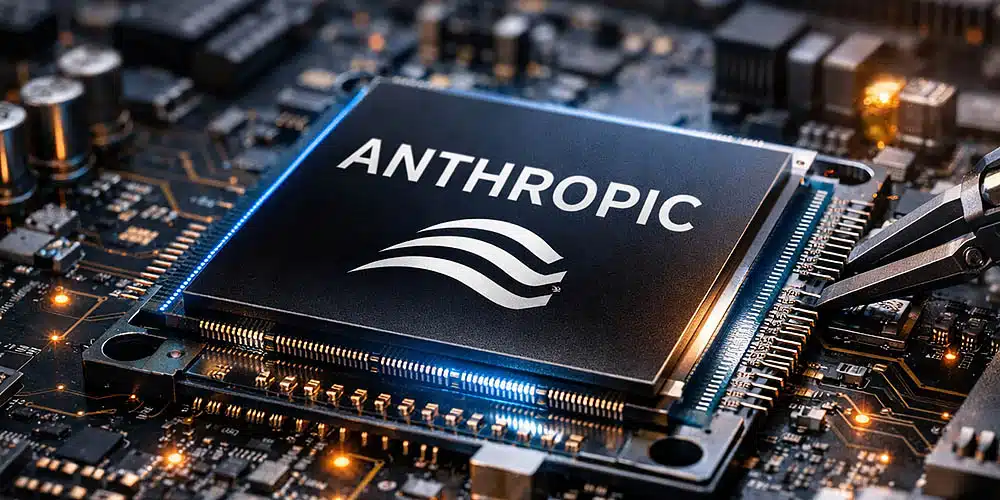
    Anthropic may still be best known to most readers for Claude, but the company’s latest reported move suggests the real battle in AI is moving deeper into the stack. According to Reuters, Anthropic is in the early stages of exploring whether it should design its own AI chips rather than rely entirely on outside suppliers. Nothing has been finalized, and the company could still decide to continue buying hardware instead. Even so, the fact that the discussion is happening at all is a strong signal about where the industry is headed.

    For the past two years, the public AI race has been framed around chatbots, benchmark scores, and flashy product launches. Behind the scenes, however, the harder truth is that advanced AI depends on an enormous amount of compute. Training large models and serving them to millions of users is no longer just a software challenge. It is a supply chain challenge, a capital allocation challenge, and increasingly a geopolitical one. In that context, any serious discussion about custom silicon becomes much more than a technical curiosity.

    Why custom AI chips suddenly matter more

    Reuters reports that demand for Anthropic’s products has accelerated sharply in 2026, with the startup’s run-rate revenue reportedly surpassing $30 billion. At that level of scale, every improvement in efficiency matters. Better chips can reduce inference costs, improve performance per watt, and give a company more leverage over long-term infrastructure planning.

    That is especially important in a market where access to top-tier AI hardware remains one of the biggest bottlenecks. Compute has become a form of strategic power. If a lab can influence its own silicon roadmap, it gains more control over cost, capacity, and product reliability. It also becomes less exposed to shortages, pricing pressure, or competitive dependence on the same suppliers that serve its rivals.

    Anthropic is not acting in isolation

    This is what makes the Reuters report so important. Anthropic is not the only company thinking this way. Reuters notes that the company recently signed a long-term deal involving Google and Broadcom, and similar custom-chip efforts are already underway across other major AI players including Meta and OpenAI. That broader pattern matters more than any single rumor.

    The market is starting to reveal its next phase. The first wave of the AI boom was about proving that generative AI could capture public imagination. The second wave is about turning that excitement into durable business infrastructure. That means data centers, networking, energy, access to advanced packaging, and specialized chips designed for the exact workloads these models need.

    What this could mean for the wider AI industry

    If Anthropic eventually moves ahead with a chip program, the implications could ripple far beyond one company. First, it would reinforce the idea that frontier AI labs increasingly want tighter control over their core systems. Second, it could intensify pressure on existing chip leaders by encouraging more vertical integration across the industry. Third, it would highlight a bigger truth: winning in AI may depend not only on model intelligence, but on cost discipline and infrastructure resilience.

    • For investors: the center of gravity may shift further toward compute ownership and supply chain strength.
    • For startups: the gap between model innovation and infrastructure access could widen even more.
    • For the market: chip design, cloud partnerships, and manufacturing capacity may become just as important as model quality.

    This is also a reminder that NVIDIA’s dominance, while still powerful, has helped motivate many of its biggest customers to explore alternatives. Some will build their own chips. Others will partner more deeply with cloud providers. Either way, the direction is clear: no major AI lab wants to be fully dependent forever on hardware it does not control.

    The bigger strategic takeaway

    Anthropic’s reported chip exploration should be read as a strategic signal, not just a hardware story. It suggests that the AI race is evolving from a competition over features into a competition over foundations. The companies that survive the next cycle may be the ones that can combine model quality, distribution, and infrastructure efficiency into a single operating system for AI at scale.

    In other words, the question is no longer only who has the smartest model. It is also who can afford to run it, scale it, and defend it over the long term.

    Source note: This analysis is based on reporting by Reuters published on April 9, 2026.

    Read the original Reuters report.

    *Related: Check out our [comprehensive guide to Claude workflows](https://aitrendheadlines.com/free-claude-learning-guides/).*

  • AI Chip Startup Rebellions Secures $400M Pre-IPO Funding at $2.3B Valuation

    AI Chip Startup Rebellions Secures $400M Pre-IPO Funding at $2.3B Valuation

    Rebellions, an emerging AI chip company, has attracted significant investor interest with a $400 million pre-IPO funding round, positioning itself as a key player in the AI hardware landscape.

    On March 30, 2026, Rebellions announced it had secured $400 million in pre-IPO financing, bringing its valuation to approximately $2.3 billion. The startup specializes in designing chips tailored specifically for AI inference workloads, a critical component in deploying machine learning models efficiently at scale. This funding round signals strong market confidence as Rebellions prepares for an initial public offering later this year.

    The AI chip sector has been dominated by Nvidia for years, with the company’s GPUs powering many of the world’s leading AI applications. However, Rebellions aims to carve out a niche by optimizing hardware for inference rather than training, potentially offering more efficient and cost-effective solutions for enterprises deploying AI models in production environments. This focus aligns well with growing demand for automation tools that can deliver fast, reliable AI-driven insights without the overhead of traditional GPU infrastructure.

    Rebellions’ rise comes at a pivotal time when AI adoption is accelerating across industries, including sectors where platforms like Polymarket leverage predictive analytics to inform decision-making. As automation becomes a strategic priority for many businesses, efficient AI inference hardware is increasingly critical. While companies such as Anthropic continue to develop sophisticated AI models like Claude, the underlying hardware must evolve to support this software innovation seamlessly.

    Investors are recognizing the strategic importance of specialized AI chips as foundational enablers for next-generation applications. With the pre-IPO round complete, Rebellions is well-positioned to expand its development capabilities and scale manufacturing to meet anticipated demand. This could also intensify competition with established players, prompting further innovation in AI chip design and deployment.

    The implications for business leaders are clear: infrastructure choices around AI will have a direct impact on the effectiveness and cost-efficiency of automation initiatives. While software advancements like OpenClaw’s AI assistant garner attention for their capabilities, the hardware enabling these tools is just as vital. Rebellions’ emergence underscores the evolving ecosystem where hardware and software must advance in tandem to unlock AI’s full potential.

    As Rebellions moves closer to its IPO, executives should monitor how this new entrant influences pricing, performance benchmarks, and supply chain dynamics in the AI chip market. The company’s focus on inference chips may also open opportunities for partnerships with AI model providers and automation platforms, driving further integration across the AI stack.

    Ultimately, Rebellions’ substantial capital raise highlights the growing investor appetite for specialized AI infrastructure solutions. For CEOs and founders navigating AI adoption strategies, understanding the hardware innovations shaping the market will be essential to making informed technology decisions that support scalable, high-impact automation.

    The surge in funding for Rebellions reflects a broader trend in the AI industry where hardware innovation is becoming as critical as software advancements. As enterprises increasingly rely on AI-driven automation to enhance operational efficiency and customer engagement, the demand for specialized inference chips that can process data swiftly and cost-effectively is rising. For business leaders, this means that investment decisions around AI infrastructure will need to account for emerging hardware options beyond traditional GPU-based solutions, potentially unlocking new levels of scalability and performance.

    This development also intersects with the progress made by AI model developers such as Anthropic, whose Claude platform exemplifies sophisticated natural language processing applications. The synergy between advanced AI models and optimized inference hardware like that offered by Rebellions can accelerate deployment in real-world contexts, from predictive analytics in platforms like Polymarket to AI-powered assistants akin to OpenClaw. Such integration promises to enhance automation capabilities, reduce latency, and lower operational costs, which are key considerations for executives evaluating AI strategies.

    Looking ahead, Rebellions’ upcoming IPO and its competitive positioning against established incumbents could stimulate further innovation across the AI chip market. For CEOs and founders, staying informed about these hardware advancements is essential, as they influence the efficiency and effectiveness of AI adoption across diverse sectors. The evolving landscape suggests a strategic opportunity to reassess AI infrastructure investments, ensuring alignment with the latest technological developments to maintain a competitive edge.

    The successful funding round for Rebellions underscores a shifting landscape in AI infrastructure, where specialized inference chips are gaining traction as vital enablers of scalable automation. For business leaders, this development suggests a growing opportunity to adopt more efficient hardware solutions that reduce latency and energy costs compared to traditional GPU-based systems. As AI-driven platforms like Polymarket and innovative assistants such as OpenClaw increasingly rely on real-time data processing, the availability of tailored inference processors may accelerate deployment across sectors.

    Moreover, Rebellions’ focus on inference hardware complements advances in AI models exemplified by Anthropic’s Claude, which require optimized backend systems to operate effectively at scale. This alignment between cutting-edge AI software and dedicated chip design could lead to enhanced performance and cost efficiencies, reinforcing the strategic importance of hardware choices in unlocking AI’s full potential. Investors’ confidence in Rebellions indicates recognition of this trend, positioning the startup as a potential catalyst for further innovation and competitive dynamics in the AI ecosystem.

    Related reading: Anthropic Launches Claude Code Channels: AI Coding Comes to Telegram and Discord and Polymarket and Kalshi Rush to Ban Insider Trading as Senators Introduce Prediction Markets Crackdown.

    *Keep Reading: [How AI is transforming Polymarket trading strategies](https://aitrendheadlines.com/claude-polymarket-wallet-analyzer/).*