Tag: algorithmic trading

  • An $11 Bet, a $9,000 Payout: Why Polymarket’s ‘Trump Dance’ Trade Is Bigger Than a Viral Screenshot

    An $11 Bet, a $9,000 Payout: Why Polymarket’s ‘Trump Dance’ Trade Is Bigger Than a Viral Screenshot

    A viral screenshot can make prediction markets look like a lottery. A closer look suggests something more structural: fast, high-variance event trading is becoming part of the mainstream market conversation.

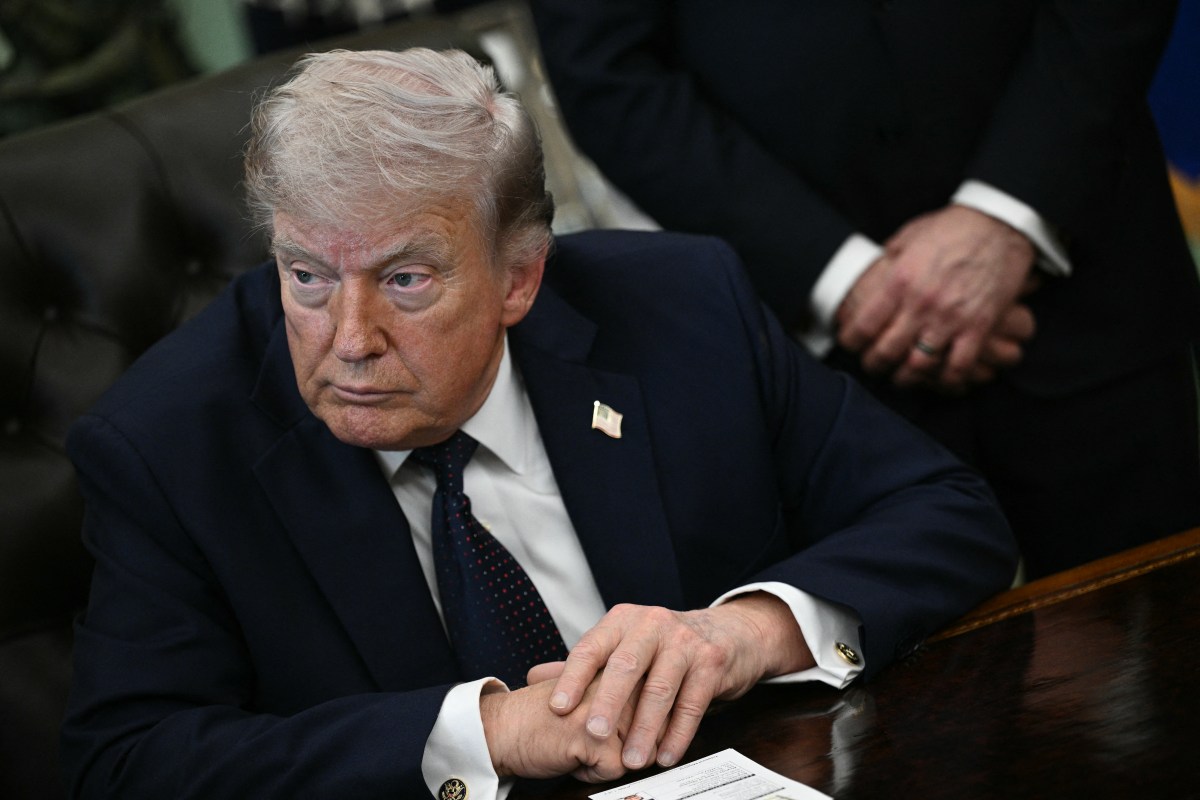
    A post on Reddit’s MarketVibe community claimed that a Polymarket trader turned $11 into roughly $9,000 on a market tied to Donald Trump dancing. The implied multiple, around 800x, is the kind of outcome that spreads quickly across social feeds because it compresses excitement, disbelief, and envy into one number. But the most relevant question for operators and investors is not whether one ticket printed. It is what this kind of outcome reveals about how prediction markets are evolving.

    At face value, a long-shot payout is not new. Traditional betting markets have always produced occasional extreme multiples. What is new is the speed with which these outcomes become narrative signals. In a few hours, a niche contract can move from a small speculative position to a mass-audience symbol of “easy money,” even when the underlying mechanics are mostly about risk transfer, asymmetric pricing, and counterparties who took the other side.

    What the $11 to $9,000 claim actually tells us

    If the posted numbers are accurate, the trade demonstrates how thinly priced event tails can create dramatic returns at very small size. It does not prove a stable repeatable edge by itself. A single screenshot has no full context: entry timing, liquidity depth, slippage, hedging behavior, or whether the trader replicated the setup across multiple contracts and mostly lost elsewhere. In other words, viral P&L is an anecdote until it is connected to a strategy log.

    Still, anecdotes matter when they align with a broader market shift. Prediction markets are increasingly treated less as one-off opinion polls and more as tradable probability surfaces. That means participants are not only “betting what happens” but also trading mispricings, reacting to information bursts, and rotating quickly between contracts in ways that resemble speculative microstructure behavior in other asset classes.

    Why public perception can diverge from market reality

    The Reddit discussion under the post captured an uncomfortable truth: highly visible winners obscure dispersed losers. In zero-sum contracts, extraordinary upside for one wallet is funded by losses distributed across many counterparties. That does not invalidate the market. But it changes how the outcome should be interpreted. A viral winner is often a byproduct of crowd positioning and pricing imbalance, not necessarily proof of superior long-term forecasting skill.

    This matters for policy and media framing. As these markets grow, headline interpretation can become detached from statistical context. A sensational payout can influence how outsiders perceive probability markets, while professionals focus on order flow, execution, and exit discipline. The gap between those two lenses is where reputational risk and regulatory attention tend to build.

    From meme contracts to market structure

    Contracts that look unserious on the surface can still function as serious liquidity events. Even novelty markets create information pathways: they attract flow, reveal where speculative attention concentrates, and expose pricing behavior under emotional demand. For product teams and trading operators, those are not side stories. They are design and governance inputs.

    In practical terms, episodes like this push platforms toward stronger transparency and risk communication. Users increasingly need clearer signals around depth, volatility, concentration, and path dependency. Without that layer, viral wins keep functioning as acquisition headlines while many participants misunderstand expected value and downside distribution.

    Strategic Outlook

    Over the next 6 to 12 months, expect more event-driven contracts to behave like high-beta speculative instruments rather than passive prediction snapshots. The most important shift will not be larger jackpots; it will be the normalization of active trade management on event markets. As that behavior scales, platforms that win will be those that combine speed with better market context: clearer risk surfaces, better execution tooling, and stronger communication about what a single “800x” screenshot does and does not prove.

    Sources: Reddit / r/MarketVibe thread.

  • A Mystery Polymarket Wallet Made 344,000 Trades in 22 Days. That Matters More Than the Profit

    A Mystery Polymarket Wallet Made 344,000 Trades in 22 Days. That Matters More Than the Profit

    A viral Polymarket wallet analysis points to something bigger than one profitable trader: prediction markets may be turning into a new venue for systematic event trading.

    A mystery Polymarket wallet is getting attention after a widely shared analysis claimed it made roughly 344,000 trades in 22 days, deployed around $24 million, and finished about $101,000 in profit. The identity behind the account remains unknown, and the numbers have not been independently verified by AI Trend Headlines. But even with that caveat, the behavior described in the report is worth paying attention to because it looks less like casual betting and more like the early shape of a new trading market.

    Most people still talk about Polymarket as if it were a crowdsourced opinion board with money attached. Users buy yes-or-no contracts on elections, wars, court rulings, sports, inflation or corporate events, and the resulting price is treated as a rough public probability. That framing starts to break down when one account is reportedly entering and exiting positions at industrial speed. If the analysis is directionally right, the real story is not the profit number. It is that a prediction market may now be supporting behavior that looks much closer to a trading desk than to a bettor waiting for a headline to settle.

    This does not look like a casual Polymarket wallet

    The 344,000-trade figure matters because it changes the category of activity we are looking at. A normal user might build a view on one election contract, a central bank decision or a geopolitical market and then hold the position until the event resolves. A wallet making hundreds of thousands of trades in less than a month suggests a very different workflow: constant repricing, repeated entry and exit, and a willingness to treat each contract as inventory rather than conviction.

    That is the language of systematic trading. It hints at scripts, rules or at least an unusually disciplined operating process. The account reportedly moved across positions quickly instead of attaching itself to one narrative. That matters because Polymarket has often been described as a measure of collective belief. But once a meaningful share of activity comes from fast, high-volume accounts, the market stops being just a poll with money and starts becoming a venue where speed, execution and risk management can matter as much as opinion.

    $24 million to make $101,000 is the clue, not the disappointment

    At first glance, moving $24 million to make about $101,000 can sound underwhelming. In internet terms it does not look like a legendary win. In market terms it can mean the opposite. It suggests a strategy that is not trying to call one giant outcome and hit a home run. It suggests repeated attempts to capture tiny pricing errors over and over again.

    That could mean some mix of spread capture, short-horizon rebalancing, micro-arbitrage, event-driven scalping or a market-making style approach. The point is not to label the exact strategy from the outside, because the wallet remains anonymous and the method is not public. The point is that the economics look like professional trading logic. In mature markets, many serious operators are not hunting one massive payoff. They are trying to harvest small edges at scale with strong discipline and low emotional attachment. The reported Polymarket behavior fits that pattern far more than it fits the image of a gambler chasing a lucky streak.

    Exiting losers changes how the market should read the account

    One of the most interesting details in the wallet write-up is that the account reportedly cut losing positions rather than simply holding every trade through settlement. That is a major distinction. Many retail Polymarket users are still trading narratives. They buy a contract because they think a candidate will win, a bill will pass or a war will escalate. Then they sit with the position and wait to be proven right or wrong. A wallet that consistently exits losers is doing something else entirely.

    It is managing risk. That makes it look less like a belief machine and more like an operator managing a book. In practical terms, that means the trader is probably responding to changing prices, information flow and liquidity conditions rather than treating every contract as a moral statement about the future. That is exactly the kind of behavior that moves a market toward financialization. Once losing trades are treated as inventory to rotate out of instead of opinions to defend, the venue starts behaving less like a prediction game and more like an event-driven exchange.

    When Polymarket prices become headlines, size becomes narrative power

    Prediction market prices do not stay inside the platform. Journalists, investors and social media users routinely quote them as shorthand for what the market thinks is likely to happen. A candidate at 62 percent, a ceasefire at 18 percent, a rate cut at 54 percent: these numbers travel fast because they compress uncertainty into a single figure. That is useful, but it also creates a new problem once large anonymous wallets become more active.

    If a high-volume account can push liquidity around aggressively, it may also shape public perception in the short run. That does not automatically mean manipulation, and it would be irresponsible to assume bad faith without evidence. But it does mean the phrase “the market believes” becomes more complicated. The market may partly be reflecting a sophisticated participant leaning on size, speed and better execution. In other words, price can still be informative while also being influenced by actors who are treating public events as tradable instruments rather than as one-off bets.

    A new kind of trader may be forming around prediction markets

    Traditional finance has produced recognizable trading archetypes for decades: equity traders, options traders, macro desks, market makers, crypto arbitrageurs and volatility funds. Prediction markets may now be incubating another category altogether: traders who specialize in event probability. They are not trading company cash flows directly. They are trading how fast information gets absorbed into a yes-or-no contract tied to reality.

    That is a meaningful shift. It means the next serious operator in this category may not care whether a market is about politics, sports, legal outcomes, inflation or AI policy as long as there is liquidity, volatility and a temporary pricing gap to exploit. If that class of participant grows, then Polymarket and its rivals stop looking like niche internet curiosities and start looking like early infrastructure for event trading. That would bring new opportunity, but also new debates about transparency, fairness, price discovery and whether the platform is measuring public wisdom or rewarding superior execution.

    The bigger question is where prediction markets go from here

    The anonymous wallet at the center of this discussion may end up being less important than the pattern it exposed. If accounts can deploy millions, turn over positions at machine speed and treat losses as risk to be managed instead of beliefs to be defended, then prediction markets are clearly evolving. They are no longer just a novelty for opinionated users. They are becoming a test bed for a market structure where news, politics and public events are turned into financial signals.

    That does not make Polymarket “Wall Street” overnight. Liquidity is still thinner, the participant base is smaller, and the rules of engagement are still being written in public. But the direction is becoming easier to see. The future of prediction markets may not be defined by who made a viral profit screenshot. It may be defined by how quickly these platforms attract traders who treat reality itself as an asset class.

    Related reading

    Sources: Reddit analysis of the wallet’s reported activity; Andrey Sergeenkov on Polymarket profitability data.