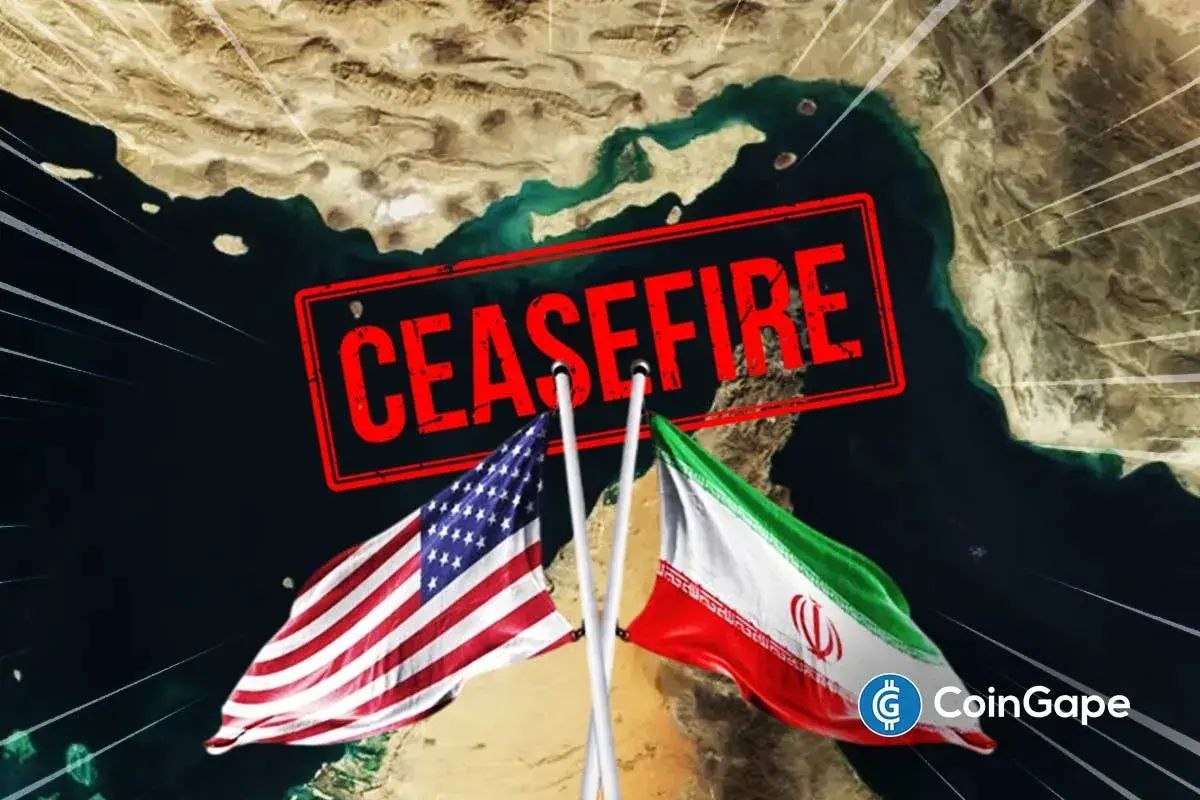
Category: Geopolitics

  • What Polymarket’s Peace-Deal Odds Actually Say About US-Iran Risk

    What Polymarket’s Peace-Deal Odds Actually Say About US-Iran Risk

    Polymarket can be useful during geopolitical shocks because it shows live expectation shifts. That does not mean the market confirms diplomacy, peace, or official state intent.

    Key takeaways

    • Prediction-market odds are a sentiment signal, not a diplomatic document.
    • In geopolitical markets, thin liquidity and fast-moving narratives can exaggerate confidence.
    • The practical business use is scenario planning: energy, shipping, insurance, and risk posture.
    • Executives should compare market moves with official statements and operational exposure before treating the signal as actionable.

    A rise in Polymarket odds around a potential peace or de-escalation scenario can be informative because it tells you how traders are repricing risk in real time. That is the valuable part. The dangerous part is treating the market itself as proof that diplomacy is advancing in a straight line.

    That distinction matters in US-Iran tensions because geopolitical markets are highly narrative-driven. A single headline, military development, or public comment can shift pricing quickly. In those environments, the market may be better at exposing changing sentiment than at delivering stable probability estimates.

    Why this kind of market still matters

    Even with those limits, executives should not ignore the signal. A market that reprices de-escalation or disruption can influence how operators think about logistics exposure, energy-sensitive planning, and near-term volatility. The useful move is not to outsource judgment to the market. It is to ask what the market is reacting to, and whether your operating assumptions are moving slower than everyone else’s.

    That is especially true in sectors that care about the Strait of Hormuz, shipping routes, oil sensitivity, insurance costs, and cross-border counterparty risk. In those cases, a live market can act as an early warning layer – not because it is always right, but because it is always updating.

    Where readers should be cautious

    Geopolitical prediction markets can become overconfident very quickly. The headline probability may obscure basic questions about volume, concentration, and event definition. If a market is thin, a relatively small amount of capital can move the visible probability far more than casual readers assume.

    There is also a language problem. A market about a “peace deal” compresses a wide range of outcomes into a single phrase. Real diplomacy is messy. Ceasefires, de-escalation signals, back-channel talks, sanctions negotiations, and temporary pauses are not the same thing. Readers should be careful not to import more certainty into the market wording than the real world can support.

    How to use the signal well

    The better workflow is simple. Start with the market move. Then compare it with official statements, reliable reporting, and your own operational exposure. If you run a business with energy, freight, geopolitical, or treasury sensitivity, the market can help you prioritize which scenarios deserve closer review.

    Used that way, prediction markets are valuable because they compress a changing narrative into a number that forces attention. But they are still only one layer. For a site like this one, the right frame is market structure and strategic interpretation – not geopolitical certainty and not AI keyword stuffing where it does not belong.

    Strategic outlook

    Over the next 6 to 12 months, executives will likely use geopolitical prediction markets more often as a live risk dashboard. The winners will be the teams that pair that signal with internal exposure maps, reliable reporting, and scenario planning. The market can tell you when attention shifts. It cannot replace verification.

    Sources and methodology

    This article treats the market as a risk-sentiment signal. It should not be read as diplomatic confirmation, geopolitical certainty, or investment advice.
  • Iranian Hackers Escalate Cyberattacks Targeting the US and Israel

    Iranian Hackers Escalate Cyberattacks Targeting the US and Israel

    Tehran’s cyber offensive against the US and Israel signals growing geopolitical tensions and highlights the evolving nature of digital threats.

    Recent reports indicate that Iranian hackers have stepped up their cyber operations against critical targets in the United States and Israel. According to sources including Ars Technica, Tehran aims to leverage these attacks to instill fear, disrupt operations, and illicitly extract sensitive intelligence. This escalation comes amid heightened geopolitical friction and illustrates the increasing sophistication and persistence of state-sponsored cyber campaigns.

    These cyberattacks are not just isolated incidents but part of a deliberate strategy by Iran to assert influence and gather strategic information. For business leaders and executives, the implications are significant as these campaigns often target infrastructure and organizations connected to government and private sectors. The risk extends beyond immediate damage, complicating efforts to secure sensitive data and maintain operational continuity.

    In this context, automation tools such as OpenClaw have become vital for cybersecurity teams aiming to detect and respond rapidly to evolving threats. Automation enables real-time threat intelligence sharing and quicker mitigation of attack vectors, reducing the window of vulnerability. Meanwhile, platforms like Polymarket continue to facilitate informed discussion and assessment of geopolitical risks, offering executives a valuable perspective on potential outcomes and strategies.

    Anthropic’s Claude, with its advanced natural language processing capabilities, is also playing a growing role in parsing large volumes of threat data and generating actionable insights. By automating the analysis of complex cyber threat intelligence, Claude helps security operations centers prioritize responses while reducing the cognitive load on human analysts.

    The escalation in Iranian cyber activity underscores the importance of integrating advanced automation and AI-driven tools into organizational cybersecurity frameworks. For business operators, this means investing not just in traditional defenses but also in technologies that enhance situational awareness and resilience. Coordination between public and private sectors, supported by these emerging technologies, remains critical to counteracting the multifaceted nature of modern cyber threats.

    As these offensive campaigns continue, executives should remain vigilant and informed about the evolving threat landscape. Staying updated with platforms like Polymarket can provide perspective on geopolitical developments, while leveraging AI and automation tools such as Claude and OpenClaw can strengthen an organization’s defense posture. Ultimately, proactive adaptation and investment in cybersecurity innovation will be key to navigating the risks posed by state-sponsored cyber actors.

    Heightened cyber threats from Iran underscore the need for robust and adaptive cybersecurity strategies among business leaders.

    As Iranian cyber operations become more aggressive, organizations linked to government infrastructure, technology, and critical services must reassess their security postures. The evolving nature of these attacks highlights a shift toward more persistent and sophisticated intrusion tactics, emphasizing the importance of real-time threat detection and response capabilities. For executives, this means that cybersecurity can no longer be seen as merely an IT function but as a core component of risk management and business continuity planning. Incorporating advanced automation platforms like OpenClaw can streamline incident response workflows, ensuring that threats are identified and mitigated faster than ever before.

    Moreover, the integration of AI-driven tools such as Anthropic’s Claude offers a significant advantage in managing vast amounts of cyber threat intelligence. Claude’s ability to analyze complex datasets and generate prioritized insights assists security teams in making informed decisions under pressure. Meanwhile, platforms like Polymarket provide a unique perspective by enabling executives to gauge geopolitical risks and potential cyber threat trajectories through collective market sentiment. Together, these technologies support a more proactive security stance, helping organizations anticipate and prepare for the multifaceted challenges posed by state-sponsored cyber adversaries in today’s interconnected digital landscape.

    Market leaders must consider the rising cyber risks posed by state-sponsored actors and adapt their strategies accordingly.

    The ongoing cyber offensive by Iranian hackers introduces complex challenges for businesses operating in or alongside vulnerable sectors. As these threat actors refine their techniques, there is an increased likelihood that private enterprises connected to critical infrastructure or government contracts could become collateral targets. This situation urges executives to reassess risk management frameworks, emphasizing proactive cybersecurity investments and partnerships with technology providers specializing in automation and threat intelligence. Tools like OpenClaw, which streamline incident detection and response, can help organizations reduce exposure and maintain operational resilience in the face of persistent adversarial activity.

    Moreover, platforms such as Polymarket offer a unique environment for CEOs and founders to gauge evolving geopolitical risks through collective market insights, supporting more informed decision-making. Meanwhile, the application of AI-driven solutions like Anthropic’s Claude in analyzing threat data highlights the growing role of advanced analytics to improve situational awareness. By embracing these innovations, business operators can better anticipate disruptions and safeguard sensitive assets, positioning themselves advantageously amid an increasingly volatile digital landscape.

    *Related: Check out our [comprehensive guide to Claude workflows](https://aitrendheadlines.com/free-claude-learning-guides/).*

    *Keep Reading: [How AI is transforming Polymarket trading strategies](https://aitrendheadlines.com/claude-polymarket-wallet-analyzer/).*