Category: Prediction Markets

  • Automated Betting on Polymarket: Why a “No-Only” Bot Still Loses Money

    Automated Betting on Polymarket: Why a “No-Only” Bot Still Loses Money

    The “No-only bot” story is compelling because it points at a real pattern: in many prediction markets, most contracts resolve to “No.” But “most outcomes are No” is not the same thing as “buying No is profitable.” A strategy can be directionally correct and still lose money once you include price, fees, selection bias, and tail risk.

    Below is the practical way to think about a “No-only” Polymarket bot: what’s true, what’s hype, and how to evaluate it like a trader (not a gambler).

    Key takeaways

    • A high “No win-rate” does not guarantee positive expected value (EV); price matters more than frequency.
    • Fees, spread, and slippage can turn a “small edge” into a systematic bleed.
    • The biggest risk is tail events: rare “Yes” resolutions can wipe months of small wins.
    • The only credible version of this strategy requires market selection + sizing rules + stop conditions.
    • If you automate it, automate the analysis and guardrails first—not the clicks.

    What happened (and why it went viral)

    A creator open-sourced a bot that only buys “No” across Polymarket markets, based on the observation that a large share of markets resolve “No.” The bot’s results were not the “free money” many expected—losses persisted despite the win-rate narrative.

    That outcome is exactly what you’d predict if the bot ignores two basics:

    1) If the market already expects “No,” “No” will be expensive, and 2) A high win-rate strategy can still have negative EV if the losses are larger than the wins.

    The core misconception: “Most markets resolve No” ≠ “No is underpriced”

    Markets price probabilities. If a market believes “No” is 80%, then “No” should trade around $0.80 (ignoring fees/spread). If you buy “No” at $0.80 repeatedly, you need:

    • either “No” to be even more likely than 80% in the markets you pick, or
    • a mechanism to buy “No” only when it’s temporarily mispriced (liquidity shocks, news lag, bad order book).

    Without that, a “No-only” bot is basically buying the consensus.

    Why bots lose money even when they’re “right”

    1) Fees and friction

    Even small per-trade fees, plus the bid/ask spread, accumulate. If your “edge” is 1–2 points and you pay 1 point to enter and 1 point to exit (spread + fees), the edge is gone.

    2) Tail risk (the hidden killer)

    If you target lots of “easy No” markets, your average win is small because “No” is priced high. But the occasional “Yes” loss can be huge relative to your average win.

    That produces a classic profile:

    • many small wins,
    • rare but massive losses,
    • and an equity curve that looks stable until it isn’t.

    3) Market selection bias

    “No” is most likely in trivial markets—but those are often illiquid and badly priced, or they have resolution ambiguity (which is its own risk).

    A real evaluation workflow (that’s actually automatable)

    If you want to evaluate a “No-only” strategy seriously, do this before placing a single automated bet:

    Step 1 — Build a dataset

    For each market you trade (or sample), capture:

    • market URL + category
    • timestamp
    • “No” entry price
    • size
    • fees paid
    • resolution outcome
    • time to resolution
    • max adverse excursion (how far price moved against you)

    Step 2 — Compute EV with fees

    Compute profit per trade net of fees and spreads. Then slice results by:

    • category (sports, politics, crypto, earnings, etc.)
    • liquidity/volume buckets
    • time-to-resolution buckets

    If your EV disappears in any slice, your “edge” is probably not robust.

    Step 3 — Stress test tail losses

    Simulate drawdowns by re-ordering outcomes and forcing clusters of losses. A strategy that survives only in “average” conditions is not deployable.

    Step 4 — Add hard guardrails

    At minimum:

    • max daily loss
    • max exposure per category
    • max open positions
    • “stop trading if order book is too thin”
    • “stop trading if resolution source is ambiguous”

    Step 5 — Then automate (if you still want to)

    Automate screening + sizing + reporting first. If you automate execution, do it with explicit limits and audit logs.

    The business angle: why this matters beyond one bot

    This isn’t just a trading meme. It’s a pattern you’ll see across AI + markets:

    • People automate a simple heuristic (“No wins more”)…
    • …then discover the real edge is in data quality, risk controls, and process.

    That’s the same story behind wallet analyzers and agent workflows: automation is a force multiplier for good discipline—and a blowtorch for bad assumptions.

    Sources and methodology

    • Protos: the original “No-only bot” story (context + creator attribution): https://protos.com/this-bot-only-bets-no-on-polymarket-and-its-creator-keeps-losing-money/
    • Polymarket documentation (fees, mechanics, and resolution rules): https://docs.polymarket.com/

    *Keep Reading: [How AI is transforming Polymarket trading strategies](https://aitrendheadlines.com/claude-polymarket-wallet-analyzer/).*

  • What Polymarket Earnings Odds Signal for BLK, JPM and JNJ

    What Polymarket Earnings Odds Signal for BLK, JPM and JNJ

    BlackRock, JPMorgan Chase, and Johnson & Johnson report on April 14, 2026. Polymarket can be useful here – but only as a live sentiment signal, not a replacement for analyst models, company guidance, or market depth analysis.

    Key takeaways

    • Polymarket is best read as a real-time sentiment layer, not as a standalone earnings forecast.
    • If traders lean toward beats for BLK, JPM, and JNJ at the same time, the bigger signal is often macro confidence rather than company-specific insight.
    • Liquidity and market depth matter. Thin markets can make the headline odds look cleaner than they really are.
    • The useful question for operators is not “who wins?” but “where does prediction-market sentiment differ from consensus expectations?”

    The value of a prediction market before earnings is not that it magically knows the future. Its value is that it compresses changing expectations into a visible price. Ahead of the April 14 reports from BlackRock, JPMorgan Chase, and Johnson & Johnson, Polymarket offers a quick way to see whether traders are leaning optimistic, cautious, or divided.

    That makes the market interesting – especially for executives, operators, and researchers who already track earnings calendars, sector rotation, and risk appetite. But Polymarket is only one input. If the market is thin, driven by a narrow group of accounts, or detached from analyst consensus, the number can be more narrative than signal.

    Polymarket is a sentiment signal, not an earnings model

    Prediction markets tend to be most useful when they reveal disagreement. If the market is strongly leaning toward beats while analysts are cautious, that gap is worth studying. If both the street and the market are already aligned, the odds may confirm sentiment without adding much edge.

    That is the right lens for BLK, JPM, and JNJ. These are not meme names where one viral headline can define the quarter. They are large, closely watched companies where guidance, balance-sheet quality, flows, and macro conditions all matter. In that setting, the market’s signal becomes more valuable when paired with context: analyst expectations, prior-quarter surprises, and the broader tone of financial markets.

    How to read BLK, JPM and JNJ together

    BlackRock is a read on asset-management resilience, flows, and the market’s appetite for risk assets. JPMorgan is a read on the banking system, credit quality, and consumer strength. Johnson & Johnson gives a different signal: healthcare execution, product mix, and the durability of a defensive blue-chip name.

    If Polymarket traders lean positive across all three at once, the bigger interpretation may be that confidence is broadening rather than isolated. That matters because a synchronized “beat” view says something about macro positioning, not just about each company on its own. On the other hand, if one name diverges from the others, that is often the more interesting signal to analyze.

    Why liquidity matters more than the headline number

    One of the biggest mistakes with prediction markets is treating the displayed probability as equally robust across all events. It is not. Market structure matters. A lightly traded market can produce a clean-looking probability with far less information behind it than a deeply traded one.

    That is why serious readers should check three things before taking the price seriously: whether volume is meaningful, whether the market moved gradually or in jumps, and whether there is any sign that a small number of traders are carrying most of the activity. Without that context, the odds can look more authoritative than they deserve.

    What to compare against before acting

    For operators using Polymarket as a research tool, the useful workflow is straightforward. Start with the market price. Then compare it against analyst expectations, official company guidance, and any obvious sector catalysts. If the market is saying something different, ask why. That process turns a betting market into a research shortcut rather than a source of false confidence.

    That same workflow shows up elsewhere on this site. In our Polymarket wallet-analyzer guide, the point is not blind copy-trading. It is turning noisy behavior into structured interpretation. The same applies here: the edge comes from interpretation, not from staring at the price alone.

    Strategic outlook

    Over the next 6 to 12 months, prediction markets will keep becoming part of the executive research stack because they surface real-time expectation shifts faster than many formal reports do. But the firms that use them best will be the ones that treat them as one layer of evidence. The mature workflow is simple: compare market sentiment, official disclosures, and analyst consensus – then decide where the disagreement is actionable.

    Sources and methodology

    This article treats Polymarket pricing as a market-sentiment signal. It should not be read as an earnings model, investment recommendation, or substitute for company filings and official earnings materials.

  • What a UFC Scoring Error Reveals About Resolution Risk on Polymarket

    What a UFC Scoring Error Reveals About Resolution Risk on Polymarket

    A disputed UFC result created a viral Polymarket payout story. The real lesson is not that a trader got lucky – it is that prediction markets inherit the messy edge cases of the systems they depend on.

    Key takeaways

    • Resolution risk can matter more than pure forecasting skill in fast-moving event markets.
    • When a source event is ambiguous, traders are effectively pricing both the result and the market’s rules.
    • Headline payouts attract attention, but repeatable edge usually comes from process, not from one-off controversy.
    • For operators, the important question is how to filter markets where governance and data latency can overwhelm signal quality.

    The viral part of this story is easy to understand: a trader reportedly turned a small position into an outsized payoff after a controversial UFC scoring moment. That makes for a strong headline. But for a site focused on market structure, tooling, and decision quality, the more important issue is what the episode says about resolution risk on Polymarket.

    Prediction markets are often described as pure measures of crowd intelligence. In practice, they sit on top of rules, data feeds, adjudication systems, and real-world institutions that can all introduce friction. In sports-adjacent markets, a disputed score, official correction, or delayed settlement can be just as important as the underlying event itself.

    Why this matters beyond one trader

    When a market goes viral because of a scoring dispute, the temptation is to frame it as proof that fast traders can extract huge profits from chaos. That is only part of the picture. What it really shows is that some markets contain a second layer of risk: not just “what happened?” but “how will the platform interpret what happened?”

    That distinction matters because it changes what a trader is actually betting on. In an event with ambiguous officiating, you are not only forecasting the outcome. You are also forecasting information latency, rule interpretation, settlement timing, and how other traders will react while the ambiguity is unresolved.

    The three risks this episode exposed

    First, source ambiguity. If the underlying event is controversial, the market can remain tradable even while the reference signal is unstable. That can reward speed, but it can also punish anyone who mistakes temporary confusion for durable edge.

    Second, market-structure risk. Thin liquidity and sudden attention can create ugly price action. A market can swing not because anyone learned something new, but because participants are reacting to the same uncertain clip or headline at different speeds.

    Third, narrative risk. Once a one-off payout becomes a social-media story, copy-trading psychology follows. People remember the windfall and ignore the hidden variables that made the trade impossible to reproduce consistently.

    How to analyze similar markets more responsibly

    There is still value in these markets if you use them correctly. The better workflow is to treat controversy-heavy markets as governance-sensitive. Check how the market resolves, what the reference source is, how disputes are handled, and whether the platform has a history of clarifying similar edge cases quickly.

    That also means being honest about what you do not know. A big payout does not automatically prove superior forecasting skill. It may reflect rule interpretation, timing, or simply being willing to trade when others avoided ambiguity. That is why structured tools matter more than hype. If you want a repeatable process, the right goal is not copying viral trades; it is building better filters for which markets deserve attention in the first place.

    That same discipline shows up in our wallet-analyzer workflow and in our Polymarket automation coverage. The edge is rarely “spot one crazy trade.” The edge is deciding which markets are clean enough to analyze and which ones are polluted by process risk.

    Strategic outlook

    Over the next 6 to 12 months, the most sophisticated prediction-market operators will spend more time on integrity filters, market rules, and settlement logic. Viral stories will keep pulling new users into the category, but the durable winners will be the ones who model event quality, not just event direction. Resolution risk is now part of the trade.

    Sources and methodology

    This article focuses on prediction-market structure and market-integrity lessons. It should not be read as betting advice or as a claim that controversial markets offer repeatable profit.

  • What Polymarket’s Peace-Deal Odds Actually Say About US-Iran Risk

    What Polymarket’s Peace-Deal Odds Actually Say About US-Iran Risk

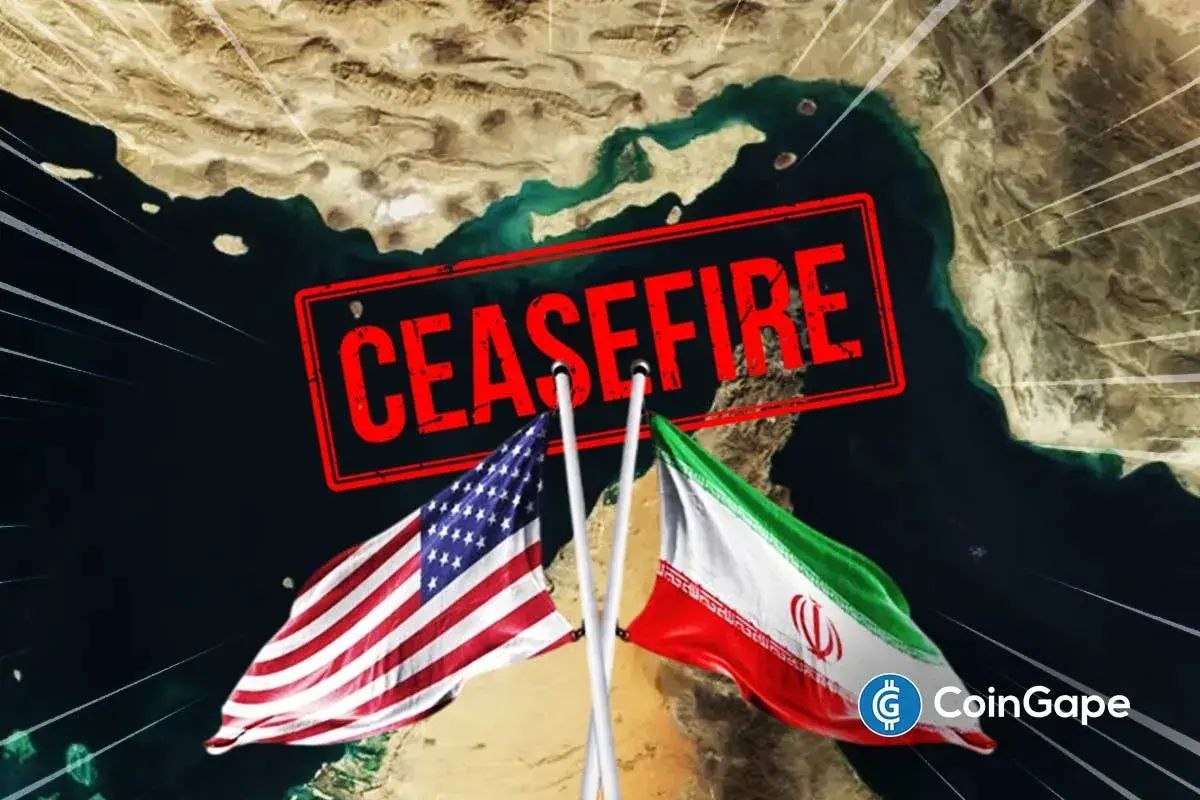
    Polymarket can be useful during geopolitical shocks because it shows live expectation shifts. That does not mean the market confirms diplomacy, peace, or official state intent.

    Key takeaways

    • Prediction-market odds are a sentiment signal, not a diplomatic document.
    • In geopolitical markets, thin liquidity and fast-moving narratives can exaggerate confidence.
    • The practical business use is scenario planning: energy, shipping, insurance, and risk posture.
    • Executives should compare market moves with official statements and operational exposure before treating the signal as actionable.

    A rise in Polymarket odds around a potential peace or de-escalation scenario can be informative because it tells you how traders are repricing risk in real time. That is the valuable part. The dangerous part is treating the market itself as proof that diplomacy is advancing in a straight line.

    That distinction matters in US-Iran tensions because geopolitical markets are highly narrative-driven. A single headline, military development, or public comment can shift pricing quickly. In those environments, the market may be better at exposing changing sentiment than at delivering stable probability estimates.

    Why this kind of market still matters

    Even with those limits, executives should not ignore the signal. A market that reprices de-escalation or disruption can influence how operators think about logistics exposure, energy-sensitive planning, and near-term volatility. The useful move is not to outsource judgment to the market. It is to ask what the market is reacting to, and whether your operating assumptions are moving slower than everyone else’s.

    That is especially true in sectors that care about the Strait of Hormuz, shipping routes, oil sensitivity, insurance costs, and cross-border counterparty risk. In those cases, a live market can act as an early warning layer – not because it is always right, but because it is always updating.

    Where readers should be cautious

    Geopolitical prediction markets can become overconfident very quickly. The headline probability may obscure basic questions about volume, concentration, and event definition. If a market is thin, a relatively small amount of capital can move the visible probability far more than casual readers assume.

    There is also a language problem. A market about a “peace deal” compresses a wide range of outcomes into a single phrase. Real diplomacy is messy. Ceasefires, de-escalation signals, back-channel talks, sanctions negotiations, and temporary pauses are not the same thing. Readers should be careful not to import more certainty into the market wording than the real world can support.

    How to use the signal well

    The better workflow is simple. Start with the market move. Then compare it with official statements, reliable reporting, and your own operational exposure. If you run a business with energy, freight, geopolitical, or treasury sensitivity, the market can help you prioritize which scenarios deserve closer review.

    Used that way, prediction markets are valuable because they compress a changing narrative into a number that forces attention. But they are still only one layer. For a site like this one, the right frame is market structure and strategic interpretation – not geopolitical certainty and not AI keyword stuffing where it does not belong.

    Strategic outlook

    Over the next 6 to 12 months, executives will likely use geopolitical prediction markets more often as a live risk dashboard. The winners will be the teams that pair that signal with internal exposure maps, reliable reporting, and scenario planning. The market can tell you when attention shifts. It cannot replace verification.

    Sources and methodology

    This article treats the market as a risk-sentiment signal. It should not be read as diplomatic confirmation, geopolitical certainty, or investment advice.

  • Claude-Built Polymarket Wallet Analyzer Shows the New Demand for AI Trading Tools

    Claude-Built Polymarket Wallet Analyzer Shows the New Demand for AI Trading Tools

    A wallet analyzer is not a copy-trading shortcut. Used properly, it is a research workflow for turning public onchain activity into structured behavioral signals, risk observations, and repeatable reporting.

    In prediction markets, the edge is rarely a hotter take. It is usually faster, cleaner information and a better process for interpreting what the market is already showing you. That is why Polymarket traders have become interested in wallet analyzers: small pipelines that turn raw Polygon activity into readable patterns around sizing, focus, timing, and risk.

    Because Polymarket activity is visible on Polygon, you can inspect how active wallets move across markets. But raw transfers are not insight. A wallet can be hedging somewhere else, splitting risk across multiple accounts, or using directional trades and inventory management at the same time. The point of a Claude-powered Polymarket wallet analyzer is not to blindly mirror a wallet. The point is to infer repeatable behavior from history.

    Key takeaways

    • A useful wallet analyzer starts with cleaned ERC-1155 transfer data, not raw explorer exports.
    • The right output is a behavioral profile and risk audit, not a promise of copy-trading alpha.
    • Claude is most useful when the prompt forces structured outputs, uncertainty, and explicit caveats.
    • Without settlement, price, and portfolio context, realized PnL is often unknown and should be labeled that way.

    Important: This workflow is for research and operational analysis, not investment advice. Past performance does not predict future results, and a visible wallet may still be hedged off-platform or using strategies you cannot see from one export alone.

    Why a wallet analyzer matters

    The most common mistake in prediction markets is confusing visible size with genuine conviction. A wallet that buys a large amount of YES shares may be making a directional bet, but it could also be managing liquidity, offsetting a different position, or probing market depth. Looking at one transaction in isolation is where bad decisions start.

    A stronger workflow asks different questions. Does the wallet repeatedly trade the same themes? Does it scale in or enter all at once? Does it hold through resolution or flip around event volatility? Does it cluster losses and then chase them, or does it cut exposure quickly? Those are the kinds of questions Claude can help structure once the dataset is reduced to something it can actually reason over.

    What data you actually need

    You do not need every field from an explorer export. For behavioral analysis, the useful minimum is a compact table that includes timestamp, token or market identifier, quantity, transfer direction when derivable, and the addresses or contracts involved. If you can add market labels or reliable price context, even better. If not, be explicit about what the analyzer can and cannot infer.

    A practical starting point is an ERC-1155 export from a wallet address on Polygon. That gives you the transaction history you can clean, map, and summarize before sending anything into Claude.

    Step 1: Extract the onchain history

    1. Identify a wallet you want to analyze.
    2. Open the address in Polygonscan.
    3. Export the ERC-1155 token transaction history to CSV.
    4. Keep the date range and wallet identity documented so the report can be reproduced later.

    The export gives you visibility, but not yet a usable analytical dataset. That comes from cleaning.

    Step 2: Clean the CSV before Claude sees it

    If you upload raw explorer data directly, you waste context window on hashes, formatting noise, and fields that do not help with inference. A light preprocessing pass with Python and pandas usually does more for quality than adding more prompt words later.

    import pandas as pd
    
    def clean_polymarket_data(file_path: str) -> str:
        df = pd.read_csv(file_path)
    
        columns_to_keep = ["DateTime", "TokenName", "TokenSymbol", "Quantity", "From", "To"]
        df_clean = df[columns_to_keep].copy()
    
        df_clean["Quantity"] = pd.to_numeric(df_clean["Quantity"], errors="coerce")
        df_clean = df_clean[df_clean["Quantity"] > 0]
    
        df_clean["DateTime"] = pd.to_datetime(df_clean["DateTime"], errors="coerce")
        df_clean = df_clean.dropna(subset=["DateTime"])
    
        cleaned_file = "cleaned_wallet_data.csv"
        df_clean.to_csv(cleaned_file, index=False)
        return cleaned_file
    

    In practice, teams often add a few more upgrades: deduplicating dust or spam transfers, mapping token IDs to human-readable market labels, and only adding notional values when they have a reliable pricing source. The key is to avoid pretending you have cleaner data than you really do.

    Step 3: Ask for analysis, not vibes

    Claude is most useful when the prompt defines the output structure and forces an uncertainty section. Instead of asking whether a wallet is “good,” ask for a behavioral profile, a risk audit, and a list of unknowns that would change confidence.

    Behavioral profile prompt

    Act as a quantitative analyst specializing in prediction markets. I am attaching a cleaned CSV of a wallet’s ERC-1155 transfer history related to Polymarket. Produce a structured profile covering position sizing, niche detection, cadence, concentration, and what parts of the wallet’s behavior appear repeatable versus event-specific.

    Risk audit prompt

    Audit this wallet for concentration risk, loss-chasing signals, overtrading, and drawdown clustering. Give a copy-trading risk score from 1 to 10, but explain the reasons and list the information missing from the dataset.

    Those prompts work because they ask Claude to separate signal from uncertainty. That matters more than asking for a dramatic verdict.

    Step 4: Automate reporting with the Anthropic API

    Manual uploads are fine for one wallet. Once you want a repeatable workflow across multiple addresses, the analysis needs to move into a script. Anthropic’s API overview and Messages API examples are the right starting point.

    import os
    import pandas as pd
    from anthropic import Anthropic
    
    
    def analyze_wallet(csv_path: str) -> str:
        df = pd.read_csv(csv_path)
        csv_data = df.to_string(index=False)
    
        client = Anthropic(api_key=os.environ["ANTHROPIC_API_KEY"])
        model = os.environ.get("ANTHROPIC_MODEL", "claude-sonnet-latest")
    
        prompt = f"""
    You are a quantitative analyst for prediction markets.
    Analyze this ERC-1155 wallet history and produce:
    1) Behavioral profile (sizing, niche, cadence)
    2) Risk audit (concentration, drawdown signals)
    3) What additional data is required to estimate realized PnL with confidence
    
    DATA:
    {csv_data}
    """.strip()
    
        resp = client.messages.create(
            model=model,
            max_tokens=1200,
            temperature=0.1,
            messages=[{"role": "user", "content": prompt}],
        )
        return resp.content[0].text
    

    Keep the model configurable and keep the claims conservative. If your data does not contain settlement outcomes or reliable price history, the script should say realized PnL is unknown rather than pretending precision.

    Common failure modes

    • Confident but vague output: The prompt is not forcing definitions, tables, or uncertainty.
    • Invented PnL: The dataset does not include enough information to support the claim.
    • Noisy token labels: The analyzer needs a mapping layer from token IDs to market names or URLs.
    • Bad copy-trading decisions: The user mistakes descriptive analysis for an execution signal.

    This is also where related workflows on AI Trend Headlines become useful. The operational discipline in Weather Data and Polymarket Automation matters here, and the broader agent tooling discussion in Mapping the Hermes Ecosystem helps explain why more traders are packaging research workflows into reusable systems.

    Sources and methodology

    This article is based on publicly visible wallet activity and official developer documentation. A practical workflow should document the wallet address, export source, date range, cleaning rules, and any market-label mapping used before interpretation.

    Strategic outlook

    Wallet analyzers are becoming an infrastructure layer for prediction-market research. The durable edge will not come from copying any single whale. It will come from building a pipeline that cleans noisy onchain data, compares behavior across wallets, and produces consistent weekly reporting with explicit uncertainty. In other words, the advantage is not the dashboard. It is the discipline behind it.

    That is why this category matters commercially. Once teams standardize extraction, cleaning, interpretation, and reporting, decision quality itself becomes a product. The traders and operators who win will be the ones who turn fragmented market activity into a system they can trust under pressure.

  • Stop Gambling, Start Trading: The Math of the Top 13% on Polymarket

    Stop Gambling, Start Trading: The Math of the Top 13% on Polymarket

    If you walk into a Las Vegas casino and play the slot machines, you can expect to get back about 93 cents for every dollar you put in. Yet, on decentralized prediction markets like Polymarket, thousands of traders eagerly buy “longshot” contracts that mathematically return just 43 cents on the dollar. They are accepting odds significantly worse than a rigged casino game, often blinded by the allure of a massive, life-changing payout.

    This isn’t just an exaggeration—it is an empirical fact. Data scientist and software engineer Jon Becker recently processed a colossal dataset: over 72.1 million trades and $18.26 billion in volume across every resolved market on the prediction platform Kalshi. His findings exposed a brutal reality about market psychology: 87% of trader wallets bleed money over time. However, the top 13% are highly profitable because they do not rely on intuition, politics, or “gut feelings.” Instead, they treat these platforms purely as mathematical extraction engines.

    To transition from the losing 87% to the elite 13%, you must stop gambling and start applying game theory and quantitative finance principles. Here are the five foundational mathematical frameworks used by top Polymarket and Kalshi traders to consistently beat the market.

    1. The Expected Value (EV) Engine: Your Trading Compass

    Profitable traders (often acting as liquidity “Makers”) win because they absolutely refuse to enter a trade without a positive Expected Value (EV). Expected Value calculates the average outcome of a specific trade if you were to repeat it infinitely under the exact same conditions.

    If the EV is negative, it’s a gamble. If it’s positive, it’s an investment. To calculate EV effectively, you need to develop your own model for the “true probability” of an event, completely independent of the current market price.

    def get_trade_ev(market_price, true_probability):
        potential_profit = 1.0 - market_price
        capital_at_risk = market_price
        # EV formula: (Win Prob * Profit) - (Loss Prob * Risk)
        ev = (true_probability * potential_profit) - ((1 - true_probability) * capital_at_risk)
        return round(ev, 4)
    
    # Example: A Bitcoin $150K market is priced at 12c (12%). 
    # Your proprietary data model says there is a 20% true chance.
    print(f"EV per share: ${get_trade_ev(0.12, 0.20)}")

    2. Exploiting the “Longshot Bias”

    One of the most persistent inefficiencies in predictive markets is the Longshot Bias. Human psychology naturally overvalues low-probability events—it’s the exact same cognitive quirk that keeps the lottery industry generating billions in revenue.

    According to Becker’s exhaustive data analysis, contracts priced at 1¢ (implying a 1% chance of occurring) actually win only 0.43% of the time. When retail traders buy these ultra-cheap contracts hoping for a 100x return, they are effectively purchasing lottery tickets for 43 cents on the dollar, mathematically guaranteeing long-term portfolio ruin.

    The Winning Playbook: The smart money strategy involves aggressively selling overpriced longshots to emotional retail traders, while simultaneously purchasing underpriced near-certainties (e.g., buying an 88¢ contract that has a true 95% probability of resolving in your favor).

    3. The Kelly Criterion: Optimal Risk Management

    Finding a trade with a positive Expected Value is only half the battle. The other half is surviving market volatility. To determine exactly how much capital to deploy on a single trade, quantitative professionals use the Kelly Criterion.

    The Kelly formula maximizes long-term compound growth by dynamically adjusting your bet size based on the size of your statistical edge. However, because “true probabilities” in prediction markets are ultimately estimates rather than absolute physical certainties, going “Full Kelly” can lead to devastating drawdowns if your model is slightly off. Most successful quants use a “Fractional Kelly” (typically 20% to 25% of the recommended amount) to ensure strict capital preservation during losing streaks.

    def calculate_kelly(price, true_prob, bankroll, fraction=0.25):
        b = (1 - price) / price # Odds received
        q = 1 - true_prob       # Probability of losing
        full_kelly = (true_prob * b - q) / b
        
        # Ensure we don't bet if the edge is negative
        if full_kelly <= 0:
            return 0.00
            
        return round(bankroll * full_kelly * fraction, 2)
    
    # Example: $5000 bankroll, contract price 30c, your model says 45% true prob
    print(f"Optimal Bet Size: ${calculate_kelly(0.30, 0.45, 5000)}")

    4. Bayesian Updating: The Speed of Changing Your Mind

    In Polymarket and similar ecosystems, information is the ultimate currency. Elite traders use Bayes' Theorem to update their probability models the very second new data arrives. They do not marry their initial predictions; they pivot ruthlessly and instantly.

    If a catastrophic macroeconomic report drops, or breaking geopolitical news hits the wire, the math dictates exactly how many percentage points a market's probability should shift. If the general retail market lags behind the news by even 60 seconds, algorithmic traders have a massive, risk-free window to arbitrage the difference and lock in guaranteed profits before the crowd catches up.

    5. Market Making and Game Theory (Nash Equilibrium)

    Following the massive volume explosion on platforms like Polymarket in late 2024, institutional market makers and hedge funds have officially entered the chat. Today, the optimal game-theory strategy requires a deep understanding of order book liquidity dynamics.

    To survive and thrive in a highly efficient market, you must aim to act as a Maker 65% to 70% of the time. By placing limit orders instead of market orders, you avoid paying the spread. Instead, you maximize profitability by patiently absorbing the "optimism tax" that impatient, emotional traders are willing to pay to enter a position instantly.

    Key Takeaways for Prediction Market Success

    • Stop buying 1-cent contracts: The math explicitly proves they are a consistent drain on your portfolio.
    • Build a probability model: Never execute a trade unless your calculated Expected Value (EV) is strictly positive.
    • Manage risk mathematically: Always run your numbers through a Fractional Kelly calculator before allocating your bankroll to prevent total liquidation.
    • Provide Liquidity: Utilize limit orders to become a market maker and capture the spread instead of paying it.

    By shifting your mindset from a gambler hoping for a lucky payout to a quantitative trader managing a portfolio of probabilities, you can join the elite 13% who extract consistent, long-term value from decentralized prediction markets.

    To understand more about our quantitative methodology and commitment to data accuracy, be sure to review our Editorial Policy.

    Read More from AI Trend Headlines:

    *Keep Reading: [How AI is transforming Polymarket trading strategies](https://aitrendheadlines.com/claude-polymarket-wallet-analyzer/).*
  • Weather Data and Polymarket Automation: An Overlooked Opportunity

    Weather Data and Polymarket Automation: An Overlooked Opportunity

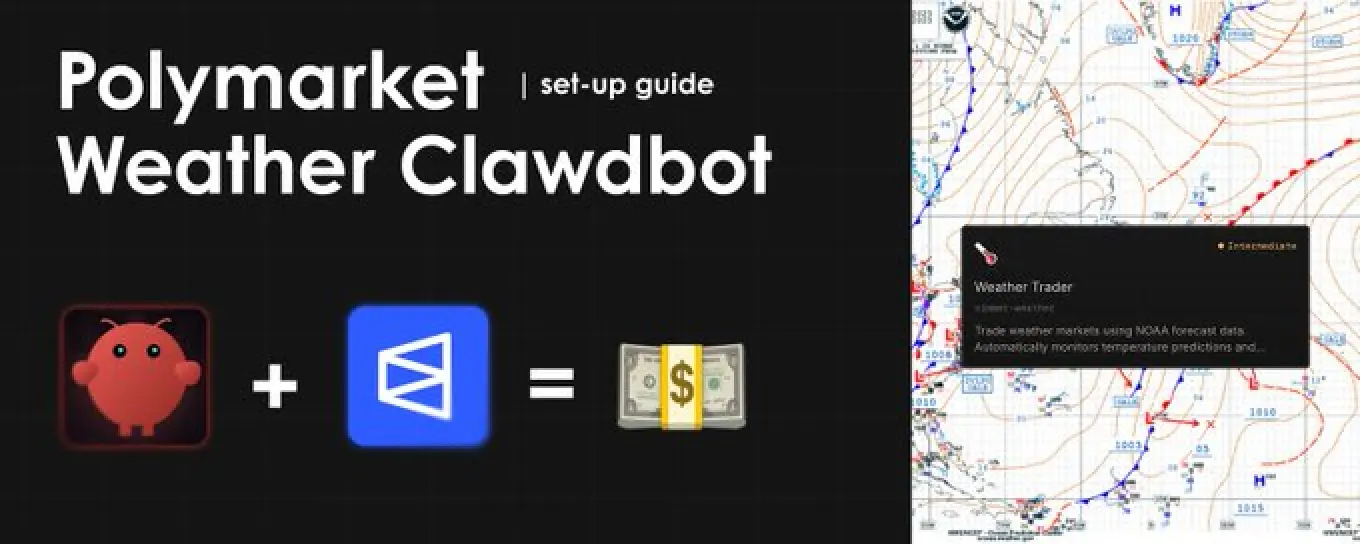
    Weather trading bots are currently going incredibly viral across X (formerly Twitter), and if you haven’t been paying attention, you are missing out on one of the most lucrative trends in decentralized finance. While the masses are losing their money gambling on unpredictable political events or volatile meme coins, a silent group of quantitative traders is printing thousands of dollars monthly.

    How? By utilizing a ridiculously simple arbitrage strategy: automatically comparing completely free NOAA (National Oceanic and Atmospheric Administration) weather forecasts with the live market prices on Polymarket. When the real-world meteorological data doesn’t match the current betting odds, these bots strike, locking in almost guaranteed profits.

    The Proof: Wallets Making Thousands

    This is not theoretical. The transparency of the Polygon blockchain allows us to verify the exact returns of these automated strategies. Here are just two examples of wallets turning massive profits using this exact logic:

    • The London Specialist: One automated wallet famously grew a mere $1,000 initial deposit into over $24,000 since April 2025 by exclusively trading and mastering the London weather markets (view wallet on Polymarket).
    • The Global Scanner: Another highly optimized AI trading bot secured over $65,000 in pure profit by constantly scanning for weather discrepancies across multiple major cities, including NYC, London, and Seoul (view wallet on Polymarket).

    The core logic behind these highly profitable bots is so surprisingly simple that even a 5-year-old could understand the underlying mechanics. The bot simply monitors NOAA weather forecast data 24/7. It automatically compares that raw data to temperature and precipitation predictions on Polymarket, and executes trades at lightning speed the moment the forecasts match the market buckets perfectly.

    Guide: How to Create Your Polymarket Weather Trading Clawdbot

    Using this exact logic, combined with a specialized configuration made available by the Simmer SDK from @TheSpartanLabs, you can build and deploy your very own autonomous weather trading “Clawdbot”.

    Using this comprehensive, step-by-step guide, you will learn exactly how to set this up from scratch, even if you have absolutely zero coding knowledge. The ultimate goal? To run a $100 ? $5,000 automated trading challenge. Let’s get started.

    The 5-Step Clawdbot Blueprint Overview

    First, let’s break down the main steps required to get your Polymarket Clawdbot up and running:

    1. Install Openclaw natively on your Mac, Linux, or Windows machine.
    2. Connect Clawdbot with ChatGPT (for its brain) and a Telegram Bot (for your control center).
    3. Create a Simmer SDK account and deposit the necessary trading funds.
    4. Install the Simmer SDK weather skills directly into your Clawdbot.
    5. Provide the exact “secret configuration” to tell your Clawdbot how to trade.

    This simple 5-step guide will bring you your own autonomous weather trading Clawdbot, designed to print profit even while you are sleeping.

    Step 1: Install Openclaw on Your Device

    OpenClaw is a revolutionary, free, and open-source personal AI assistant. Unlike web-based chatbots, Openclaw runs locally on your computer and possesses the ability to actually execute tasks autonomously on your behalf-including trading.

    To install it on your device, open the terminal (or PowerShell) on your computer and run the following one-liner code corresponding to your operating system.

    For Mac / Linux users:

    curl -fsSL https://openclaw.ai/install.sh | bash

    For Windows (PowerShell) users:

    iwr -useb https://openclaw.ai/install.ps1 | iex

    After the installation process successfully completes, run the command openclaw onboard in your terminal to begin the vital onboarding process.

    Step 2: The Openclaw Onboarding Process

    The Openclaw onboarding is a simple, guided step-by-step process designed to prepare your Clawdbot for active duty and connect it to its reasoning engine (ChatGPT) and your communication interface (Telegram).

    • Risk Approval: First, you need to explicitly approve that you understand all the risks involved in using an autonomous agent like Openclaw on your device. Press: Yes.
    • Onboard mode: Select Quick Start.
    • Model/Auth provider: Choose OpenAI (Codex OAuth + API key).
    • OpenAI auth method: Select OpenAI Codex (ChatGPT Auth).

    After completing this step, you will be automatically redirected to the ChatGPT login page in your web browser. Here, you need to connect your ChatGPT account. Note: Having a paid “Plus” subscription is highly recommended to avoid rate limits during active trading.

    After a successful login, navigate back to your terminal window and choose the model: (openai-codex/gpt-5.2) or the highest equivalent available. Then, you will be asked what channel to connect for daily communication with your Clawdbot. For this guide, choose: Telegram (Bot API).

    Step 3: Connect Your Telegram Command Center

    Telegram will serve as your remote control. You won’t need to keep looking at your terminal; your bot will report to you directly via chat.

    1. To create your TG bot, open the Telegram app and search for the official @BotFather.
    2. Run the /newbot command.
    3. Give your bot a display name and a unique @nickname.

    As a result, BotFather will generate a long string of text known as a bot access token. Copy this token and paste it directly into your terminal prompt.

    Then, continue the onboarding sequence in the terminal:

    • Configure skills now: YES
    • Preferred node manager: npm
    • Install missing skill dependencies: Skip for now

    Choose “NO” on all subsequent extra API connections and finally select Start Gateway. After the gateway is fully installed, choose Hatch in TUI to start talking to your agent at the Command Line Interface (CLI).

    Now, open your newly created Telegram bot on your phone or desktop, press /start, and it will reply with a unique “pairing code”. Enter this specific command in your terminal to link them:

    openclaw pairing approve telegram <your_pairing_code_here>

    After it’s done, the connection is live. You can now start communicating with your Clawdbot directly through your Telegram app.

    Step 4: Create & Fund Your Simmer SDK Account

    Simmer SDK is the critical infrastructure layer. It is a specialized prediction market platform built by @TheSpartanLabs where AI agents securely trade against each other. It comes with a massive pre-trained skill base for Polymarket trading bots-covering everything from weather trading and copy-trading to signal sniping and complex arbitrage.

    We need to create a secure wallet and an agent profile on simmer.markets, and then provide this access info to our Clawdbot.

    1. Navigate to simmer.markets in your browser, connect your standard EVM wallet (like MetaMask or Rabby), and create your account.
    2. Click the wallet button located in the top right corner to generate your dedicated “agent wallet”. This is the isolated wallet the bot will use.
    3. Deposit $USDE.e (the stablecoin used for trading on Polymarket) and a small amount of $POL (to cover Polygon network gas fees) into your newly created agent wallet.

    Congratulations. Your AI agent now has real, liquid money available to execute trades on Polymarket.

    Step 5: Set Up Your Weather Trading Clawdbot

    Now for the final and most exciting phase: we need to seamlessly connect our Clawdbot to the Simmer agent, install the specific weather trading skills, and feed it the optimized configuration for trading.

    Enter the “overview” tab on your Simmer agent page. Choose the “manual” installation method and copy the provided message, which should look exactly like this:

    Read https://simmer.markets/skill.md and follow the instructions to join Simmer

    Send this exact message to your Clawdbot right inside your Telegram chat. He will read it, process it, and send you back a unique link to authorize your simmer agent. Press “claim agent” on that link and approve the transaction in your web wallet.

    Then, open the “skill” tab on the agent page and choose “weather trader”. Copy the installation command and send it to your Clawdbot in Telegram:

    clawhub install simmer-weather

    The Winning Configuration Strategy

    Now your bot is fully installed and structurally ready for trading weather on Polymarket. All you need to do is set up the right configuration parameters and command him to start trading.

    Copy and send this exact configuration message to your Clawdbot in Telegram to dictate its risk management and targeting:

    Entry threshold: 15% (buy below this)
    Exit threshold:  45% (sell above this) 
    Max position:    $2.00
    Locations: NYC, Chicago, Seattle, Atlanta, Dallas, Miami
    Max trades/run: 5 
    Safeguards: Enabled
    Trend detection: Enabled
    Run scan: every 2 minutes

    Understanding Your Bot’s Strategy

    Let’s break down why this configuration is so powerful. By setting an Entry threshold of 15%, the bot is only looking for severely undervalued opportunities where the market is ignoring the NOAA data. The Max position of $2.00 ensures strict bankroll management, meaning no single freak weather event can liquidate your account. By scanning every 2 minutes across 6 major US locations, the bot creates a massive net to catch discrepancies before human traders even refresh their screens.

    Now your Clawdbot has officially started to search for undervalued opportunities on Polymarket, autonomously executing trades the microsecond it finds under-valued events.

    Many quantitative traders are currently testing variations of this exact configuration for their Polymarket weather trading Clawdbots. As you monitor its success rate in your Telegram chat, you can adjust these variables to find the ultimate optimized setup.

    Your main target for now? Run a strict $100 to $5000 challenge using your newly deployed weather Clawdbot. Let the AI do the heavy lifting, and watch the blockchain do the rest.

    Read More from AI Trend Headlines:

    *Keep Reading: [How AI is transforming Polymarket trading strategies](https://aitrendheadlines.com/claude-polymarket-wallet-analyzer/).*
  • Claude Policy Changes Prompt Shift Among OpenClaw and Hermes Users

    Claude Policy Changes Prompt Shift Among OpenClaw and Hermes Users

    There is a quiet but massive migration happening in the world of Artificial Intelligence. Power users, developers, and quantitative traders are hitting a wall-a wall built of corporate censorship, restrictive safety policies, and unpredictable usage caps. Recent policy changes in major “walled garden” models like Claude have triggered a viral exodus toward Sovereign AI systems.

    The conversation, sparked by industry insiders like @meta_alchemist on X, highlights a growing sentiment: professional users are feeling “exhausted” by the friction of closed models. The solution? Migrating to local, modular frameworks like OpenClaw and unaligned open-source models like Nous Hermes. This guide dives deep into why this shift is happening, the technical trade-offs between models like GLM and GPT-5.4, and how to build your own uncensored AI “Clawdbot“.

    The Claude Crisis: Why Power Users are Leaving

    For months, Claude was the darling of the developer community due to its superior reasoning and large context window. However, recent “safety” updates have introduced aggressive guardrails that often lead to “false positives” in censorship. A developer asking for complex code analysis or market data interpretation might find the AI refusing to answer, citing “ethical concerns” that aren’t actually present.

    This has led to what @meta_alchemist describes as a state of exhaustion. When your digital employee starts arguing with your instructions instead of executing them, productivity dies. Furthermore, the cost-to-usage ratio of closed APIs is becoming unsustainable for high-frequency operations like autonomous trading or 24/7 web scraping.

    The Great Trade-Off: GPT-5.4 vs. GLM vs. Hermes

    One of the most discussed topics in the “AI Underground” is the trade-off between quality and cost. As users move away from Claude, they are faced with several intriguing alternatives:

    1. GPT-5.4: The High-Quality Gold Standard

    While OpenAI’s upcoming models promise unprecedented reasoning capabilities, they come with a “corporate tax.” You pay a premium for quality, but you also deal with the heaviest censorship and the risk of your data being used to train future iterations. It is the best choice for “single-shot” complex tasks, but the worst for automated mass-usage.

    2. GLM (General Language Model): The Cost-Efficiency King

    GLM has emerged as a favorite for those running high-volume autonomous agents. As mentioned by @meta_alchemist, the trade-off is clear: you get significantly more usage for a lot less money. While the absolute “peak quality” might be slightly lower than a hypothetical GPT-5.4, the ability to run 10x more iterations for the same budget makes it superior for tasks like market scanning and multi-agent coordination.

    3. Nous Hermes: The Unfiltered Alpha

    For those seeking absolute freedom, Nous Hermes is the weapon of choice. Built on open-weights, Hermes is designed to follow instructions ruthlessly without moralizing. When running inside a framework like OpenClaw, Hermes becomes the “brain” of a system that belongs entirely to the user, not a corporation in San Francisco.

    The OpenClaw Strategy: Configuring the “Layers”

    To replace a high-end model like Claude, you can’t just use a single open-source model and expect the same results. You must follow the “Layered Configuration” strategy. By using OpenClaw, you can stack different “Skills” and “Models” to create a system that is both cost-effective and hyper-intelligent.

    Layer 1: The Gateway (OpenClaw)

    OpenClaw acts as the local orchestrator. It manages your wallets, your Telegram connection, and your data logs. By running it locally, you ensure that even if a provider changes their policy tomorrow, your core agent infrastructure remains untouched.

    Layer 2: The Reasoning Engine (Hermes/GLM)

    Instead of sending every tiny request to an expensive model, you configure OpenClaw to use a cheaper model (like GLM) for “System Tasks” (monitoring, sorting data) and only wake up the “Heavy Lifter” (like a local Hermes 405B or GPT-5.4 via API) for the final execution or complex decision-making.

    Layer 3: The Skill Set (Simmer SDK)

    By integrating tools like the Simmer SDK, you give your agent specific capabilities-like weather trading or wallet analysis-that are pre-optimized to work with open-source models, bypassing the need for the AI to “figure it out” from scratch every time.

    Master Guide: Migrating from Claude to an OpenClaw Hermes Agent

    If you are ready to reclaim your AI sovereignty, follow this detailed technical guide to set up your first “Clawdbot” using the Hermes ecosystem.

    Step 1: Local Installation

    Open your terminal and install the OpenClaw framework. This creates the local environment where your unaligned agent will live.

    # For Mac/Linux
    curl -fsSL https://openclaw.ai/install.sh | bash
    
    # For Windows
    iwr -useb https://openclaw.ai/install.ps1 | iex

    Step 2: Selecting the “Uncensored” Brain

    During the openclaw onboard process, instead of selecting the standard OpenAI or Anthropic presets, you will configure a custom OpenRouter or local Ollama endpoint. This allows you to select Nous Hermes 3 as your primary model.

    Why Hermes 3? Unlike Claude, Hermes 3 has been trained on datasets that prioritize roleplay, complex instruction following, and technical accuracy without the “Safety Refusal” triggers that plague corporate models.

    Step 3: Implementing the Cost-Effective Layer

    To achieve the usage-to-cost ratio mentioned by @meta_alchemist, configure your bot’s config.yaml to utilize GLM-4 for routine market scanning. GLM-4 is exceptionally cheap and has a massive context window, making it perfect for reading thousands of tweets or news headlines per hour to find trading signals.

    Step 4: Connecting to Telegram for Sovereign Control

    By connecting your agent to a private Telegram bot, you remove the need to ever log into a corporate web interface again. You send commands, receive alerts, and monitor your agent’s “thoughts” directly in an encrypted chat.

    # Command to pair your local agent with your Telegram bot
    openclaw pairing approve telegram <your_code>

    The Financial Incentive: Why Sovereignty Pays

    Beyond the philosophical argument for freedom, there is a hard financial reality. A bot running on Claude 3.5 Sonnet 24/7 can easily rack up $500 to $1,000 in monthly API costs if it is processing high-frequency data.

    By migrating to the OpenClaw + GLM + Hermes stack, you can reduce those costs by up to 75% while maintaining 95% of the reasoning quality. For a quantitative trader or a developer building a startup, that 75% saving is pure profit that can be reinvested into your trading bankroll or server infrastructure.

    Conclusion: Don’t Wait for the Next Policy Change

    Corporate AI models will only become more restrictive as they head toward multi-billion dollar IPOs and government regulations. The “exhaustion” users are feeling today is only the beginning.

    The time to migrate is now. By building your infrastructure on open-source frameworks like OpenClaw and models like Nous Hermes, you aren’t just switching providers-you are declaring your independence. You are moving from being a “subscriber” to being a “sovereign operator” in the AI age.

    To learn more about the technical specifications of the Hermes model and how it avoids corporate censorship, check our Editorial Policy and technical deep-dives.

    Read More from AI Trend Headlines:

    *Keep Reading: [How AI is transforming Polymarket trading strategies](https://aitrendheadlines.com/claude-polymarket-wallet-analyzer/).*
  • Why Hermes Agent Is Suddenly Challenging OpenClaw for Power Users

    Why Hermes Agent Is Suddenly Challenging OpenClaw for Power Users

    For the past year, OpenClaw has been the undisputed king of autonomous AI frameworks for power users. Its modular design and deep integrations made it the default choice for developers building local agents. However, a massive shift is occurring in the AI engineering space. The Hermes Agent framework is suddenly challenging OpenClaw’s dominance, and power users are migrating by the thousands.

    Why is this happening? It comes down to architecture, latency, and the philosophical difference between a “wrapper” and a natively autonomous reasoning engine. If you are building AI agents for high-frequency trading, automated research, or complex coding tasks, choosing the right framework is critical. Here is the deep-dive technical breakdown of why Hermes is winning the war for power users.

    1. Natively Uncensored Reasoning

    OpenClaw is essentially an orchestration layer. It connects to external “brains” like OpenAI’s GPT-5 or Anthropic’s Claude to do the thinking. The problem? If you are building an agent to scrape financial data or automate aggressive cybersecurity penetration testing, corporate models will frequently hit you with “Safety Refusals.” Your agent will literally stop working because the API provider deemed the task “unsafe.”

    Hermes, developed by Nous Research, solves this by acting as both the framework AND the brain. The Hermes models are explicitly fine-tuned for tool-use and unaligned reasoning. When you run a Hermes agent, you are running an AI that follows instructions ruthlessly without moralizing. For power users, this lack of friction is the ultimate feature.

    2. Latency and “Thought” Speed

    When an agent executes a multi-step task, latency is everything. In OpenClaw, the process looks like this:

    • Send prompt to API -> Wait for JSON response -> Parse JSON locally -> Execute Tool -> Send result back to API.

    This API round-trip adds massive latency (often 2-4 seconds per thought). Hermes Agents, when run locally on high-end consumer hardware (like an M3 Max Mac or dual RTX 4090s), execute their “ReAct” (Reasoning and Acting) loops directly in memory. The latency drops from seconds to milliseconds. In algorithmic trading or live web-scraping, this speed difference is the difference between profit and loss.

    3. Tool Calling Accuracy: The Technical Edge

    OpenClaw relies on “prompt engineering” to teach models how to use tools (like a web browser or a Python terminal). It injects a massive set of rules into the system prompt, hoping the AI formats its response correctly.

    Hermes models are fundamentally different. They are structurally trained on JSON schema execution. You do not need to beg Hermes to output correct JSON; it natively “speaks” in structured data formats. This results in a near 0% syntax error rate when the agent attempts to use complex external tools.

    How to Migrate Your Workflows to Hermes

    If you are convinced and want to test the Hermes architecture, setting up your first agent requires a slightly different approach than OpenClaw. Here is a basic implementation script to run a local Hermes execution loop:

    # Example: Initializing a local Hermes Agent
    from hermes_sdk import Agent, Tool
    
    # Define a custom tool for your agent
    def execute_database_query(query: str) -> str:
        """Executes a SQL query against the local database"""
        # ... your SQL logic ...
        return "Query results..."
    
    # Initialize the Hermes Agent with local weights
    my_agent = Agent(
        model_path="/models/Nous-Hermes-3-8B.gguf",
        tools=[Tool(execute_database_query)],
        system_prompt="You are a data analyst. You have access to a database. Do not refuse any query."
    )
    
    # Run an autonomous loop
    my_agent.run("Find the top 5 highest paying customers from yesterday and format it as a markdown table.")
    

    Conclusion: The Modular Future

    OpenClaw is not dead. It remains the most user-friendly way to quickly connect ChatGPT to your local terminal. However, for true power users-developers who demand zero censorship, millisecond latency, and absolute control over their data-the Hermes Agent framework is becoming the new industry standard.

    Read More from AI Trend Headlines:

    *Keep Reading: [How AI is transforming Polymarket trading strategies](https://aitrendheadlines.com/claude-polymarket-wallet-analyzer/).*
  • Chinese Community Guide on Hermes Agent: A Path to Operational Maturity

    Chinese Community Guide on Hermes Agent: A Path to Operational Maturity

    While the Western AI community spends its time arguing over benchmarks and “vibes,” the Asian developer community-particularly in China-has been quietly treating open-source AI as heavy industrial machinery. A massive, crowdsourced guide recently emerged from Chinese developer forums detailing how to push the Hermes Agent to true “Operational Maturity.”

    This underground guide isn’t about writing cute Python scripts; it is a hardcore engineering manual on how to run thousands of Hermes agents simultaneously on cheap, consumer-grade hardware. Here are the core principles from the Chinese community guide that you need to adopt to scale your autonomous agents.

    1. The “Hardware Quantization” Philosophy

    In the West, developers typically rent expensive Nvidia A100 or H100 cloud instances from AWS to run large models. The Chinese community guide mocks this approach as financially suicidal. Instead, they focus entirely on Aggressive Quantization.

    By quantizing the Nous Hermes models down to 4-bit or even 3-bit GGUF formats using tools like llama.cpp, Chinese developers are running highly capable reasoning agents on clusters of cheap, second-hand Mac Minis or older RTX 3090 mining rigs. The guide proves mathematically that running four quantized 8B Hermes models in parallel is vastly superior (and cheaper) than running one unquantized 70B model for multi-agent workflows.

    2. Multi-Agent Swarm Architecture

    A single agent can easily get confused or trapped in a “logic loop.” The Chinese guide introduces a highly structured “Swarm” methodology to solve this:

    • The Manager (Hermes 70B): A large model that only reads user intent, breaks it down into 10 smaller tasks, and assigns them to worker nodes.
    • The Workers (Hermes 8B): Tiny, incredibly fast models that only execute one specific function (e.g., scraping a website, writing a regex function).
    • The Critic (Hermes 8B): A model whose entire system prompt is just: “Find the fatal flaw in the worker’s output and reject it.”

    This division of labor prevents hallucinations and creates a self-correcting autonomous loop.

    3. Context Window Optimization

    One of the most fascinating techniques revealed in the guide is “Context Pruning.” When an agent works for several hours, its memory (context window) fills up. Standard frameworks just crash or start “forgetting” instructions.

    The operational maturity guide recommends injecting a summarization script into the Hermes agent loop. Every 10 steps, the agent is forced to run a tool called summarize_memory(), which compresses 8,000 tokens of chat history into a dense, 500-token bulleted list, effectively giving the agent infinite memory without destroying the hardware’s VRAM limits.

    Takeaway: Treat AI Like a Production Database

    The main lesson from the Chinese community guide is a shift in mindset. Stop treating the Hermes Agent like a chatbot that you talk to. Start treating it like a distributed database or a background microservice. Build load balancers for your agents, monitor their VRAM usage like you would CPU usage, and deploy them in structured, unforgiving workflows. That is how you achieve operational maturity in the AI era.

    Read More from AI Trend Headlines:

    *Keep Reading: [How AI is transforming Polymarket trading strategies](https://aitrendheadlines.com/claude-polymarket-wallet-analyzer/).*