Category: Productivity

  • Codex “For Almost Everything”: What OpenAI Shipped and Why the Reaction Is Mixed

    Codex “For Almost Everything”: What OpenAI Shipped and Why the Reaction Is Mixed

    OpenAI’s latest Codex release is not being framed as “a better coding assistant.” The messaging is bigger: Codex is being pushed toward a workspace for multi-step work that can operate across tools—closer to an agent than an IDE plugin.

    That shift explains the mixed reaction. The upside is obvious: fewer handoffs, more automation, and faster iteration. The skepticism is also rational: cross‑app agents introduce new failure modes—permissions, hallucinated actions, and unreliable long chains.

    Key takeaways

    • This is a positioning change: Codex is being sold as an agent workspace, not just autocomplete.
    • The business question is not features—it’s reliability per workflow and cost per successful output.
    • Cross‑app capability raises governance requirements (least privilege, logs, approval gates).
    • Teams should evaluate Codex on a small, repeatable task set before rolling it broadly.

    What OpenAI announced (high signal)

    OpenAI’s announcement describes Codex as expanding into broader workflows—beyond “write code” into operating across a developer’s full task surface. Even without perfect details, the important implication is:

    The product is moving from “assist me” to “run steps for me.”

    That’s a different market category—and a different operational risk profile.

    Why the early reaction is mixed

    1) Trust is the bottleneck

    The more steps an agent runs, the more chances it has to drift. In production environments, a single wrong action can cost more than a week of saved time.

    2) Permissions don’t scale by default

    If Codex needs access to repos, tickets, browsers, and deployment surfaces, you need clear boundaries:

    • what it can read,
    • what it can write,
    • and what always requires human approval.

    3) “Cool demo” ≠ repeatable workflow

    The highest ROI comes from workflows that are:

    • frequent,
    • well-defined,
    • and easy to verify (diffs, logs, deterministic checks).

    How to evaluate Codex like a business tool (not a hype launch)

    Pick 10 tasks you actually do (examples):

    • triage a bug ticket into a reproducible checklist,
    • update a small feature behind a flag,
    • generate a weekly “what changed” report from repo + docs,
    • refactor a module with tests passing.

    For each task, track:

    • time-to-acceptable output,
    • number of retries,
    • human review time,
    • and failure types.

    Then compute cost per successful outcome. That one metric will cut through most launch noise.

    What to do if you want this to show up in the Home page consistently

    If you publish manually in WordPress, the homepage “latest updates” section may not refresh automatically. You can refresh it after publishing by running the site’s homepage refresh script (it regenerates the Home cards from the latest posts).

    Sources and methodology

    • OpenAI announcement (primary source): https://openai.com/index/codex-for-almost-everything/

  • How to Build a Folder‑First Second Brain with AI (Karpathy‑Inspired, Agent‑Ready)

    How to Build a Folder‑First Second Brain with AI (Karpathy‑Inspired, Agent‑Ready)

    Most “second brain” systems fail for one reason: they turn knowledge into an app you babysit.

    The folder‑first approach flips that: your knowledge base is plain text in a simple directory structure, and AI becomes the interface—summarizing, searching, and compiling insights on demand. This idea has been popularized recently in a “Karpathy‑inspired” framework: keep it local, keep it boring, and make the AI do the glue work.

    The upgrade for 2026 is that you can now pair this with an agentic workflow (e.g., Claude Code) so the system maintains itself: ingest → normalize → index → review.

    Key takeaways

    • Your “second brain” can be folders + text files; AI is the UI.
    • The real leverage is a schema file that forces consistency.
    • Agent workflows turn it from “notes” into an operational asset: weekly reports, decision logs, and searchable memory.
    • Local‑first storage reduces risk and lock‑in—but only if you handle backups and sensitive data correctly.

    The 3‑folder architecture (the simplest version that works)

    Create one root folder, then three subfolders:

    1) /inbox/ — raw capture (messy notes, links, transcripts) 2) /wiki/ — cleaned, structured pages (stable knowledge) 3) /projects/ — active work (plans, decisions, deliverables)

    If you can’t decide where something goes, it goes to /inbox/.

    The schema file: the AI’s instruction manual

    Without a schema, AI “summaries” drift into vibes. Your schema makes outputs consistent.

    Create a file like /schema.yml:

    page_template:
      title: ""
      summary: ""
      key_points: []
      definitions: []
      sources: []
      open_questions: []
      last_updated: ""
    rules:
      - "Do not invent sources."
      - "If a claim is uncertain, mark it."
      - "Prefer bullets over long paragraphs."

    How to automate ingestion (agent‑ready workflow)

    Step 1 — Capture into /inbox/ (daily)

    • paste links with 2–3 lines of context (“why I saved this”)
    • drop meeting notes or voice transcripts
    • store short “decision memos”

    Step 2 — Normalize into /wiki/ (3x per week)

    Prompt template:

    Convert this inbox note into a Wiki page using schema.yml. Keep sources as URLs. Mark uncertain claims as “unverified”.

    Step 3 — Compile into a weekly report (weekly)

    Have the agent generate:

    • “What changed this week”
    • “Top 5 insights”
    • “Decisions made”
    • “Open questions”

    Store it as /projects/weekly-review/2026-04-XX.md.

    Where Claude Code fits (and why it matters)

    Claude Code is useful here because it can operate across files:

    • create new pages,
    • rewrite older ones to match schema,
    • and generate weekly reports—without you manually copy/pasting between tools.

    For non‑developers, the safety rule is simple: require a plan + diff review before any bulk rewrite.

    Common failure modes (and fixes)

    • Too much structure early: start with 3 folders; add complexity later.
    • No “why” context: always add 1–2 lines on why the note matters.
    • No sources: your wiki becomes fiction; enforce the sources field.
    • Sensitive data leaks: keep secrets out of /inbox/; use separate secure storage for credentials.

    Sources and methodology

    • Claude Code product overview (agentic, project‑wide changes): https://www.anthropic.com/product/claude-code
    • Add the original “Karpathy” reference link you’re quoting (tweet/blog) to avoid hearsay.

    *Related: Check out our [comprehensive guide to Claude workflows](https://aitrendheadlines.com/free-claude-learning-guides/).*

  • Claude Code for Non-Developers: Why Terminal Workflows Are Getting Easier

    Claude Code for Non-Developers: Why Terminal Workflows Are Getting Easier

    For most people, the terminal isn’t “hard.” It’s high‑stakes: one wrong command and you worry you’ll break something you don’t know how to fix.

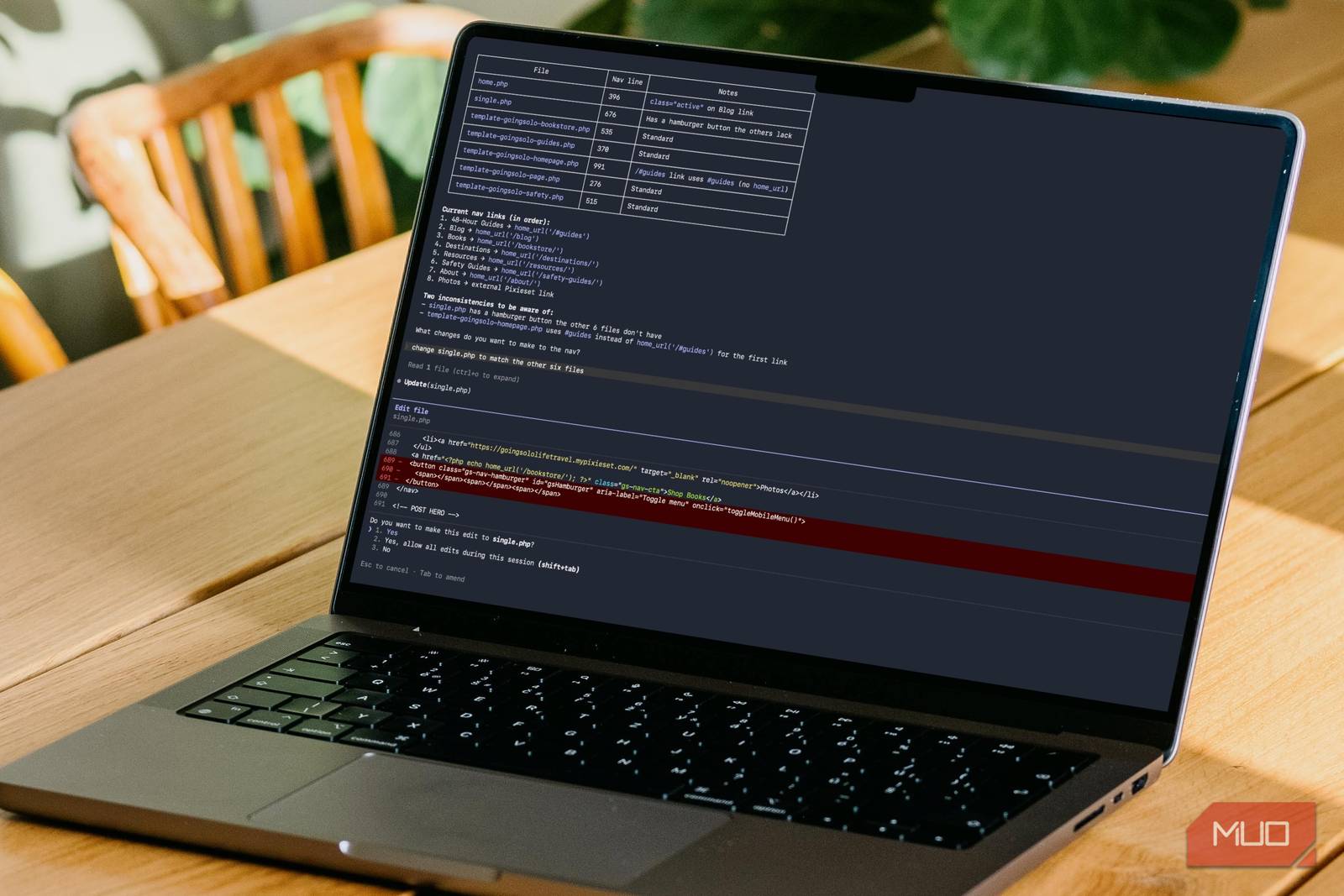
    Claude Code changes that dynamic by acting less like a chatbot and more like an agentic coding system: it can understand a project, propose a plan, and carry out multi‑file changes. That’s powerful for developers—but it’s also the first time non‑developers can realistically benefit from terminal workflows without memorizing syntax.

    The upside is real: faster prototypes, repeatable automations, less tooling friction. The downside is also real: permissions, security, and accountability become the bottleneck.

    Key takeaways

    • Claude Code is designed to operate across an entire project (not just single commands).
    • The best “non‑dev” use is a guardrailed workflow: plan → dry run → review → execute.
    • The biggest failure mode is over‑permissioning (letting an agent run as admin with broad access).
    • Treat “AI + terminal” like “AI + production access”: logs, least privilege, and checkpoints.

    What Claude Code actually is (in plain terms)

    Think of Claude Code as a system that can:

    1) read and understand a codebase or folder, 2) propose a multi‑step plan, and 3) execute changes across files and commands to complete a task.

    That’s a meaningful shift from “copy/paste snippets” to “end‑to‑end task completion.”

    Why this matters for business (not just devs)

    When terminal workflows get easier, three things happen:

    1) More work moves from apps into repeatable scripts (less manual clicking). 2) Ops and analysis become self‑serve for small teams (fewer handoffs). 3) Governance becomes urgent (who is allowed to run what, and when).

    If you’re a founder, analyst, or ops lead, the question is not “can we use it?” It’s:

    • Which workflows should we allow?
    • What data can it touch?
    • How do we review outputs before they cause damage?

    A safe “non‑developer” workflow template

    Use this as a standard operating procedure (SOP):

    1) Start with constraints (not tasks)

    Tell the agent:

    • what it is allowed to read/write (specific folders),
    • what it must never do (delete, reset, publish, deploy),
    • what must be confirmed by a human (network calls, credentials, production changes).

    2) Require a plan before execution

    Ask for:

    • a numbered plan,
    • the exact commands it intends to run,
    • and what files it will change.

    3) Do a dry run / diff review

    For file changes:

    • require a diff,
    • review it like a pull request,
    • then execute.

    4) Log everything

    Keep:

    • a command log,
    • a file‑change log,
    • and a short “what changed / why” note.

    This isn’t bureaucracy—it’s how you prevent “mystery changes” that no one owns.

    The new risks (and how to reduce them)

    • Command injection / unsafe shell usage: constrain tools and require confirmation for destructive commands.
    • Data leakage: do not point the agent at secrets folders, browser profiles, or production credentials.
    • Silent drift: schedule periodic “health checks” (does the workflow still do what you think?).

    Where this pairs perfectly with a “Second Brain”

    If you maintain a folder‑based knowledge base, Claude Code becomes the automation layer that:

    • summarizes new docs into your /inbox/,
    • normalizes notes into consistent schema,
    • and generates weekly “what changed” reports.

    That’s how terminal workflows turn into organizational leverage.

    Sources and methodology

    • Anthropic product page (definition + positioning of Claude Code): https://www.anthropic.com/product/claude-code
    • Claude Code security page (controls / security positioning): https://claude.com/claude-code-security
    • MakeUseOf (non‑dev “terminal fear” framing): https://www.makeuseof.com/i-was-scared-of-the-terminal-until-i-tried-claude-code/

    *Related: Check out our [comprehensive guide to Claude workflows](https://aitrendheadlines.com/free-claude-learning-guides/).*

  • Claude Expands Mobile Capabilities, Enhancing On-the-Go Access to Work Tools

    Claude’s latest update brings essential work tools to mobile devices, allowing executives and teams to stay productive on the move.

    Anthropic’s Claude platform has introduced a significant enhancement by enabling seamless access to popular work tools on mobile devices. Users can now explore Figma design files, create Canva slides, review Amplitude dashboards, and interact with other critical business applications—all from their phones. This move underscores a clear focus on improving mobile productivity for professionals who need flexible, remote access to their workflows.

    For CEOs, founders, and business operators, the ability to engage with multiple work applications without being tied to a desktop environment represents an operational advantage. Whether reviewing design iterations, preparing presentations, or monitoring product metrics, executives can maintain oversight and make informed decisions in real time. This flexibility also supports increasingly distributed and hybrid work models, where rapid access to business tools on mobile devices can drive efficiency and responsiveness.

    The integration of these tools within Claude’s mobile interface suggests a continued push toward automation and workflow streamlining. While platforms like Polymarket and OpenClaw have focused on automation and decentralized tools in their respective domains, Claude’s mobile capabilities emphasize the importance of accessible, unified work environments. By reducing friction between different software and device contexts, Claude helps businesses maintain momentum outside traditional office settings.

    As mobile work continues to gain prominence, tools that consolidate access to design, analytics, and content creation apps will play a vital role in shaping how business leaders manage their operations. Claude’s expansion into mobile work tools reflects this trend and offers executives practical means to stay connected and productive without compromising on the depth of their work.

    Overall, Claude’s latest update enhances the platform’s appeal to business professionals seeking efficient, mobile-first solutions. This development could influence how companies prioritize their digital toolkits, emphasizing flexibility and real-time collaboration across devices.

    Claude’s move to integrate key work tools into a mobile environment reflects a broader shift in how executives and teams approach productivity. As business operations become more distributed, the ability to access and interact with essential applications like Figma, Canva, and Amplitude from a smartphone enables decision-makers to stay engaged with critical tasks regardless of location. This development is particularly relevant for leaders managing remote or hybrid teams, as it supports continuous oversight and swift responses to evolving business needs.

    From a strategic perspective, Claude’s enhancement aligns with ongoing trends toward workflow automation and software consolidation seen across the tech industry. While companies like Polymarket and OpenClaw have concentrated on automation within their specialized domains, Claude’s focus on mobile work tool integration highlights the importance of seamless, cross-platform accessibility. For business leaders, this means fewer disruptions caused by switching contexts or devices, ultimately facilitating faster decision-making and more agile operations.

    Looking ahead, the availability of comprehensive work tools on mobile platforms could influence how organizations prioritize technology investments and digital transformation initiatives. By empowering executives to maintain visibility into design processes, data analytics, and content creation without desktop reliance, Claude is contributing to a more flexible and responsive business environment. As mobile productivity gains traction, such innovations may become critical for sustaining competitive advantage in dynamic markets.

    Related reading: Claude Code Enables Desktop Automation with Interactive Workflow Capabilities and Claude Code CLI Source Code Leak Raises Concerns for Anthropic and Industry.

    *Keep Reading: [How AI is transforming Polymarket trading strategies](https://aitrendheadlines.com/claude-polymarket-wallet-analyzer/).*