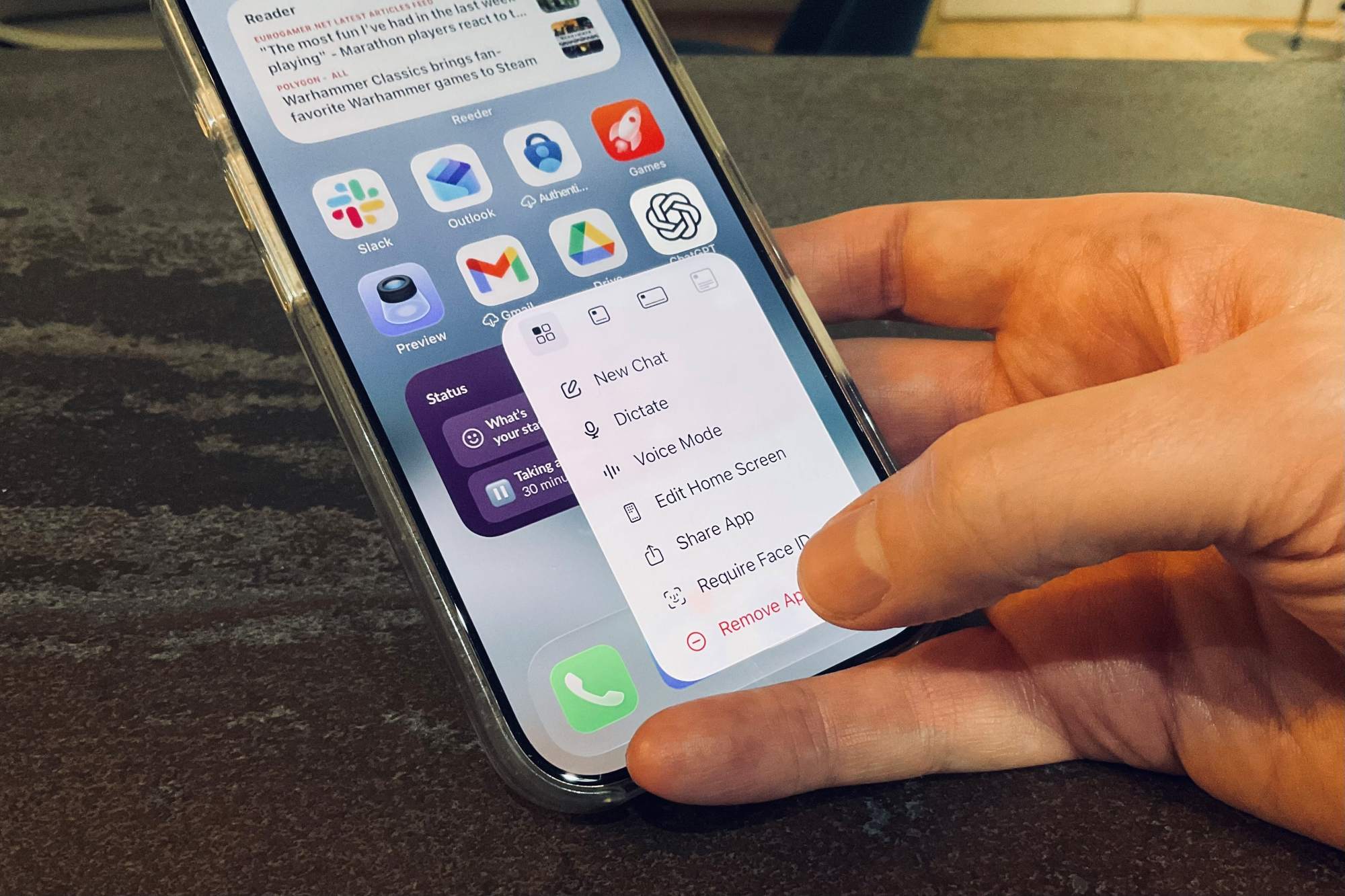
## Detailed Analysis: Navigating Life Without AI: A Personal Experiment
The decision to step away from AI tools like Claude, ChatGPT, and Gemini for a week prompted surprising realizations about our reliance on technology.
In a world increasingly dominated by artificial intelligence, the convenience these tools offer can often overshadow the fundamental question of whether they genuinely enhance productivity or merely facilitate a dependency that may not be necessary. A recent personal experiment involving a week without Claude, ChatGPT, and Gemini paints a compelling picture of this dilemma. Surprisingly, the absence of these AI companions did not result in a noticeable decline in productivity or quality of work.
During the week, I undertook the daunting task of moving homes, a scenario where one might expect AI to shine with assistance in logistics, planning, and communication. However, as I navigated the complexities of packing and relocating, it became evident that human intuition and traditional methods often outperformed the automated solutions I had relied on in the past. The experience raised questions about the actual utility of AI in tasks that require a high degree of personal engagement and nuanced understanding.
The implications of this experiment extend beyond personal anecdotes. For business leaders and operators, particularly those in the tech sector, the findings highlight a critical point of reflection. As companies increasingly invest in AI technologies, the tendency to overestimate their capabilities can lead to an underappreciation of fundamental human skills. Automation tools like Claude and ChatGPT are designed to streamline processes, yet their effectiveness may vary significantly depending on the context in which they are deployed.
This week-long hiatus also coincided with discussions surrounding platforms such as Polymarket and OpenClaw, which are focused on automation and predictive betting markets. The challenge for these platforms lies in effectively integrating AI without displacing the human element that drives decision-making. Users may find themselves navigating through complex algorithms that, while efficient, can sometimes lack the intuition and emotional intelligence that real-time human interaction provides.
Furthermore, the growing popularity of these platforms underscores a broader trend where businesses are exploring the boundaries between human insight and machine learning. As AI technologies evolve, it will be essential for organizations to strike a balance, leveraging automation to enhance, rather than replace, human capabilities. The future of work may hinge on how well industries adapt to this paradigm shift, incorporating AI as a tool for support rather than a crutch.
Looking ahead, the next 6 to 12 months will be crucial for organizations as they reassess their AI strategies. Companies must consider whether their reliance on automation is genuinely beneficial or if it detracts from core competencies. The insights gained from stepping back from AI can inform strategic decisions, leading to a more thoughtful integration of technology that complements human input.
In conclusion, the week without AI tools served as a reminder of the importance of human engagement in various tasks. While automation offers remarkable efficiencies, the value of personal skills and judgment remains irreplaceable. As we move forward, embracing a balanced approach may ultimately prove to be the key to harnessing the best of both worlds—human intuition and technological advancement.
The recent experiment of stepping away from AI tools like Claude, ChatGPT, and Gemini for a week highlights an intriguing aspect of modern business operations: the interplay between human intuition and automated solutions. For CEOs and business operators, understanding the nuances of this relationship is crucial. While these AI tools promise enhanced efficiency, their true impact often depends on the specific task at hand. In scenarios requiring strategic decision-making or emotional intelligence, such as moving homes, the advantages of human judgment can become more pronounced. This raises pertinent questions about the appropriate contexts for deploying automation and whether it detracts from our innate capabilities.
This reflection is particularly relevant in light of the increasing reliance on platforms such as Polymarket and OpenClaw, which aim to harness automation within their predictive markets. These platforms face the challenge of effectively integrating AI to enhance user experience while ensuring that the human element remains central to decision-making processes. As leaders contemplate the role of AI in their operations, it is vital to recognize that the most effective solutions may not always stem from the latest technology but rather from a balanced approach that values both human expertise and automation.
Looking ahead, the strategic implications of this introspection are significant. Over the next 6 to 12 months, business leaders must carefully evaluate their investments in AI technologies, focusing on how these tools can complement rather than replace human skills. Developing hybrid models that leverage the strengths of both AI and human insight could pave the way for more resilient and adaptive business strategies. As the market continues to evolve, the ability to discern when to rely on automation versus human judgment will be a defining characteristic of successful organizations in the future.
Source: pcworld.com.
Related reading: Claude-Built Polymarket Wallet Analyzer Shows the New Demand for AI Trading Tools, Weather Data and Polymarket Automation: An Overlooked Opportunity, and Maximizing Claude Cowork: Strategies for Business Leaders.
Leave a Reply