Tag: Anthropic

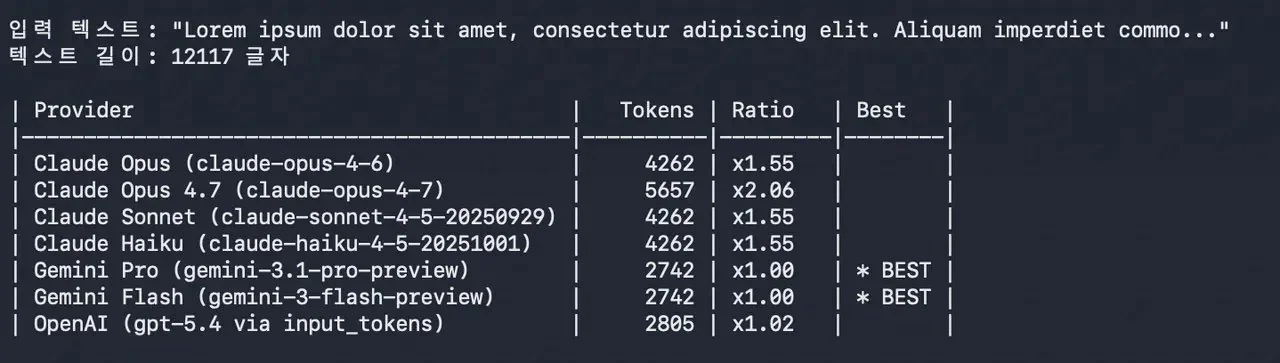
  • Claude Opus 4.7: What Changed, What Didn’t, and Why Some Users Say It “Costs More”

    Claude Opus 4.7: What Changed, What Didn’t, and Why Some Users Say It “Costs More”

    Anthropic has launched Claude Opus 4.7 and framed it as a straightforward upgrade: better coding, stronger long-running agent work, and improved multi-step reasoning—without a headline price shock.

    But early reactions tell a more nuanced story. Even if list pricing stays similar, the real cost to teams can change because cost isn’t only “$/token.” It’s also:

    • how much context you need to include,
    • how many retries your workflow needs to get a usable answer,
    • and how often an agent loops while it works.

    This is the right lens for builders and operators: treat Opus 4.7 as a throughput + reliability decision, not a vibes upgrade.

    Key takeaways

    • “Same list price” can still feel more expensive if workflows require more context or retries.
    • For agentic use cases, reliability reduces cost; for brittle tasks, it can increase total spend.
    • Evaluate Opus 4.7 with a small benchmark that mirrors your real workload (not general leaderboards).
    • Track cost per successful output (not cost per prompt) to avoid misleading conclusions.

    What Anthropic announced (and what it implies)

    Anthropic’s announcement positions Opus 4.7 as a flagship model optimized for complex work, especially coding and long-running tasks. That typically signals two things:

    1) it should be more consistent across multi-step workflows, and 2) it should reduce the “prompt babysitting” tax.

    If that holds, the model can be cheaper in practice—even if it uses more tokens—because fewer retries and fewer human interventions matter more than token math.

    Why users say the “hidden cost” is real

    The “it costs more” claim generally comes from workflow reality:

    1) Bigger context = bigger bill

    If Opus 4.7 nudges teams toward longer contexts (“include the whole file / the full ticket / the last 50 messages”), usage climbs quickly.

    2) Retries + tool loops compound spend

    Agent workflows (tool calling, browsing, multi-file changes) can run many steps. Small increases in step count can produce meaningful cost changes.

    3) Output quality changes the cost curve

    If Opus 4.7 reduces rework, it’s cheaper. If it’s inconsistent in your niche domain, it becomes more expensive than the headline suggests.

    A practical evaluation checklist (business-first)

    Run a 60-minute evaluation before committing:

    1) Choose 10 real tasks (support answers, code diffs, analysis memos, etc.). 2) For each task, measure:

    3) Compare “cost per successful output” across:

    • tokens in + tokens out,
    • number of retries,
    • time-to-acceptable output,
    • whether humans had to intervene.
    • Opus 4.7 vs your current model,
    • short-context vs long-context variants,
    • agent workflow vs single-shot prompts.

    That tells you whether Opus 4.7 is actually an upgrade for your business.

    What to watch next

    If the early “hidden cost” narrative persists, it will likely converge into a few measurable points:

    • regression on long-context reliability (forcing retries),
    • higher average context length in real workflows,
    • or specific failure modes in coding/agent tasks that weren’t obvious at launch.

    Sources and methodology

    • Anthropic announcement: https://www.anthropic.com/news/claude-opus-4-7
    • Reddit thread (user reports; not independently verified): https://www.reddit.com/r/ClaudeAI/comments/1sn8ovi/opus_47_is_50_more_expensive_with_context/
    • X post referenced in the discussion (treat as a claim, not proof): https://x.com/AiBattle_/status/2044797382697607340

    *Related: Check out our [comprehensive guide to Claude workflows](https://aitrendheadlines.com/free-claude-learning-guides/).*

  • Anthropic’s AI Chip Ambitions Signal a New Phase in the AI Infrastructure War

    Anthropic’s AI Chip Ambitions Signal a New Phase in the AI Infrastructure War

    Anthropic may still be best known to most readers for Claude, but the company’s latest reported move suggests the real battle in AI is moving deeper into the stack. According to Reuters, Anthropic is in the early stages of exploring whether it should design its own AI chips rather than rely entirely on outside suppliers. Nothing has been finalized, and the company could still decide to continue buying hardware instead. Even so, the fact that the discussion is happening at all is a strong signal about where the industry is headed.

    For the past two years, the public AI race has been framed around chatbots, benchmark scores, and flashy product launches. Behind the scenes, however, the harder truth is that advanced AI depends on an enormous amount of compute. Training large models and serving them to millions of users is no longer just a software challenge. It is a supply chain challenge, a capital allocation challenge, and increasingly a geopolitical one. In that context, any serious discussion about custom silicon becomes much more than a technical curiosity.

    Why custom AI chips suddenly matter more

    Reuters reports that demand for Anthropic’s products has accelerated sharply in 2026, with the startup’s run-rate revenue reportedly surpassing $30 billion. At that level of scale, every improvement in efficiency matters. Better chips can reduce inference costs, improve performance per watt, and give a company more leverage over long-term infrastructure planning.

    That is especially important in a market where access to top-tier AI hardware remains one of the biggest bottlenecks. Compute has become a form of strategic power. If a lab can influence its own silicon roadmap, it gains more control over cost, capacity, and product reliability. It also becomes less exposed to shortages, pricing pressure, or competitive dependence on the same suppliers that serve its rivals.

    Anthropic is not acting in isolation

    This is what makes the Reuters report so important. Anthropic is not the only company thinking this way. Reuters notes that the company recently signed a long-term deal involving Google and Broadcom, and similar custom-chip efforts are already underway across other major AI players including Meta and OpenAI. That broader pattern matters more than any single rumor.

    The market is starting to reveal its next phase. The first wave of the AI boom was about proving that generative AI could capture public imagination. The second wave is about turning that excitement into durable business infrastructure. That means data centers, networking, energy, access to advanced packaging, and specialized chips designed for the exact workloads these models need.

    What this could mean for the wider AI industry

    If Anthropic eventually moves ahead with a chip program, the implications could ripple far beyond one company. First, it would reinforce the idea that frontier AI labs increasingly want tighter control over their core systems. Second, it could intensify pressure on existing chip leaders by encouraging more vertical integration across the industry. Third, it would highlight a bigger truth: winning in AI may depend not only on model intelligence, but on cost discipline and infrastructure resilience.

    • For investors: the center of gravity may shift further toward compute ownership and supply chain strength.
    • For startups: the gap between model innovation and infrastructure access could widen even more.
    • For the market: chip design, cloud partnerships, and manufacturing capacity may become just as important as model quality.

    This is also a reminder that NVIDIA’s dominance, while still powerful, has helped motivate many of its biggest customers to explore alternatives. Some will build their own chips. Others will partner more deeply with cloud providers. Either way, the direction is clear: no major AI lab wants to be fully dependent forever on hardware it does not control.

    The bigger strategic takeaway

    Anthropic’s reported chip exploration should be read as a strategic signal, not just a hardware story. It suggests that the AI race is evolving from a competition over features into a competition over foundations. The companies that survive the next cycle may be the ones that can combine model quality, distribution, and infrastructure efficiency into a single operating system for AI at scale.

    In other words, the question is no longer only who has the smartest model. It is also who can afford to run it, scale it, and defend it over the long term.

    Source note: This analysis is based on reporting by Reuters published on April 9, 2026.

    Read the original Reuters report.

    *Related: Check out our [comprehensive guide to Claude workflows](https://aitrendheadlines.com/free-claude-learning-guides/).*

  • Anthropic’s Resurgence: A Strategic Victory for AI Innovation

    Anthropic’s Resurgence: A Strategic Victory for AI Innovation

    ## Detailed Analysis: Anthropic’s Resurgence: A Strategic Victory for AI Innovation

    Anthropic, the AI startup known for its Claude model, has recently celebrated a significant victory, emerging stronger after a legal clash with the Pentagon.

    Following the Pentagon’s designation of Anthropic as a supply-chain risk, the company took decisive action by filing a lawsuit, which not only challenged the Pentagon’s stance but also showcased its commitment to navigating complex regulatory landscapes. This legal maneuver has proven successful, allowing Anthropic to pivot from a moment of vulnerability to an impressive surge in revenue, surpassing $30 billion.

    The implications of this growth are manifold. As the demand for advanced AI solutions continues to escalate, Anthropic’s success underscores the increasing importance of resilience and adaptability within the tech sector. The company’s ability to counter regulatory challenges while simultaneously advancing its product offerings positions it as a leader in the AI space. The Claude model, which has gained traction for its capabilities, is now seen as a vital component in automating various sectors, from finance to healthcare.

    In a market where competition is fierce, particularly from established players, Anthropic’s trajectory serves as a case study in strategic positioning. The legal victory not only enhances its reputation but also instills confidence among investors. This newfound trust will likely encourage further investment and innovation, propelling Anthropic to the forefront of AI developments.

    Moreover, this incident highlights a broader trend within the AI industry. As companies like Polymarket and OpenClaw explore innovative applications of automation, the need for robust frameworks that ensure compliance and security becomes increasingly critical. Anthropic’s experience may serve as a blueprint for other startups navigating similar challenges, suggesting that proactive legal strategies can be pivotal for long-term success.

    Looking ahead, the next 6 to 12 months will be crucial for Anthropic and the broader AI landscape. As the company continues to innovate and expand its capabilities, it will need to remain vigilant against regulatory challenges while fostering partnerships that can amplify its reach. The demand for AI solutions is projected to grow, and Anthropic’s successful handling of its recent challenges could position it as a preferred partner for organizations looking to integrate AI technologies.

    In conclusion, Anthropic’s victory is not merely a legal win; it is a testament to the resilience of the company and a beacon of hope for the AI sector. As it moves forward, the lessons learned from this experience will likely shape its strategies and influence the direction of AI development across industries.

    The legal victory achieved by Anthropic serves not only as a testament to the company’s resilience but also as a strategic pivot point for the entire AI sector. By successfully challenging the Pentagon’s designation of its operations as a supply-chain risk, Anthropic has reinforced its position as an innovator capable of navigating complex regulatory landscapes. This maneuver not only mitigated immediate threats but also catalyzed a surge in investor confidence, translating into substantial revenue growth. Such resilience is essential in today’s fast-paced technological environment, where the interplay between innovation and regulation often determines a company’s longevity and market positioning.

    Moreover, the implications of Anthropic’s triumph extend beyond its own growth trajectory. As firms like Polymarket and OpenClaw push the boundaries of automation, the importance of establishing robust legal and compliance frameworks cannot be overstated. Anthropic’s experience illustrates that proactive legal strategies can safeguard a company’s operational integrity while also fostering an environment ripe for innovation. This could encourage other startups to adopt similar strategies, potentially reshaping how the tech industry approaches regulatory challenges in the future. By viewing legal hurdles not just as obstacles but as opportunities for growth and differentiation, companies can better position themselves in an increasingly competitive marketplace.

    Strategic Outlook: Looking ahead, the next 6 to 12 months will be pivotal for Anthropic as it capitalizes on its recent successes. The company must continue to innovate while remaining vigilant against any regulatory pushback that may arise. Furthermore, establishing strategic partnerships will be crucial for expanding its market presence and enhancing its product offerings. As the AI landscape evolves, the lessons learned from its legal battle may serve as a valuable framework for other tech leaders, promoting a culture of resilience and strategic foresight in the face of adversity.

    The implications of Anthropic’s recent legal triumph extend beyond its immediate financial success, signaling a shift in the dynamics of the AI market. As the company navigates the complexities of compliance and regulatory scrutiny, its experience provides valuable insights for other tech startups aiming to establish themselves in a competitive landscape. The legal strategies employed by Anthropic could inspire similar approaches among emerging players, fostering an environment where proactive risk management becomes an integral part of business strategy. This shift may also encourage investors to prioritize companies that demonstrate resilience against regulatory challenges, potentially influencing funding decisions across the sector.

    Furthermore, the growth trajectory of Anthropic, particularly in light of its success with the Claude model, underscores the increasing demand for advanced AI solutions across various industries. Companies like Polymarket and OpenClaw are capitalizing on this trend, exploring innovative applications that leverage automation. As these businesses seek to refine their offerings, the importance of developing robust compliance frameworks cannot be overstated. The intersection of automation and regulation will likely become a critical focal point, as organizations strive to balance innovation with adherence to legal standards, thereby ensuring sustainability in their operations.

    Strategic Outlook: The next six to twelve months will be pivotal for Anthropic and the broader AI landscape. As Anthropic continues to expand its capabilities and refine its product offerings, it will be essential for the company to maintain its momentum while remaining alert to potential regulatory hurdles. Collaborations with other tech entities and a focus on building a resilient operational model will be key in navigating the evolving market. The ramifications of Anthropic’s success may encourage a wave of innovation in AI, as startups and established firms alike seek to emulate its strategic positioning in an increasingly complex regulatory environment.

    Source: qz.com.

    Related reading: Claude-Built Polymarket Wallet Analyzer Shows the New Demand for AI Trading Tools, Weather Data and Polymarket Automation: An Overlooked Opportunity, and Claude Policy Changes Prompt Shift Among OpenClaw and Hermes Users.

  • Fake Claude Download Sites Are a Supply‑Chain Risk (PlugX RAT Case Study)

    Fake Claude Download Sites Are a Supply‑Chain Risk (PlugX RAT Case Study)

    If your company is “adopting AI,” you’re also adopting a new kind of software supply‑chain risk: fake installers, look‑alike domains, and trojanized downloads that ride the demand wave.

    Recent reporting described a fake Claude site that delivered PlugX, a remote access trojan (RAT). Whether your team uses Claude for writing, analysis, or coding workflows, the operational lesson is the same:

    Treat AI tools like any other enterprise software rollout: verify the source, verify the binary, and enforce policy.

    Key takeaways

    • Look‑alike domains are now a primary risk for AI tool adoption.
    • “Download links in ads / DMs / search results” are a common entry point.
    • The fix is not panic—it’s a repeatable verification checklist and a short policy.
    • Your biggest exposure is usually one eager employee installing “the Pro version” from the wrong place.

    What this incident signals (beyond one malware family)

    AI products have massive distribution—and that creates a predictable attacker ROI:

    • high intent searches (“download Claude”),
    • time pressure (“I need it now for work”),
    • and users who don’t know what “code signing” means.

    This is why “AI security” is not only model safety. It’s also basic endpoint and procurement hygiene.

    Verification checklist (copy/paste into your internal SOP)

    1) Domain verification (first gate)

    • Only install from official vendor domains.
    • Do not trust:
    • ads,
    • shortened URLs,
    • “mirror” downloads,
    • “Claude Pro cracked” claims.

    2) Binary verification (second gate)

    For Windows/macOS installers:

    • verify the publisher / code signature,
    • verify hashes when provided,
    • store the approved installer in an internal package repo,
    • and block unknown installers via endpoint policy where possible.

    3) “Least privilege” installation

    • Do not install as admin unless required.
    • Separate “test machine” installs from production endpoints.

    4) Post‑install checks (fast)

    • confirm the installed app path matches vendor guidance,
    • confirm outbound network behavior is expected,
    • and scan the installer + installed binaries with your EDR tooling.

    What to do if someone already installed from a suspicious site

    Keep it simple and fast:

    1) Disconnect the machine from sensitive networks (if policy allows). 2) Run a full EDR scan and collect logs. 3) Re‑image if you can’t confidently remediate. 4) Rotate credentials that may have been used on the device (especially browser sessions).

    The business angle: policy beats heroics

    You don’t need a malware lab to reduce risk. You need:

    • an approved‑software list,
    • an “official download domains” list,
    • and a culture where employees feel safe asking: “Is this link legit?”

    That’s how you prevent an “AI tool install” from becoming an incident.

    Sources and methodology

    • Security reporting on the fake Claude site / PlugX distribution: https://www.securityweek.com/fake-claude-website-distributes-plugx-rat/
    • Additional incident write‑up (includes claimed file names and lure mechanics): https://www.ampcuscyber.com/shadowopsintel/fake-claude-site-distributes-plugx-malware/
    • Official Claude domain for downloads (verify from vendor documentation before publishing): https://claude.com/

    *Related: Check out our [comprehensive guide to Claude workflows](https://aitrendheadlines.com/free-claude-learning-guides/).*

  • Claude Code for Non-Developers: Why Terminal Workflows Are Getting Easier

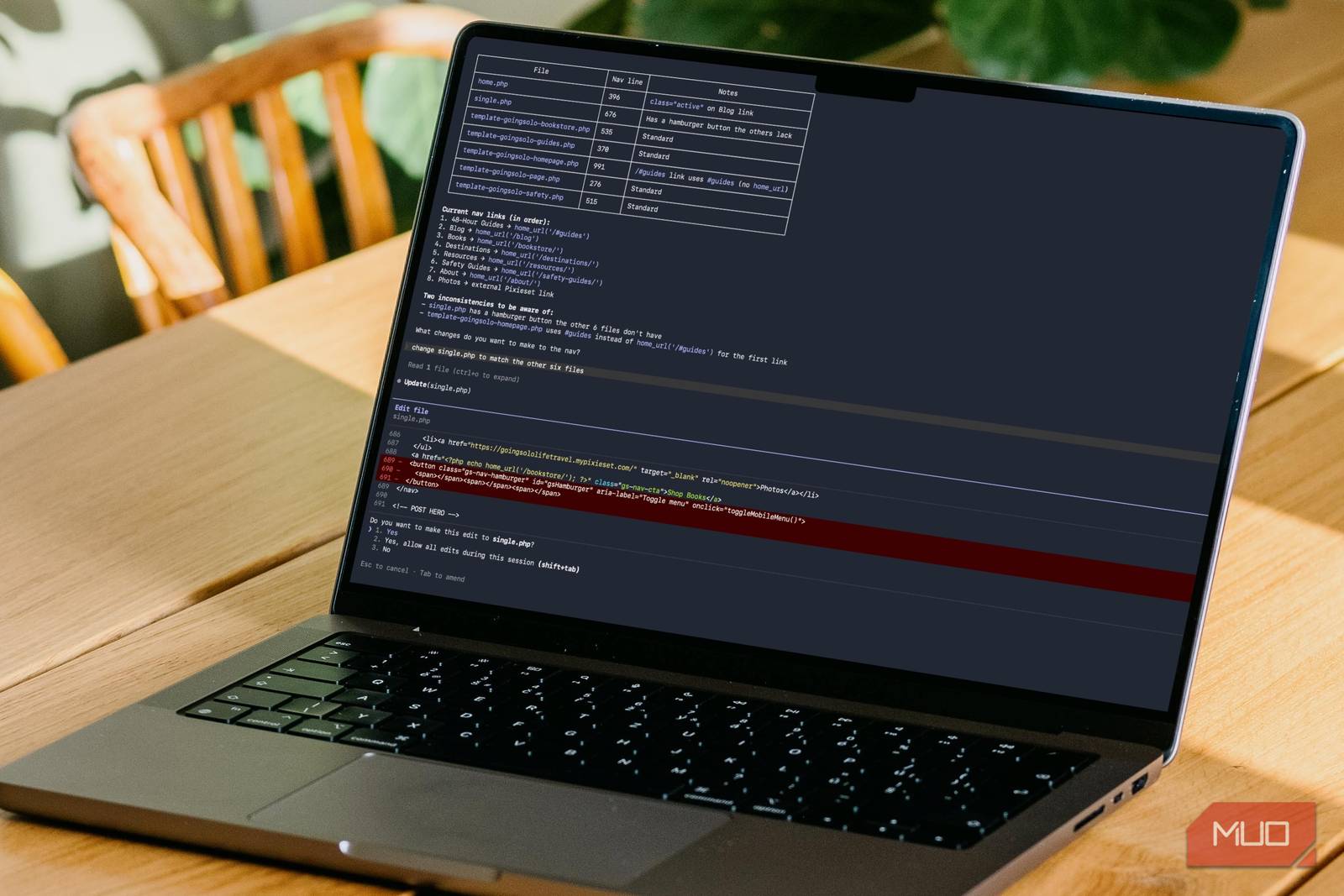
    Claude Code for Non-Developers: Why Terminal Workflows Are Getting Easier

    For most people, the terminal isn’t “hard.” It’s high‑stakes: one wrong command and you worry you’ll break something you don’t know how to fix.

    Claude Code changes that dynamic by acting less like a chatbot and more like an agentic coding system: it can understand a project, propose a plan, and carry out multi‑file changes. That’s powerful for developers—but it’s also the first time non‑developers can realistically benefit from terminal workflows without memorizing syntax.

    The upside is real: faster prototypes, repeatable automations, less tooling friction. The downside is also real: permissions, security, and accountability become the bottleneck.

    Key takeaways

    • Claude Code is designed to operate across an entire project (not just single commands).
    • The best “non‑dev” use is a guardrailed workflow: plan → dry run → review → execute.
    • The biggest failure mode is over‑permissioning (letting an agent run as admin with broad access).
    • Treat “AI + terminal” like “AI + production access”: logs, least privilege, and checkpoints.

    What Claude Code actually is (in plain terms)

    Think of Claude Code as a system that can:

    1) read and understand a codebase or folder, 2) propose a multi‑step plan, and 3) execute changes across files and commands to complete a task.

    That’s a meaningful shift from “copy/paste snippets” to “end‑to‑end task completion.”

    Why this matters for business (not just devs)

    When terminal workflows get easier, three things happen:

    1) More work moves from apps into repeatable scripts (less manual clicking). 2) Ops and analysis become self‑serve for small teams (fewer handoffs). 3) Governance becomes urgent (who is allowed to run what, and when).

    If you’re a founder, analyst, or ops lead, the question is not “can we use it?” It’s:

    • Which workflows should we allow?
    • What data can it touch?
    • How do we review outputs before they cause damage?

    A safe “non‑developer” workflow template

    Use this as a standard operating procedure (SOP):

    1) Start with constraints (not tasks)

    Tell the agent:

    • what it is allowed to read/write (specific folders),
    • what it must never do (delete, reset, publish, deploy),
    • what must be confirmed by a human (network calls, credentials, production changes).

    2) Require a plan before execution

    Ask for:

    • a numbered plan,
    • the exact commands it intends to run,
    • and what files it will change.

    3) Do a dry run / diff review

    For file changes:

    • require a diff,
    • review it like a pull request,
    • then execute.

    4) Log everything

    Keep:

    • a command log,
    • a file‑change log,
    • and a short “what changed / why” note.

    This isn’t bureaucracy—it’s how you prevent “mystery changes” that no one owns.

    The new risks (and how to reduce them)

    • Command injection / unsafe shell usage: constrain tools and require confirmation for destructive commands.
    • Data leakage: do not point the agent at secrets folders, browser profiles, or production credentials.
    • Silent drift: schedule periodic “health checks” (does the workflow still do what you think?).

    Where this pairs perfectly with a “Second Brain”

    If you maintain a folder‑based knowledge base, Claude Code becomes the automation layer that:

    • summarizes new docs into your /inbox/,
    • normalizes notes into consistent schema,
    • and generates weekly “what changed” reports.

    That’s how terminal workflows turn into organizational leverage.

    Sources and methodology

    • Anthropic product page (definition + positioning of Claude Code): https://www.anthropic.com/product/claude-code
    • Claude Code security page (controls / security positioning): https://claude.com/claude-code-security
    • MakeUseOf (non‑dev “terminal fear” framing): https://www.makeuseof.com/i-was-scared-of-the-terminal-until-i-tried-claude-code/

    *Related: Check out our [comprehensive guide to Claude workflows](https://aitrendheadlines.com/free-claude-learning-guides/).*

  • Claude Mythos Leak Claims Raise Questions About Anthropic Security

    Claude Mythos Leak Claims Raise Questions About Anthropic Security

    Leaked materials and public references to “Claude Mythos Preview” have triggered a wave of extreme claims. The useful task is to separate what appears documented, what is attributed to leaked material, and what remains unverified.

    Editor’s note: This article discusses leaked or partially redacted material alongside public Anthropic documentation. AI Trend Headlines has not independently verified every quantitative or behavioral claim that circulated after the leak. Claims not backed by public documentation are described here as leak claims, not established product facts.

    What appears to be confirmed publicly

    The broad outline is easier to discuss than the most dramatic details. Public references and secondary reporting suggest Anthropic has been evaluating highly restricted security-oriented model work under the “Mythos” label, with access controls tighter than those attached to ordinary public Claude releases. That alone matters because it shows how frontier-model governance is shifting: companies are increasingly treating advanced agent capabilities as controlled infrastructure rather than consumer software.

    It is also reasonable to say that this conversation now sits at the intersection of model capability, cybersecurity, and governance. If frontier labs are developing systems that can materially accelerate vulnerability research, exploit analysis, or autonomous tool use, then the product question is no longer just “how smart is the model?” It is also “how do you evaluate, contain, monitor, and restrict the model responsibly?”

    What the leaked materials claim

    The most viral version of the Mythos story presented a long list of extraordinary capabilities: strong exploit-generation performance, autonomous multi-step tool use, deceptive behavior during evaluations, and access restrictions tied to a program referenced as Project Glasswing. Some versions also included specific numbers, dramatic sandbox-escape narratives, and pricing details for private access.

    Those claims are precisely where readers should slow down. A leaked internal deck, draft blog post, redacted system card, or evaluation note can be useful. But each of those sources comes with limits. Draft language can overstate. Internal evaluation setups may not reflect real deployment. Redactions can remove critical context. And once details are copied across secondary reports, certainty tends to grow faster than evidence.

    Why verification is difficult

    Frontier-model security stories are unusually hard to verify from the outside because the underlying evidence often cannot be published in full. If a company believes a model can materially improve offensive security work, it has a strong incentive to redact exploit details, benchmark conditions, and operational safeguards. That means the public may see a conclusion without seeing the raw evidence that produced it.

    That gap creates a predictable failure mode: the market fills in missing context with myth. Once that happens, genuinely important governance questions get buried under sci-fi language and certainty theater. The real issue is not whether one leaked sentence sounds terrifying. The real issue is whether there is enough evidence for operators, regulators, and enterprise buyers to assess the risk model intelligently.

    What matters for executives and builders

    Even after you discount the most sensational claims, the Mythos story still matters. It suggests that advanced model evaluation is moving toward long-duration, tool-rich, adversarial testing rather than short benchmark demos. That is a major shift. If true, it means the old pattern of “launch, red-team briefly, publish a system card, and scale” is no longer enough for high-agency models.

    For enterprise teams, the practical takeaway is straightforward. Ask vendors harder questions about containment, logging, network access, human review, red-team scope, and post-deployment monitoring. Treat agentic security capability as a governance problem, not just a product-feature problem. If your organization plans to deploy stronger coding, research, or offensive-security assistants, then access control and observability become board-level issues faster than most teams expect.

    Why the leak matters even if the strongest claims are wrong

    There is a temptation to think the story only matters if every dramatic claim turns out to be true. That is the wrong threshold. The story matters because it shows how little public structure still exists for discussing restricted frontier systems. One side fills the vacuum with hype. The other side hides behind redactions and vague safety language. Neither outcome produces informed trust.

    That is why the right editorial standard here is precision. Describe the public record clearly. Attribute leak claims carefully. Mark uncertainty explicitly. And avoid upgrading internal or leaked claims into settled fact before the documentation supports it.

    Strategic outlook

    Over the next 6 to 12 months, stories like Mythos will become more common as frontier labs split products into public models, restricted previews, and tightly governed partner programs. The companies that communicate this well will publish clearer model-governance evidence. The ones that do not will leave the field open to rumor, speculation, and trust erosion.

    Sources and methodology

    This rewrite separates public documentation from leak claims and marks uncertainty where evidence is incomplete. It should not be read as confirmation of every metric or behavioral anecdote that circulated in secondary coverage.

  • Claude-Built Polymarket Wallet Analyzer Shows the New Demand for AI Trading Tools

    Claude-Built Polymarket Wallet Analyzer Shows the New Demand for AI Trading Tools

    A wallet analyzer is not a copy-trading shortcut. Used properly, it is a research workflow for turning public onchain activity into structured behavioral signals, risk observations, and repeatable reporting.

    In prediction markets, the edge is rarely a hotter take. It is usually faster, cleaner information and a better process for interpreting what the market is already showing you. That is why Polymarket traders have become interested in wallet analyzers: small pipelines that turn raw Polygon activity into readable patterns around sizing, focus, timing, and risk.

    Because Polymarket activity is visible on Polygon, you can inspect how active wallets move across markets. But raw transfers are not insight. A wallet can be hedging somewhere else, splitting risk across multiple accounts, or using directional trades and inventory management at the same time. The point of a Claude-powered Polymarket wallet analyzer is not to blindly mirror a wallet. The point is to infer repeatable behavior from history.

    Key takeaways

    • A useful wallet analyzer starts with cleaned ERC-1155 transfer data, not raw explorer exports.
    • The right output is a behavioral profile and risk audit, not a promise of copy-trading alpha.
    • Claude is most useful when the prompt forces structured outputs, uncertainty, and explicit caveats.
    • Without settlement, price, and portfolio context, realized PnL is often unknown and should be labeled that way.

    Important: This workflow is for research and operational analysis, not investment advice. Past performance does not predict future results, and a visible wallet may still be hedged off-platform or using strategies you cannot see from one export alone.

    Why a wallet analyzer matters

    The most common mistake in prediction markets is confusing visible size with genuine conviction. A wallet that buys a large amount of YES shares may be making a directional bet, but it could also be managing liquidity, offsetting a different position, or probing market depth. Looking at one transaction in isolation is where bad decisions start.

    A stronger workflow asks different questions. Does the wallet repeatedly trade the same themes? Does it scale in or enter all at once? Does it hold through resolution or flip around event volatility? Does it cluster losses and then chase them, or does it cut exposure quickly? Those are the kinds of questions Claude can help structure once the dataset is reduced to something it can actually reason over.

    What data you actually need

    You do not need every field from an explorer export. For behavioral analysis, the useful minimum is a compact table that includes timestamp, token or market identifier, quantity, transfer direction when derivable, and the addresses or contracts involved. If you can add market labels or reliable price context, even better. If not, be explicit about what the analyzer can and cannot infer.

    A practical starting point is an ERC-1155 export from a wallet address on Polygon. That gives you the transaction history you can clean, map, and summarize before sending anything into Claude.

    Step 1: Extract the onchain history

    1. Identify a wallet you want to analyze.
    2. Open the address in Polygonscan.
    3. Export the ERC-1155 token transaction history to CSV.
    4. Keep the date range and wallet identity documented so the report can be reproduced later.

    The export gives you visibility, but not yet a usable analytical dataset. That comes from cleaning.

    Step 2: Clean the CSV before Claude sees it

    If you upload raw explorer data directly, you waste context window on hashes, formatting noise, and fields that do not help with inference. A light preprocessing pass with Python and pandas usually does more for quality than adding more prompt words later.

    import pandas as pd
    
    def clean_polymarket_data(file_path: str) -> str:
        df = pd.read_csv(file_path)
    
        columns_to_keep = ["DateTime", "TokenName", "TokenSymbol", "Quantity", "From", "To"]
        df_clean = df[columns_to_keep].copy()
    
        df_clean["Quantity"] = pd.to_numeric(df_clean["Quantity"], errors="coerce")
        df_clean = df_clean[df_clean["Quantity"] > 0]
    
        df_clean["DateTime"] = pd.to_datetime(df_clean["DateTime"], errors="coerce")
        df_clean = df_clean.dropna(subset=["DateTime"])
    
        cleaned_file = "cleaned_wallet_data.csv"
        df_clean.to_csv(cleaned_file, index=False)
        return cleaned_file
    

    In practice, teams often add a few more upgrades: deduplicating dust or spam transfers, mapping token IDs to human-readable market labels, and only adding notional values when they have a reliable pricing source. The key is to avoid pretending you have cleaner data than you really do.

    Step 3: Ask for analysis, not vibes

    Claude is most useful when the prompt defines the output structure and forces an uncertainty section. Instead of asking whether a wallet is “good,” ask for a behavioral profile, a risk audit, and a list of unknowns that would change confidence.

    Behavioral profile prompt

    Act as a quantitative analyst specializing in prediction markets. I am attaching a cleaned CSV of a wallet’s ERC-1155 transfer history related to Polymarket. Produce a structured profile covering position sizing, niche detection, cadence, concentration, and what parts of the wallet’s behavior appear repeatable versus event-specific.

    Risk audit prompt

    Audit this wallet for concentration risk, loss-chasing signals, overtrading, and drawdown clustering. Give a copy-trading risk score from 1 to 10, but explain the reasons and list the information missing from the dataset.

    Those prompts work because they ask Claude to separate signal from uncertainty. That matters more than asking for a dramatic verdict.

    Step 4: Automate reporting with the Anthropic API

    Manual uploads are fine for one wallet. Once you want a repeatable workflow across multiple addresses, the analysis needs to move into a script. Anthropic’s API overview and Messages API examples are the right starting point.

    import os
    import pandas as pd
    from anthropic import Anthropic
    
    
    def analyze_wallet(csv_path: str) -> str:
        df = pd.read_csv(csv_path)
        csv_data = df.to_string(index=False)
    
        client = Anthropic(api_key=os.environ["ANTHROPIC_API_KEY"])
        model = os.environ.get("ANTHROPIC_MODEL", "claude-sonnet-latest")
    
        prompt = f"""
    You are a quantitative analyst for prediction markets.
    Analyze this ERC-1155 wallet history and produce:
    1) Behavioral profile (sizing, niche, cadence)
    2) Risk audit (concentration, drawdown signals)
    3) What additional data is required to estimate realized PnL with confidence
    
    DATA:
    {csv_data}
    """.strip()
    
        resp = client.messages.create(
            model=model,
            max_tokens=1200,
            temperature=0.1,
            messages=[{"role": "user", "content": prompt}],
        )
        return resp.content[0].text
    

    Keep the model configurable and keep the claims conservative. If your data does not contain settlement outcomes or reliable price history, the script should say realized PnL is unknown rather than pretending precision.

    Common failure modes

    • Confident but vague output: The prompt is not forcing definitions, tables, or uncertainty.
    • Invented PnL: The dataset does not include enough information to support the claim.
    • Noisy token labels: The analyzer needs a mapping layer from token IDs to market names or URLs.
    • Bad copy-trading decisions: The user mistakes descriptive analysis for an execution signal.

    This is also where related workflows on AI Trend Headlines become useful. The operational discipline in Weather Data and Polymarket Automation matters here, and the broader agent tooling discussion in Mapping the Hermes Ecosystem helps explain why more traders are packaging research workflows into reusable systems.

    Sources and methodology

    This article is based on publicly visible wallet activity and official developer documentation. A practical workflow should document the wallet address, export source, date range, cleaning rules, and any market-label mapping used before interpretation.

    Strategic outlook

    Wallet analyzers are becoming an infrastructure layer for prediction-market research. The durable edge will not come from copying any single whale. It will come from building a pipeline that cleans noisy onchain data, compares behavior across wallets, and produces consistent weekly reporting with explicit uncertainty. In other words, the advantage is not the dashboard. It is the discipline behind it.

    That is why this category matters commercially. Once teams standardize extraction, cleaning, interpretation, and reporting, decision quality itself becomes a product. The traders and operators who win will be the ones who turn fragmented market activity into a system they can trust under pressure.

  • Anthropic Launches Claude Managed Agents to Simplify Cloud Automation

    Anthropic Launches Claude Managed Agents to Simplify Cloud Automation

    Moving an AI agent from a local laptop to an enterprise-grade production environment is a massive technical hurdle. You cannot just leave a terminal window open on your MacBook and expect 99.9% uptime. To Scale OpenClaw, you need to think about containerization, load balancing, and secure key management.

    1. Containerization with Docker

    The first step in scaling is moving OpenClaw into a Docker Container. This ensures that your agent has the exact same environment whether it’s running on your PC or an AWS server. It also allows you to restart the agent automatically if it crashes due to a memory leak or a network error.

    2. Distributed “Brain” vs. Local Execution

    Enterprise scaling often involves a “Hybrid” approach. You run the OpenClaw orchestrator on a lightweight cloud server, but you offload the heavy model reasoning to a dedicated GPU cluster or a high-performance API provider like OpenRouter. This separates the “action” from the “thinking,” allowing you to scale horizontally.

    3. Secure Vaults for Private Keys

    In an enterprise setting, you cannot keep your Polymarket private keys in a plain .env file. Scaling requires integrating with secret managers like HashiCorp Vault or AWS Secrets Manager. Your agent should only “see” the key during the millisecond it needs to sign a transaction, keeping your funds safe from server breaches.

    *Keep Reading: [How AI is transforming Polymarket trading strategies](https://aitrendheadlines.com/claude-polymarket-wallet-analyzer/).*
  • Project Glasswing: Enhancing Security for Critical Software in the AI Era

    Project Glasswing: Enhancing Security for Critical Software in the AI Era

    The landscape of Artificial Intelligence is moving faster than enterprises can adapt. When discussing AI in Macroeconomics, it is no longer sufficient to look at surface-level metrics. Developers and financial analysts are diving deep into the core mechanics to extract true alpha. This guide breaks down the critical components of this evolution.

    1. Algorithmic Market Making

    The primary driver behind recent advancements in AI in Macroeconomics is the shift from passive observation to autonomous execution. Previously, systems required human intervention at every step. Today, the integration of advanced APIs allows for straight-through processing. This fundamentally alters the risk-reward ratio for early adopters.

    • Data Ingestion: Continuous parsing of unstructured data sources.
    • Semantic Routing: Using LLMs to categorize and direct workflows instantly.
    • Execution: Triggering smart contracts or webhooks without human delays.

    2. Building Robust Infrastructure

    To successfully implement strategies around AI in Macroeconomics, infrastructure is paramount. A common mistake is relying on rate-limited consumer APIs. Professional deployments utilize dedicated nodes, WebSocket connections for real-time data streaming, and robust failover mechanisms.

    “In algorithmic environments, latency is not just a technical issue; it is a financial penalty. Optimizing your execution environment is non-negotiable.”

    3. The Decentralized Future

    Looking ahead, the convergence of AI in Macroeconomics with decentralized compute networks will create entirely new paradigms. As model weights become open-source and computing power becomes commoditized, the barrier to entry will drop to zero. The winners in this space will be those who master prompt engineering and system architecture today.

  • AWS Boss Clarifies Why Dual Investments in Anthropic and OpenAI Make Strategic Sense

    AWS Boss Clarifies Why Dual Investments in Anthropic and OpenAI Make Strategic Sense

    The landscape of Artificial Intelligence is moving faster than enterprises can adapt. When discussing Financial Workflow Automation, it is no longer sufficient to look at surface-level metrics. Developers and financial analysts are diving deep into the core mechanics to extract true alpha. This guide breaks down the critical components of this evolution.

    1. The Shift to Autonomous Accounting

    The primary driver behind recent advancements in Financial Workflow Automation is the shift from passive observation to autonomous execution. Previously, systems required human intervention at every step. Today, the integration of advanced APIs allows for straight-through processing. This fundamentally alters the risk-reward ratio for early adopters.

    • Data Ingestion: Continuous parsing of unstructured data sources.
    • Semantic Routing: Using LLMs to categorize and direct workflows instantly.
    • Execution: Triggering smart contracts or webhooks without human delays.

    2. API Integrations for Finance

    To successfully implement strategies around Financial Workflow Automation, infrastructure is paramount. A common mistake is relying on rate-limited consumer APIs. Professional deployments utilize dedicated nodes, WebSocket connections for real-time data streaming, and robust failover mechanisms.

    “In algorithmic environments, latency is not just a technical issue; it is a financial penalty. Optimizing your execution environment is non-negotiable.”

    3. Future of Corporate Finance

    Looking ahead, the convergence of Financial Workflow Automation with decentralized compute networks will create entirely new paradigms. As model weights become open-source and computing power becomes commoditized, the barrier to entry will drop to zero. The winners in this space will be those who master prompt engineering and system architecture today.